





For many pool owners, robotic pool cleaners are worth it because they can reduce manual cleaning, automate recurring debris removal and clean independently of the pool’s main circulation system. However, the value depends on your pool size, cleaning frequency, debris load, current cleaning method and total ownership cost.
This guide explains when a robotic pool cleaner is worth the investment, what it can realistically replace, how much it costs to own, and when another cleaning method may make more sense.
When Are Robotic Pool Cleaners Worth It?
A robotic pool cleaner is more likely to be worth the investment when it solves a recurring cleaning problem, such as frequent manual vacuuming, heavy debris or ongoing cleaning costs. The value depends on how much cleaning work it can replace compared with the total cost of owning the robot.
The Simple Worth-It Test
Before comparing models or prices, ask three questions:
-
How often do you clean your pool?
Frequent cleaning creates more opportunities to save time through automation. -
How much time or money does cleaning currently cost you?
Consider both the time you spend cleaning yourself and any recurring cost for professional pool service. -
Can the robotic pool cleaner actually replace that work?
Check whether it can clean the areas and handle the debris you currently spend the most time or money dealing with.
The more frequently you clean, the more work you currently spend on cleaning, and the more of that work the robot can replace, the stronger the case for buying one.
What Makes a Robotic Pool Cleaner Worth It?
A robotic pool cleaner is most valuable when it removes a recurring cleaning task, reduces manual work, or replaces part of an ongoing pool-cleaning expense. Its value tends to increase when a pool is used frequently, collects substantial debris, or requires regular vacuuming and brushing.
| Your Situation | Potential Value of a Robotic Pool Cleaner |
|---|---|
| Frequent manual vacuuming or brushing | High — reduces recurring hands-on cleaning |
| Large or frequently used pool | High — more cleaning work can be automated |
| Heavy leaves, sand or other debris | High — reduces the frequency of manual debris removal |
| Paying for regular pool cleaning | Potentially high — may reduce some cleaning-service costs |
| Small pool with light debris | Moderate to low — manual cleaning may already be manageable |
| Existing automatic cleaner works well | Depends — compare the additional coverage and convenience |
| Main concern is water chemistry | Low — a robotic cleaner does not replace chemical maintenance |
The key is not simply whether a robotic pool cleaner has useful features. It is whether those features solve a recurring problem in your own pool.
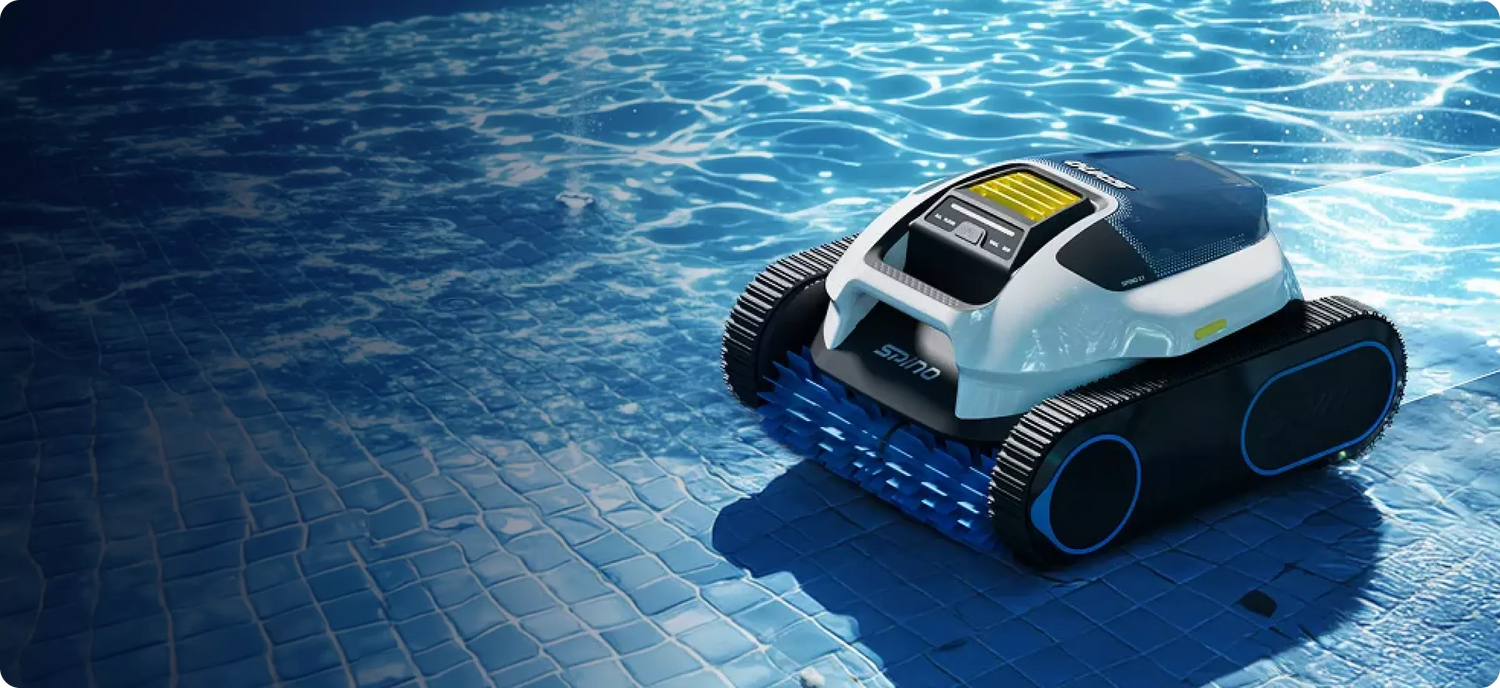
For example, the Mammotion SPINO E1 combines 5,800 GPH suction power, a 180 μm filter layer, an 11.4-inch roller brush and up to 210 minutes of runtime. For pools that regularly collect fine particles and surface debris, these specifications can support effective pickup and allow the cleaner to handle more cleaning work in a single cycle.
What Does a Robotic Pool Cleaner Replace?
The value of a robotic pool cleaner depends largely on what you are replacing. It may reduce manual vacuuming and brushing, lower some professional cleaning costs, or supplement an existing automatic cleaner—but it does not replace every part of pool maintenance.
| Current Cleaning Method | What a Robotic Pool Cleaner May Replace or Reduce | What It Does Not Replace |
|---|---|---|
| Manual cleaning | Vacuuming, brushing and collecting some debris | Water chemistry, sanitization and other maintenance |
| Professional pool service | Some routine surface-cleaning tasks | Services outside the robot's coverage |
| Suction-side cleaner | Existing automated surface cleaning, depending on coverage | Pool circulation and filtration |
| Pressure-side cleaner | Some debris collection and surface cleaning | Other pool-system functions |
| No automatic cleaner | A large portion of routine surface cleaning | Complete pool maintenance |
Manual Pool Cleaning
If you currently clean your pool yourself, the main benefit is usually time saved rather than a direct reduction in your monthly bill. A robotic pool cleaner can automate recurring tasks such as floor cleaning, brushing and debris collection, depending on the model.
The more frequently you perform these tasks, the more meaningful the time savings can become.
Professional Pool Service
A robotic pool cleaner can potentially reduce the cleaning work included in a professional service, but it should not automatically be treated as a replacement for the entire service.
For example, a pool service may also handle:
- Water testing and chemical balancing
- Equipment inspection
- Skimming and other surface maintenance
- Filter or pump maintenance
- Repairs
Only the portion of the service related to tasks the robot can actually perform should be counted as potential savings.
Suction-Side or Pressure-Side Cleaner
If you already use an automatic pool cleaner, the question becomes whether a robotic pool cleaner provides enough additional coverage, cleaning performance or convenience to justify replacing or supplementing it.
In this situation, compare what your current system already handles against what the robotic cleaner would add.
Buying rule: Before calculating whether a robotic pool cleaner is worth the money, identify the specific cleaning tasks, time or expenses it would actually replace.
How Much Does a Robotic Pool Cleaner Cost to Own?
The cost of a robotic pool cleaner goes beyond its purchase price. A realistic evaluation should include the initial investment, electricity, routine maintenance and replacement parts. The following ranges provide a practical starting point for estimating ownership costs.
| Cost Item | Typical Reference Range | What Affects the Cost |
|---|---|---|
| Purchase price | $150–$1,500+ | Cleaning coverage, navigation, filtration, battery and smart features |
| Electricity per cleaning cycle | About $0.02–$0.15 | Power consumption, runtime and local electricity rate |
| Cleaning frequency | 2–7 cycles/week | Pool size, debris load, season and cleaning preference |
| Filter / basket | $20–$100+ | Filter type, capacity and replacement frequency |
| Brushes / rollers | $20–$100+ per set | Pool surface, usage frequency and wear |
| Battery replacement | $100–$500+ | Battery type, model and replacement availability |
| Warranty | Typically 1–3 years | Brand and product tier |
| Expected service life | About 3–8 years | Build quality, usage, maintenance and storage |
*These are general reference ranges rather than fixed industry standards. Actual costs vary by model, market, electricity rate and usage.
Calculate the Total Ownership Cost
For example, a cleaner used 3 times per week runs about 156 cleaning cycles per year. At an illustrative $0.05 per cycle, electricity would cost about $7.80 per year. This shows why electricity alone is usually not the main factor determining whether a robotic pool cleaner is worth the investment—the bigger variables are the purchase price, maintenance and what cleaning costs it replaces.
Buying rule: Compare the robot's total ownership cost with the actual time or money you currently spend on pool cleaning, rather than comparing purchase prices alone.
How Much Time and Money Can a Robotic Pool Cleaner Save?
A robotic pool cleaner can create value in two main ways: reducing the time you spend on manual cleaning and, in some cases, reducing part of a recurring pool-cleaning expense. The actual savings depend on your pool, cleaning frequency and what the robot replaces.
If You Clean the Pool Yourself
| Cleaning Task | Typical Time per Session | Potential Savings |
|---|---|---|
| Manual vacuuming | 20–45 min | Time spent vacuuming |
| Brushing walls and floor | 10–20 min | Time spent brushing |
| Debris collection | 5–15 min | Time spent removing debris |
| Total routine cleaning | 35–80 min/session | Depends on what the robot can cover |
For example, if manual cleaning takes 45 minutes, 3 times per week, that adds up to about 117 hours per year. A robotic pool cleaner that handles the same cleaning tasks could substantially reduce that hands-on work.
However, don't treat all 117 hours as guaranteed savings. You may still need to empty the filter, inspect the pool and perform maintenance that the robot cannot automate.
If You Pay for Pool Service
The calculation is different. A robotic pool cleaner may reduce some routine cleaning work, but it does not automatically replace the entire pool-service bill.
| Current Situation | What to Compare |
|---|---|
| Weekly professional cleaning | Annual cleaning cost vs. robot ownership cost |
| Biweekly service | Cleaning cost that could realistically be reduced |
| Service includes chemicals | Don't count chemical maintenance as robot savings |
| Service includes equipment maintenance | Don't count equipment work as robot savings |
Calculate Your Potential Payback
The important point is that payback depends on what the robot replaces. Someone who spends several hours every week manually cleaning a large pool may gain significant value from automation, while someone who already pays for comprehensive pool service may see less direct financial savings.
Buying rule: Don't ask, “How quickly will every robotic pool cleaner pay for itself?” Ask, “How much time or cleaning expense can this specific robot realistically replace for my pool?”
What Can a Robotic Pool Cleaner Not Replace?
A robotic pool cleaner automates specific pool-surface cleaning tasks, but it is not a complete pool-maintenance system. It can reduce vacuuming, brushing and debris collection, while water chemistry, circulation, sanitization and some manual maintenance still require separate attention.
| A Robotic Pool Cleaner Can Help With | Still Requires Separate Maintenance |
|---|---|
| Pool floor cleaning | Water chemistry |
| Wall cleaning* | Sanitization |
| Waterline cleaning* | Pool circulation |
| Surface scrubbing | Pool pump and filter maintenance |
| Collecting settled debris | Floating debris / surface skimming |
| Routine debris removal | Water testing and chemical balancing |
*Wall and waterline cleaning capabilities depend on the specific model.
A robotic pool cleaner should be viewed as an automated cleaning tool, not a complete pool-maintenance solution. Its value comes from the specific cleaning work it can reliably take off your hands.
Is a Robotic Pool Cleaner Worth It for Your Pool?
Whether a robotic pool cleaner is worth the investment depends on what you currently spend on pool cleaning and how much of that work the robot can realistically replace. Use your pool size, debris load, cleaning frequency and current cleaning method to make the final decision.
A Quick Decision Guide
| Your Situation | Verdict | Why |
|---|---|---|
| Frequent cleaning + significant manual work | Likely worth it | The robot can automate recurring cleaning tasks and save hands-on time |
| Heavy debris + frequent cleaning | Likely worth it | Regular debris removal creates more value from automation |
| You pay for recurring pool cleaning | Potentially worth it | The robot may reduce some routine cleaning costs |
| Large or frequently used pool | Likely worth it | More cleaning demand means more work to automate |
| Small pool + light debris | Maybe | Manual cleaning may already require little time or effort |
| Existing automatic cleaner works well | Depends | Compare the robot's additional coverage and convenience |
| You mainly need chemical maintenance | Probably not | A robotic cleaner does not replace water testing or chemical balancing |
Before You Buy, Check These 4 Things
-
What will it replace?
Identify the specific cleaning tasks you currently perform or pay for. Don't count tasks the robot cannot actually handle. -
Does it fit your pool?
Confirm compatibility with your pool type, surface, size, shape, depth, debris and required cleaning coverage. -
What will it cost over time?
Look beyond the purchase price. Include electricity, filters, brushes, batteries and other replacement parts when estimating total ownership cost. -
Is the time or money saved meaningful to you?
A robot may be financially worthwhile for someone spending hours each week on pool cleaning but less compelling for someone who cleans a small, low-debris pool occasionally.
The Bottom Line
Robotic pool cleaners are worth it when the cleaning work they automate is valuable enough to justify their total ownership cost.
For frequent manual cleaning, heavy debris or recurring cleaning-service expenses, the case is generally stronger. For pools that require little cleaning, or when an existing cleaner already performs well, the convenience may not justify the additional investment.
The best robotic pool cleaner is therefore not necessarily the most powerful or feature-rich model. It is the one that solves your pool's biggest cleaning problem at a reasonable total cost.
If you've decided that a robotic pool cleaner is worth considering, the next step is choosing a model that matches your pool's size, surface, debris and cleaning coverage. See our guide on How to Choose a Robotic Pool Cleaner.
FAQ
They can be, especially for pool owners who clean frequently, spend significant time on manual maintenance, or pay for recurring cleaning services. The value depends on how much cleaning work the robot can replace compared with its total ownership cost.
Service life varies by model, usage, maintenance and storage conditions. A well-maintained robotic pool cleaner can remain useful for several years, but batteries, brushes, filters and other wear components may need replacement before the main unit reaches the end of its service life.
Generally, electricity is only one part of the ownership cost. The actual cost depends on the cleaner's power consumption, runtime, cleaning frequency and local electricity rate. Calculate the cost per cycle rather than assuming every model has the same energy cost.
Not necessarily. A robot can automate certain cleaning tasks, but professional pool service may also include water testing, chemical balancing, equipment inspection and other maintenance that a robotic cleaner does not perform.
Not always. Cleaning frequency should match your pool's debris load, usage and cleaning needs. A pool with heavy debris may benefit from frequent cleaning, while a lightly used pool may require fewer cycles.
They can, but the savings depend on what they replace. Owners who currently pay for recurring cleaning or spend substantial time on manual cleaning may see greater value than owners who rarely clean their pools.
No. A robotic pool cleaner is designed primarily for automated pool cleaning. The pool's circulation, filtration and water-treatment systems still perform their respective functions.
Common drawbacks include the upfront purchase cost, filter and brush maintenance, replacement-part costs and limitations in reaching certain pool features. A robotic cleaner may also provide limited financial value if your pool requires very little cleaning or you already have an effective cleaning system.
Did you like this article? Add us as a preferred source to find us more easily on Google.