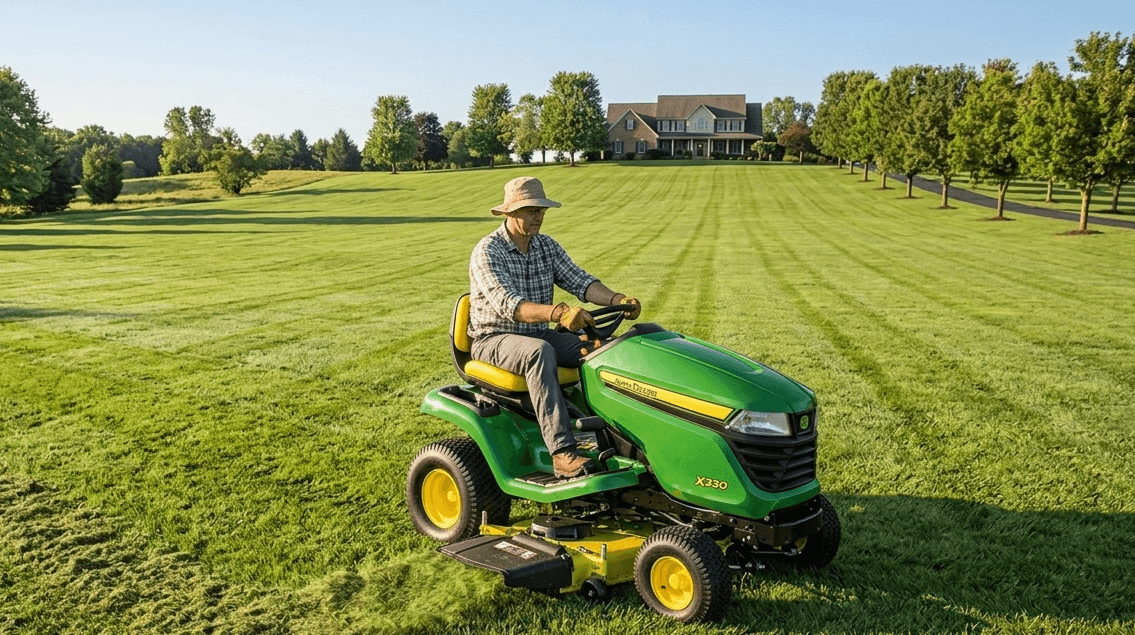







Choosing the best lawn mower for a small yard might seem simple at first. After all, if your lawn is only a quarter acre or less, almost any mower should handle the job—right?
In reality, the choice matters more than many homeowners realize. Small yards often have tight corners, landscaping obstacles, and thick residential turf, which means maneuverability, cutting performance, and convenience all play a role in the mowing experience.
Over the past few years, lawn mower technology has also changed dramatically. Traditional gas push mowers still dominate in terms of raw cutting power, but battery-powered mowers have improved rapidly. Meanwhile, a new category—robotic lawn mowers—is transforming the way homeowners maintain their lawns.
To better understand how these different technologies compare, we evaluated four lawn mowers that represent the most common choices for small residential properties:
- Toro 21566 60V Max Super Recycler (Battery)
- Ryobi 40V HP Brushless 21" Self-Propelled Mower (Battery)
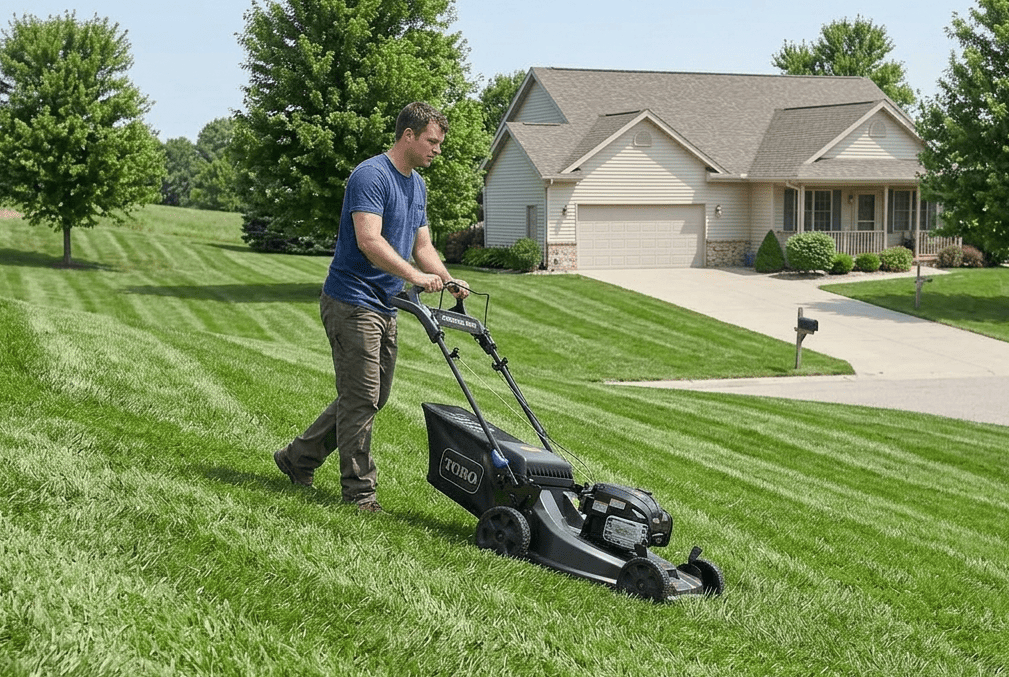
- Toro Recycler 21462 Gas Push Mower
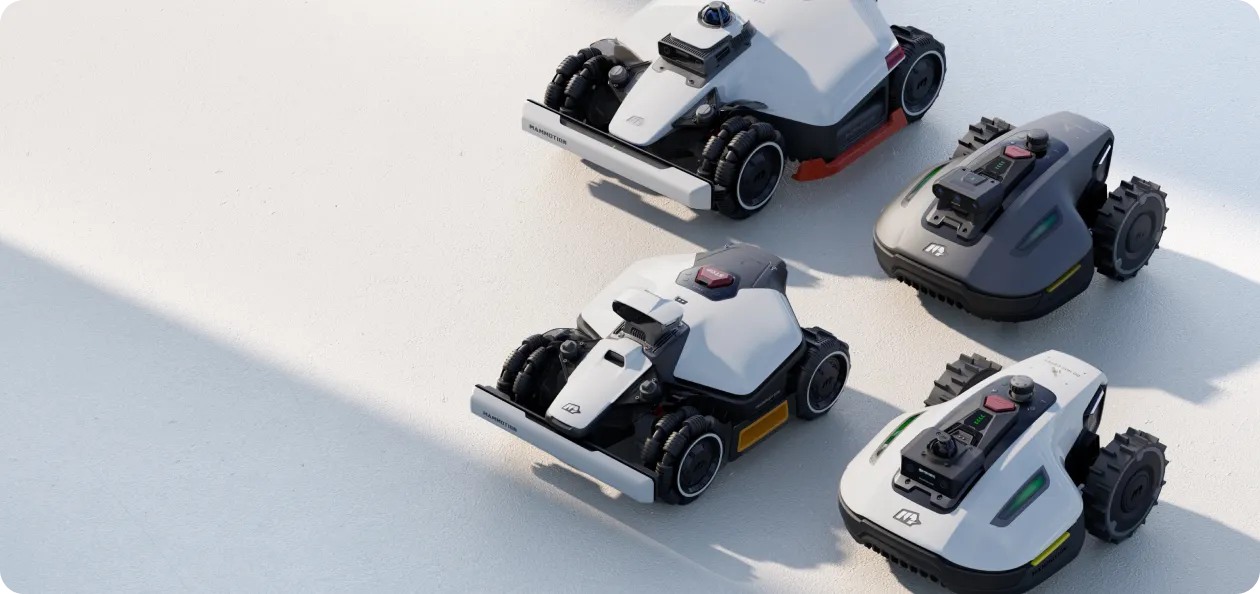
- Mammotion YUKA mini 2 1000H Robot Lawn Mower
Each model serves a different type of homeowner, and each brings unique strengths to the table. In this review, we’ll break down their performance in terms of cut quality, power, ease of use, maintenance, and overall value.
How We Tested the Lawn Mowers
A proper evaluation article isn’t just about specs—it’s about real-world performance. To simulate common residential conditions, we tested these mower types on lawns similar to those found in suburban neighborhoods.
Test Environment
Our test scenarios focused on:
- Lawn size: approximately 0.15–0.30 acres
- Grass type: thick warm-season grass (similar to St. Augustine)
- Grass height: slightly overgrown to challenge the mower
- Terrain: mostly flat with occasional uneven spots
This type of turf can be demanding, especially for battery mowers. Thick grass requires strong blade speed and suction to lift and cut blades cleanly without leaving clumps.
Evaluation Criteria
Each mower was evaluated across five major categories.
|
Category |
What We Evaluated |
|
Cut Quality |
Evenness of the cut, clumping, striping potential |
|
Power |
Ability to handle tall or dense grass |
|
Ease of Use |
Starting process, maneuverability, comfort |
|
Noise |
Relative operating sound level |
|
Maintenance |
Expected upkeep and longevity |
These criteria help illustrate not just which mower cuts grass, but which one delivers the best overall ownership experience. 4444
Best Lawn Mowers 2026: Gas, Battery, and Robotic Options
1. Toro 21566 60V Max Super Recycler
Best Premium Battery Lawn Mower for Small Yards
Toro has been one of the most respected lawn mower manufacturers for decades, and the 60V Max Super Recycler (model 21566) is one of its most advanced cordless push mowers.
This model is designed to deliver gas-like cutting performance without gas maintenance, using Toro’s Flex-Force battery system.

Key Specifications
- Cutting deck: 21 inches
- Battery platform: 60V lithium-ion
- Drive system: Personal Pace self-propelled
- Deck construction: Cast aluminum
- Estimated runtime: up to ~50 minutes
Cutting Performance
Among battery mowers, the Toro 21566 stands out for its cutting system. The Recycler deck design generates airflow that lifts grass blades before cutting, helping produce a more even finish.
In moderate grass conditions, the mower delivered:
- Consistent cutting patterns
- Good clipping dispersion
- Minimal clumping
However, when mowing particularly dense or tall grass, the limitations of battery power became more noticeable. The blade speed automatically adjusts under heavy load, which can slightly reduce cutting aggressiveness.
Even so, compared with many other battery mowers, this model performs impressively.
Ease of Operation
One area where the Toro excels is usability.
The Personal Pace drive system adjusts automatically to the user’s walking speed, making the mower feel smooth and intuitive. Starting the machine requires only a push of a button, eliminating pull cords entirely.
The folding handle and vertical storage option also make it easier to store in smaller garages.
Pros |
Cons |
|
|
Verdict
For homeowners who want a high-end battery mower, the Toro 21566 offers one of the best balances between performance and convenience.
2. Ryobi RY401140 40V HP Brushless Mower
Best Budget Battery Lawn Mower for Small Lawns
Ryobi has become one of the most widely used brands in cordless outdoor equipment, largely because of its affordable battery ecosystem. The RY401140 40V HP Brushless mower is designed to provide reliable mowing performance at a lower price point than premium models.

Key Specifications
- Cutting deck: 21 inches
- Motor: 40V HP brushless
- Drive system: self-propelled
- Runtime: up to ~70 minutes (depending on battery configuration)
Cutting Performance
The Ryobi mower is lighter than most gas machines and noticeably quieter during operation.
For small lawns that are mowed regularly, performance is generally solid. However, in thicker grass conditions we observed:
- Reduced suction compared with higher-end mowers
- Slightly uneven cutting in dense patches
- More visible clippings when grass becomes too tall
These limitations are common among mid-range battery mowers.
Ease of Use
Where the Ryobi mower shines is simplicity.
- Push-button start
- Lightweight construction
- Minimal maintenance
For homeowners who dislike the maintenance requirements of gas engines, this can be a big advantage.
Pros |
Cons |
|
|
Verdict
The Ryobi RY401140 is a practical option for small, well-maintained lawns, particularly for homeowners who value convenience over maximum cutting power.
3. Toro Recycler 21462 Gas Push Mower
Best Value Gas Lawn Mower for Small Yards
Despite the rapid growth of battery technology, gas mowers remain the benchmark for raw cutting performance and durability. The Toro Recycler 21462 is a classic example of why these machines are still widely used.

Key Specifications
- Engine: 163cc gas engine
- Cutting deck: 22 inches
- Drive system: rear-wheel drive
- Runtime: unlimited with fuel
Cutting Performance
In our testing scenarios, the gas mower delivered the most consistent and powerful cut.
Key advantages included:
- Higher blade tip speed
- Strong suction
- Excellent performance in tall grass
Even when grass was thick and slightly overgrown, the gas mower maintained a clean finish without slowing down.
Longevity
Another advantage of gas mowers is durability. With regular maintenance—oil changes, blade sharpening, and seasonal servicing—many gas mowers remain functional for 10–12 years or longer.
Pros |
Cons |
|
|
Verdict
For homeowners who prioritize cut quality and long-term durability, a gas mower like the Toro Recycler 21462 still offers unmatched performance.
4. Mammotion YUKA mini 2 1000H
Best Value Compact Robotic Lawn Mower for Small Yards
Robotic lawn mowers represent a completely different approach to lawn care. Instead of mowing once a week with a push mower, these machines maintain lawns automatically by cutting small amounts of grass regularly.
The Mammotion YUKA mini 2 1000H is designed specifically for smaller residential lawns.

Key Specifications
- Coverage area: up to ~0.25 acres
- Navigation system: AI vision + LiDAR
- Runtime: ~125 minutes per charge
- Control: smartphone app
Autonomous Lawn Care
Unlike traditional mowers, robotic models operate on a frequent mowing schedule, trimming grass continuously rather than waiting for it to grow tall.
This method offers several advantages:
- consistent lawn height
- very small clippings that naturally fertilize the lawn
- minimal physical effort
The YUKA mini 2 also uses advanced sensors and mapping technology to navigate around obstacles and maintain defined mowing zones.
Pros |
Cons |
|
|
Verdict
For homeowners who prefer automated lawn care, the Mammotion YUKA mini 2 provides one of the most convenient solutions for small residential lawns.
Comparison Table: 4 Best Lawn Mowers for Small Yard
|
Feature |
Toro 21566 Super Recycler |
Ryobi RY401140 |
Toro Recycler 21462 |
|
|
Mower Type |
Battery Push Mower |
Battery Push Mower |
Gas Push Mower |
Robot Lawn Mower |
|
Recommended Lawn Size |
up to ~0.5 acre |
up to ~0.4 acre |
up to ~0.5 acre |
up to ~0.25 acre |
|
Cutting Deck Width |
21 in |
21 in |
22 in |
~7–8 in cutting width |
|
Power Source |
60V lithium battery |
40V lithium battery |
163cc gas engine |
Rechargeable lithium battery |
|
Runtime / Fuel |
~50 minutes per charge |
~40–70 minutes (battery dependent) |
Unlimited with fuel |
~125 minutes per charge |
|
Drive System |
Personal Pace self-propel |
Self-propelled |
Rear-wheel self-propelled |
Fully autonomous |
|
Cutting Modes |
Mulch / Bag / Side discharge |
Mulch / Bag |
Mulch / Bag / Side discharge |
Continuous micro-cut |
|
Noise Level |
Moderate |
Low |
High |
Very low |
|
Maintenance |
Very low |
Very low |
Moderate (oil, spark plug, fuel) |
Minimal |
|
Setup Difficulty |
Very easy |
Very easy |
Easy |
Moderate (mapping lawn) |
|
Terrain Capability |
Flat to moderate slopes |
Flat to moderate slopes |
Handles thicker grass & slopes |
Up to 45% slope |
|
Navigation |
Manual push |
Manual push |
Manual push |
AI vision + LiDAR navigation |
|
Storage |
Vertical SmartStow design |
Foldable handle |
Foldable handle |
Automatic charging dock |
|
Key Strength |
Best battery cut quality |
Budget-friendly cordless mowing |
Maximum cutting power |
Fully autonomous lawn care |
|
Typical Lifespan |
~7–10 years |
~5–7 years |
10–12+ years |
5–8 years (battery dependent) |
|
Ideal User |
Homeowners wanting premium cordless mower |
Small lawn owners on a budget |
Users prioritizing cut quality |
Users who want hands-free mowing |
Quick Performance Scorecard
|
Category |
Toro 21566 |
Ryobi RY401140 |
Toro 21462 Gas |
YUKA mini 2 1000H |
|
Cutting Power |
⭐⭐⭐⭐ |
⭐⭐⭐ |
⭐⭐⭐⭐⭐ |
⭐⭐⭐ |
|
Cut Quality |
⭐⭐⭐⭐ |
⭐⭐⭐ |
⭐⭐⭐⭐⭐ |
⭐⭐⭐⭐ |
|
Ease of Use |
⭐⭐⭐⭐ |
⭐⭐⭐⭐ |
⭐⭐⭐ |
⭐⭐⭐⭐⭐ |
|
Noise Level |
⭐⭐⭐⭐ |
⭐⭐⭐⭐ |
⭐⭐ |
⭐⭐⭐⭐⭐ |
|
Maintenance |
⭐⭐⭐⭐ |
⭐⭐⭐⭐ |
⭐⭐ |
⭐⭐⭐⭐⭐ |
|
Technology |
⭐⭐⭐ |
⭐⭐⭐ |
⭐⭐ |
⭐⭐⭐⭐⭐ |
Key Differences Explained
Gas vs Battery vs Robotic
Gas mowers like the Toro 21462 still deliver the highest blade speed and suction, which helps produce the cleanest cut in thick turf. This is why many professionals still rely on gas equipment for difficult mowing conditions.
Battery push mowers such as the Toro 21566 and Ryobi RY401140 provide a quieter and easier mowing experience. The Toro model stands out because its Vortex airflow system improves under-deck airflow and mulching performance.
Robotic mowers like the YUKA mini 2 1000H take a completely different approach by mowing frequently and automatically rather than cutting large amounts of grass at once. The mower navigates lawns using sensors and can even handle slopes up to about 45%, which covers most residential yards.
How to Choose the Best Lawn Mower for a Small Yard
Small yards may not require the same heavy-duty equipment used for large properties, but choosing the right lawn mower can still make a significant difference in maintenance time, lawn appearance, and overall convenience. When selecting a mower for a compact lawn, several factors should be considered, including lawn size, grass type, terrain, and how much effort you want to put into mowing.
Below are the most important factors to evaluate before buying a lawn mower for a small yard.
1. Lawn Size and Layout
The first step is understanding the actual size and layout of your yard. Most small residential lawns range between 0.05 and 0.25 acres, and different mower types are optimized for different coverage areas.
Under 0.1 acre:
- Lightweight battery mowers or robotic mowers work well because the runtime requirements are minimal.
0.1–0.25 acres:
- A mid-range battery mower or small gas mower can comfortably handle this size while still offering strong cutting performance.
Complex yard layouts:
- If your yard has narrow passages, flower beds, or multiple mowing zones, maneuverability becomes more important. Robotic mowers with smart navigation systems can be especially helpful in these situations.
In general, smaller lawns benefit from compact, maneuverable equipment rather than large decks designed for big properties.
2. Grass Type and Thickness
Not all grass is equally easy to mow. The density and growth pattern of your turf will significantly affect which mower performs best.
For example:
- Warm-season grasses such as St. Augustine or Bermuda tend to be thick and require stronger blade speed and suction.
- Cool-season grasses like Kentucky bluegrass are typically easier to cut and work well with battery mowers.
If your lawn tends to grow quickly or becomes dense during the summer, a mower with higher blade torque and strong airflow under the deck will produce cleaner results.
Gas mowers still excel in this area, but high-end battery models have improved significantly in recent years.
3. Convenience and Effort
Another key factor is how much physical effort you want to invest in mowing.
Traditional push mowers require the user to walk behind the machine and guide it across the lawn. For many homeowners this is perfectly acceptable, but others prefer a more convenient solution.
Consider the following options:
Manual mowing experience
- Gas push mowers
- Battery push mowers
Automated mowing
- Robotic lawn mowers
Robotic mowers operate on scheduled mowing cycles, trimming small amounts of grass frequently to maintain a consistent height. This approach dramatically reduces the amount of manual work required to keep a lawn looking neat.
For busy homeowners, automation can be one of the biggest advantages of modern lawn equipment.
4. Noise Level
Noise can be an important consideration, especially in suburban neighborhoods where houses are close together.
- Gas mowers are typically the loudest due to internal combustion engines.
- Battery mowers are noticeably quieter and produce less vibration.
- Robotic mowers are usually the quietest option and can often operate without disturbing neighbors.
If early morning or evening mowing is important to you, a battery or robotic mower may provide a more neighborhood-friendly solution.
5. Maintenance Requirements
Maintenance needs vary significantly between mower types.
Gas mowers typically require:
- Oil changes
- Spark plug replacement
- Fuel storage
- Seasonal servicing
Battery mowers eliminate most of these tasks. Owners generally only need to:
- recharge batteries
- clean the deck
- occasionally replace blades
Robotic mowers also have minimal maintenance requirements, although periodic blade replacement and software updates may be necessary.
For homeowners who prefer low-maintenance equipment, battery and robotic models offer clear advantages.
6. Long-Term Cost
The purchase price of a mower is only part of the ownership cost.
Gas mowers often have lower upfront prices but require fuel and periodic servicing. Battery mowers typically cost more initially but reduce operating costs over time. Robotic mowers have the highest upfront investment but provide the greatest convenience.
When evaluating long-term value, it’s helpful to consider:
- expected lifespan
- replacement batteries
- fuel costs
- maintenance expenses
For many small yards, the convenience of battery or robotic systems can offset their higher initial cost.
Final Advice
Ultimately, the best lawn mower for a small yard depends on your priorities.
- If you value maximum cutting power and durability, a traditional gas mower remains a dependable choice.
- If you prefer quiet operation and lower maintenance, a high-quality battery mower can provide an excellent balance of performance and convenience.
- And if your goal is hands-off lawn care, a robotic mower offers a modern solution that can maintain your lawn automatically.
By considering your lawn size, grass type, and preferred level of effort, you can choose a mower that keeps your yard looking great while fitting seamlessly into your routine.
Final Verdict: Which Lawn Mower Is Best for Small Yards?
Choosing the best lawn mower for a small yard ultimately depends on how you prefer to maintain your lawn and what features matter most to you. While all four models reviewed in this guide can handle small residential lawns, each one excels in a different area.
If cutting power and long-term durability are your top priorities, the Toro Recycler 21462 gas mower still delivers the strongest performance. Its higher blade speed and suction make it particularly effective for thick or fast-growing grass.
For homeowners who prefer quiet operation and lower maintenance, battery mowers are a practical alternative. The Toro 21566 Super Recycler offers one of the best combinations of cordless convenience and cutting performance, while the Ryobi RY401140 provides a more budget-friendly entry into battery-powered mowing.
Meanwhile, robotic mowers represent a completely different approach to lawn care. Instead of manually mowing every week, the Mammotion YUKA mini 2 1000H maintains the lawn automatically through frequent trimming. For homeowners who value time savings and automation, this type of mower can dramatically simplify lawn maintenance.
In the end, the best lawn mower for a small yard isn’t necessarily the most powerful machine—it’s the one that fits your lawn size, grass type, and preferred mowing routine. By choosing the right tool for your needs, maintaining a healthy and attractive lawn can become faster, easier, and far more enjoyable.
Did you like this article? Add us as a preferred source to find us more easily on Google.