





A robotic pool cleaner typically costs about $150–$2,000+, with many residential models concentrated around $500–$1,500. The right budget depends on more than the purchase price: pool size, shape, wall and waterline coverage, debris load, battery runtime, filtration, and replacement-part costs all affect the value of a robot. A $500-class cleaner can be sufficient for a straightforward pool, while a larger or more demanding pool may justify spending $1,000 or more.
The rest of this guide breaks robotic pool cleaner cost into the factors that actually affect a buying decision: price tier, pool geometry, operating expenses, maintenance, battery runtime, and long-term value.
Robotic Pool Cleaner Cost: How Much Does it Cost?
A robotic pool cleaner generally costs $150–$2,000+, with entry-level models around $150–$500, mid-range models around $500–$1,000, and premium models often reaching $1,000–$2,000 or more.
| Price Range | Typical Position | What You May Get | Best Suited For |
|---|---|---|---|
| $150–$500 | Entry-level | Basic floor cleaning, simpler filtration and navigation | Small or straightforward pools |
| $500–$1,000 | Mid-range | More complete cleaning coverage and additional automation | Typical residential pools |
| $1,000–$2,000 | Premium | Advanced navigation, filtration, runtime, or wall/waterline capabilities | Large or complex pools |
| $2,000+ | Flagship | Specialized or multifunction capabilities | Buyers with specific advanced requirements |
These are market reference ranges, not fixed industry price standards. Actual pricing varies by brand, model, promotions, pool type, and included accessories.
What Is Included in a Robotic Pool Cleaner’s Purchase Price?
The purchase price normally covers the cleaner itself and its basic operating components, but filters, brushes, batteries, accessories, and replacement parts can create additional costs over time.
Before comparing prices, check whether the listed price includes:
- Filter basket or cartridge
- Charging system or power supply
- Roller brushes
- Retrieval hook or other accessories
- App or smart-control functions
- Warranty coverage
Why Do Robotic Pool Cleaner Prices Vary by Hundreds of Dollars?
The biggest price differences usually come from cleaning coverage, navigation, filtration, runtime, traction, and automation, rather than one universal measure of suction power.
For example, paying more may make sense if you need:
- Floor and wall cleaning
- Waterline cleaning
- A larger stated cleaning area
- Fine-debris filtration
- Longer cleaning cycles
- Better navigation for freeform pools
- Stronger traction on sloped walls
By contrast, a small pool that mainly accumulates leaves on the floor may not benefit enough from every premium feature to justify a $1,000+ purchase.
Robotic Pool Cleaner Price Tiers: What Does Each Budget Buy?
A higher robotic pool cleaner price generally buys broader cleaning coverage, more advanced filtration or navigation, and longer or more flexible operation, but expensive features are only valuable when your pool actually requires them.
| Price Tier | Typical Capabilities | What to Check Before Buying |
|---|---|---|
| $150–$500 | Basic floor cleaning on many models | Pool size, floor coverage, filter design |
| $500–$1,000 | More models with wall, waterline, or improved navigation | Coverage, wall-climbing ability, runtime |
| $1,000–$2,000 | More advanced navigation, filtration, runtime, and automation | Whether premium features solve a real pool-maintenance problem |
| $2,000+ | Flagship or specialized functionality | Specific capabilities that justify the additional cost |
These ranges are market reference points rather than universal specifications. Features can overlap significantly between price tiers.
What Does a $500 Robotic Pool Cleaner Typically Offer?
A roughly $500 robot can provide substantially more than basic floor cleaning when the specific model includes wall and waterline coverage, adequate filtration, and sufficient runtime for the pool.
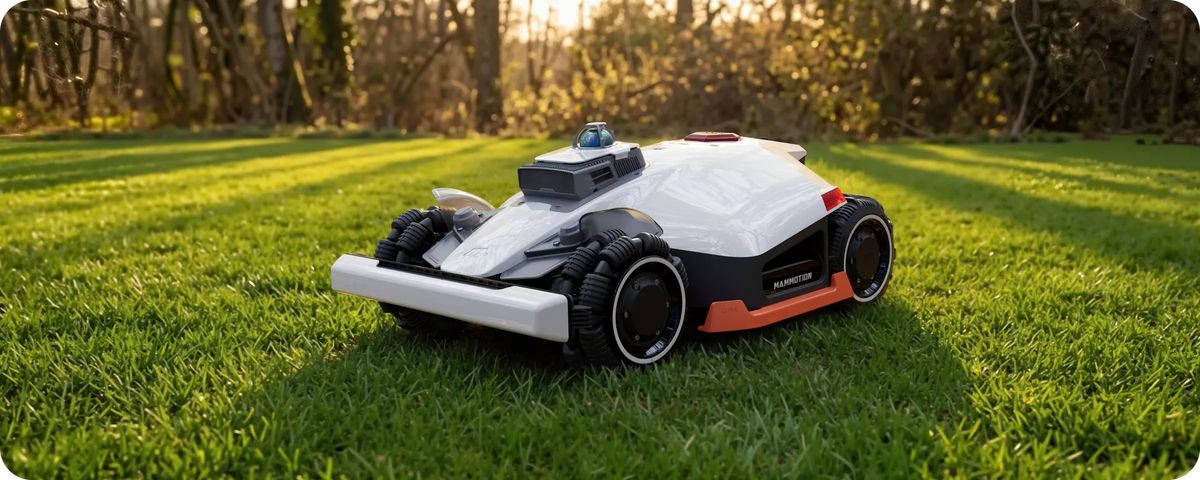
Mammotion's SPINO E1 provides a useful example. As of August 2026, Mammotion lists the SPINO E1 at $499 during its anniversary promotion, versus a $799 regular price, and specifies:
- Cleaning area: up to 1,600 sq. ft.
- Cleaning coverage: floor, wall, and waterline
- Filter basket: 180 μm
- Battery: 6,000 mAh
- Floor runtime: up to 210 minutes
- Wall runtime: up to 180 minutes
- Charging time: approximately 3 hours
- Maximum suction: 5,800 GPH

That makes the SPINO E1 a useful real-world benchmark for understanding what a roughly $500 robotic pool cleaner can offer—but its specifications should not be treated as a standard for every product in that price range.
The key point is that $500 does not automatically mean “basic.” Compare the actual specifications rather than assuming all robots within the same price tier offer the same coverage.
If you'd like to learn how to choose a robotic pool cleaner that's right for you, please refer to our practical guide: “How to Choose a Robotic Pool Cleaner: A Practical Buying Guide”.
When Does a $1,000+ Robotic Pool Cleaner Make Sense?
Spending $1,000 or more becomes easier to justify when a pool requires capabilities that a less expensive model cannot reliably provide, such as broader coverage, advanced navigation, longer operating requirements, or specialized filtration.
Consider the higher price tier when your pool has:
- A large cleaning area
- Complex or freeform geometry
- Significant wall-cleaning requirements
- Waterline cleaning requirements
- Heavy or fine debris loads
- A need for more sophisticated automation
The deciding factor should be the capability you need, not the assumption that a higher price guarantees proportionally better cleaning.
Robotic Pool Cleaner Coverage: How Pool Size and Shape Affect Cost
Pool size alone does not determine robotic pool cleaner cost; pool shape, wall geometry, waterline requirements, steps, shelves, and surface type can determine whether a more capable robot is worth the extra money.
| Pool Condition | Primary Requirement | Cost Consideration |
|---|---|---|
| Small, rectangular pool | Floor cleaning | Entry-level models may be sufficient |
| Larger rectangular pool | Greater coverage and runtime | Mid-range or premium models may be more appropriate |
| Freeform or kidney-shaped pool | Navigation and coverage | Check the manufacturer's supported pool shapes |
| Steep or sloped walls | Traction and wall climbing | Verify the stated wall-angle capability |
| Waterline buildup | Waterline cleaning | Requires a model specifically rated for waterline cleaning |
| Heavy leaves or fine debris | Filter capacity and filtration | Filter design may matter more than headline suction |
How Much Pool Area Can a Robotic Pool Cleaner Handle?
A robot's stated cleaning area should be compared directly with your pool's estimated cleaning surface, but the manufacturer's coverage figure should not be interpreted as a guaranteed real-world cleaning time.
For example, Mammotion rates the SPINO E1 for up to 1,600 sq. ft. of cleaning area. It is also specified for water depths of 23.62–118.11 inches.
Before buying, compare:
- Your pool's approximate surface area
- The manufacturer's stated cleaning area
- Available runtime
- Floor versus wall cleaning mode
- Pool shape and obstacles
- Required cleaning frequency
A robot rated for a particular area is not automatically the best choice simply because your pool falls below that number.
Why Do Wall Slope and Pool Surface Matter?
Wall-climbing performance depends on the interaction between the robot's traction system, wall geometry, and pool surface, so the manufacturer's stated wall-angle and surface compatibility should be checked before purchase.
For the SPINO E1, Mammotion specifies:
- Up to 110° wall slope
- 1.57-inch widened caterpillar tread
- Concrete, fiberglass, vinyl, tile, and Pebble Tec surfaces
This distinction matters because wall climbing is not the same as cleaning every wall, step, shelf, or transition in every pool. A specification such as “110° wall slope” should be evaluated against the actual geometry of your pool rather than treated as a universal guarantee.
For freeform pools, steps, tanning ledges, or unusual transitions, verify the manufacturer's supported cleaning behavior before paying extra for a premium model.
Robotic Pool Cleaner Operating Cost: How Much Does It Cost to Run?
The ongoing cost of a robotic pool cleaner comes from electricity, filters, replacement parts, and repairs, so the true cost of ownership should be calculated from your cleaning frequency and the specific model’s maintenance requirements.
How Much Electricity Does a Robotic Pool Cleaner Use?
Electricity cost depends on the robot's power draw, cleaning time, number of cycles, and local electricity rate, so there is no single accurate monthly operating cost for every model.
For example, the calculation requires four model- and location-specific numbers:
- Rated power consumption in kW
- Average cleaning-cycle length
- Cleaning cycles per week or season
- Your local electricity rate
Do not estimate operating cost from battery capacity alone. Battery capacity in mAh does not directly tell you how many kilowatt-hours the robot consumes from the wall outlet.
How Much Do Filters and Replacement Parts Cost?
Replacement parts can add meaningful costs over several seasons, particularly when filters, brushes, tracks, or retrieval accessories are treated as wear items rather than lifetime components.
For example, Mammotion currently lists these SPINO E1 accessories on its U.S. store:
- Inner Filter Basket: $59.90
- Filter Basket: $69.00
- Filter Pad: $39.90
- Retrieval Hook: $32.90
Prices and availability can change, so these figures should be treated as a current product-page reference rather than a fixed long-term cost.
Does a Cordless Pool Cleaner Cost More to Maintain?
A cordless robotic pool cleaner may reduce cable-related inconvenience, but its long-term ownership cost should also account for battery aging, charging components, and battery-service options when available.
| Cordless Robot | Corded Robot |
|---|---|
| Battery condition over time | Power supply condition |
| Charging components | Power cable condition |
| Runtime limits between charges | Continuous external power during operation |
| Potential battery-service cost | Potential cable or power-supply replacement cost |
The best value depends on which maintenance trade-offs you are willing to accept and whether the model's runtime can complete your typical cleaning cycle without interruption.
Robotic Pool Cleaner Maintenance Cost: What Will You Pay After Purchase?
A robotic pool cleaner's maintenance cost depends mainly on wear parts, replacement availability, and warranty coverage, so buyers should not assume that a two-year robot warranty means every component is covered for two years.
Which Robotic Pool Cleaner Parts Wear Out?
Common serviceable or replaceable components include filters, brushes, tracks, seals, batteries, and other moving parts, although replacement intervals vary by model and usage.
- Filter basket or cartridge: Clean after use and inspect for damage.
- Roller brushes: Wear depends on surface texture, cleaning frequency, and debris load.
- Caterpillar treads or drive components: Traction parts can wear over time.
- Battery and charging components: Relevant primarily to cordless robots.
- Motors and internal drive systems: Typically longer-term components, but repair cost can be significant after warranty expiration.
Your pool environment also affects maintenance. A pool surrounded by heavy leaf fall may require more frequent filter cleaning, while fine dust or pollen can increase the importance of filter condition.
Does the Warranty Cover Every Robotic Pool Cleaner Component?
Warranty coverage can vary significantly between the main machine and individual wear parts, so check the component-level policy before estimating long-term ownership cost.
Most brands of robotic pool cleaners on the market offer a 2-3-year warranty, but keep in mind that the warranty period for most of the parts on these robotic pool cleaners is only a few months.
This illustrates an important cost distinction:
A component with a three-month warranty is not necessarily expected to fail after three months. It simply means warranty coverage for that component ends earlier than coverage for the main machine. For a realistic long-term cost estimate, check the replacement price and availability of each major wear part before buying.
Robotic Pool Cleaner Battery and Runtime: How Much Runtime Do You Need?
The right runtime is the amount needed to complete your normal cleaning cycle with adequate coverage, and a longer advertised runtime does not automatically mean better cleaning.
How Long Does a Cordless Robotic Pool Cleaner Run?
Cordless runtime can vary by cleaning mode, with wall climbing and other demanding functions potentially having different rated runtimes from floor cleaning.
For example, Mammotion lists the SPINO E1 with up to 210 minutes in Floor Mode, and up to 180 minutes in Wall Mode.
These are manufacturer-stated maximum runtimes. Actual runtime can vary with the cleaning mode and operating conditions.
Does More Runtime Always Mean Better Cleaning?
A longer runtime is useful only if the robot can use that time effectively, so cleaning coverage and navigation can be as important as the number of minutes printed on the specification sheet.
When comparing robots, consider:
- Pool cleaning area
- Pool shape and geometry
- Floor, wall, and waterline coverage
- Cleaning mode
- Debris load
- Navigation efficiency
- Battery condition over time
For example, a robot with 210 minutes of maximum floor-cleaning runtime may still need to spend more time navigating a complex pool than a simple rectangular pool. Runtime should therefore be compared with the manufacturer's stated coverage area and cleaning modes, not treated as an isolated performance metric.
How Often Should You Run a Robotic Pool Cleaner?
Cleaning frequency should match your pool's debris load and usage rather than following one fixed schedule for every pool.
A practical starting point is:
- Low debris load: Run as needed, often after visible debris accumulates.
- Moderate debris load: Increase frequency during normal swimming use or seasonal leaf fall.
- Heavy debris load: More frequent cleaning may be necessary, especially after storms or periods of heavy pollen and leaf drop.
If you use the pool heavily or experience a sudden debris event, the appropriate cleaning frequency may be higher than your normal routine. Check the manufacturer's instructions for the maximum recommended duty cycle and maintenance requirements.
Robotic Pool Cleaner Value: Is a $500, $1,000, or $2,000 Robot Worth It?
A $500 robotic pool cleaner can be enough for a simple residential pool, while spending $1,000 or more makes sense only when larger cleaning coverage, complex pool geometry, demanding debris, or advanced cleaning features solve a real maintenance problem.
| Your Pool Situation | Starting Budget to Consider | What to Prioritize |
|---|---|---|
| Small and simple | $150–$500 | Basic floor coverage and filtration |
| Typical residential pool | $500–$1,000 | Coverage, runtime, wall cleaning |
| Large or complex pool | $1,000–$2,000 | Navigation, runtime, traction, filtration |
| Specialized requirements | $2,000+ | Specific advanced capabilities |
Who Should Buy a $500-Class Robotic Pool Cleaner?
A $500-class robot can be a strong value when your pool fits the cleaner's stated coverage and you do not need advanced capabilities that will go unused.
This price range can make sense when:
- Your pool has a relatively simple shape.
- The manufacturer's stated cleaning area matches your pool.
- You need floor cleaning and possibly wall or waterline cleaning.
- Your debris load does not require a specialized filtration setup.
- The available runtime fits your normal cleaning cycle.
Who Should Spend $1,000 or More on a Robotic Pool Cleaner?
A $1,000+ budget becomes easier to justify when a lower-priced model cannot meet the physical or maintenance requirements of your pool.
Consider the higher price range when you need:
- A larger stated cleaning area
- More reliable wall and waterline coverage
- Longer runtime
- More advanced navigation for complex geometry
- Filtration suited to heavy fine debris
- Greater automation or scheduling capability
The key is to identify the specific limitation a higher-priced model solves. Paying twice as much does not necessarily produce twice the cleaning performance.
When Is a More Expensive Robotic Pool Cleaner Not Worth It?
A premium robot may offer poor value when its additional capabilities do not address an actual problem in your pool.
Spending less may be the better decision if:
- Your pool is small and has a simple layout.
- Floor cleaning handles most of your maintenance needs.
- Your debris load is light.
- You are comfortable handling occasional manual brushing.
- The premium features would rarely be used.
- A lower-priced model already meets your required coverage and runtime.
Buying rule: Choose the lowest price tier that meets your pool's actual cleaning requirements, then compare maintenance and replacement-part costs before making the final decision.
Robotic Pool Cleaner Cost FAQ
A good robotic pool cleaner typically costs about $500–$1,500, although the right budget depends on your pool size, cleaning coverage, debris load, and required features. A $500 model can be sufficient for a simple pool, while larger or more complex pools may justify a higher budget.
A robotic pool cleaner can reduce the amount of manual cleaning or supplemental service you need, but whether it costs less than a pool service depends on the cleaner's purchase price, maintenance costs, and the local cost and scope of professional service.
Monthly cost depends on the robot's power consumption, cleaning time, cleaning frequency, and your electricity rate. Use the formula:
You should also include replacement filters, brushes, batteries, or other wear parts when estimating the total monthly ownership cost.
Service life varies by model, usage frequency, water conditions, maintenance, and replacement-part availability. A warranty period should not be treated as a guaranteed lifespan, and the expected service life of a specific model should be confirmed through the manufacturer's documentation and long-term ownership evidence.
Robotic pool cleaners generally operate independently of the pool's main circulation system, but actual electricity use depends on the specific model's power draw and cleaning schedule. Check the manufacturer's rated power consumption before calculating your local operating cost.
A cordless robotic pool cleaner can be worth the added convenience if its runtime is sufficient for your pool. However, you should also consider charging time, battery aging, and potential battery-service costs.
Models above $2,000 can include larger coverage, advanced navigation, specialized filtration, longer operating capability, additional automation, or other specialized functions. The higher price is only worth paying when those features solve a specific pool-cleaning requirement.
Price alone does not determine pool capacity. Always check the individual model's stated cleaning area, supported pool dimensions, depth range, and cleaning coverage. For example, Mammotion states that its SPINO E1 can clean up to 1,600 sq. ft., but that figure should not be generalized to every robotic pool cleaner in the $500 price range.
Did you like this article? Add us as a preferred source to find us more easily on Google.