


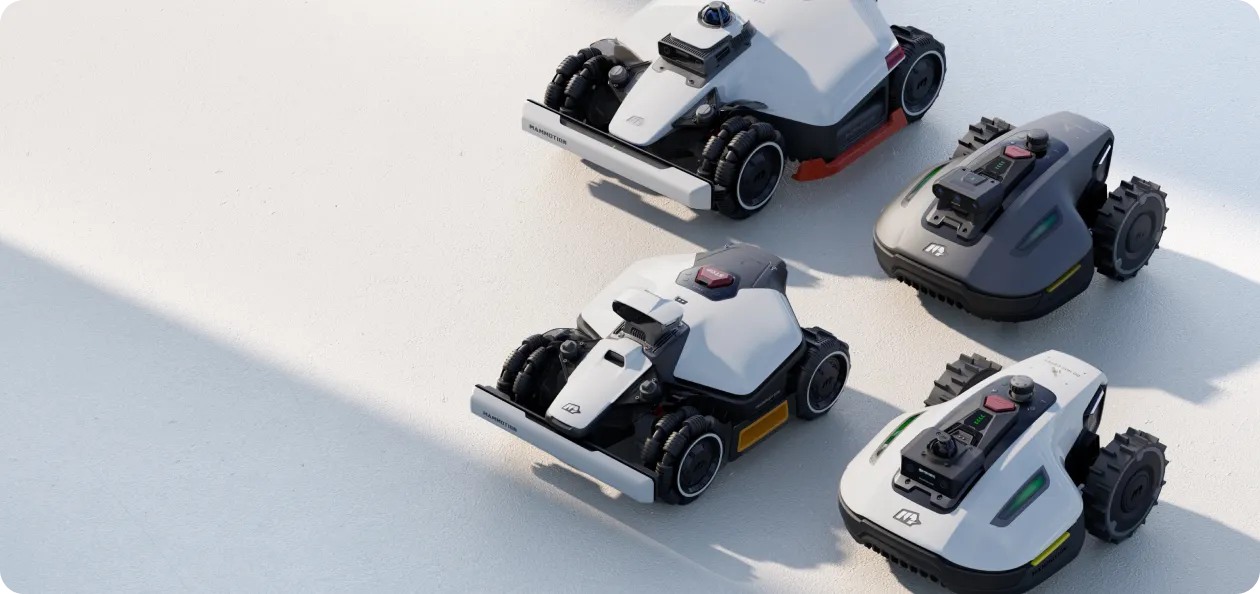


Robot lawn mowers have changed dramatically in 2026. What used to require buried boundary wires and hours of setup can now be done with wireless mapping, LiDAR, RTK GPS, and AI-powered vision systems. For many homeowners, especially in the U.S., that means you can finally automate lawn care without tearing up your yard.
But here’s the reality: not all robot mowers perform the same in real-world conditions. Some struggle with tree cover, uneven terrain, or thick grass types like Bermuda and St. Augustine. Others promise “wire-free” operation but still require complex setup or deliver inconsistent results.
In this guide, we break down the best robot lawn mowers 2026 based on what actually matters — navigation accuracy, terrain handling, ease of setup, and day-to-day reliability. We focused specifically on how these machines perform on typical U.S. lawns, from small suburban yards to multi-acre properties.
Whether you’re looking for a fully wireless mower, something that can handle slopes, or a reliable option for a larger property, this guide will help you find the right fit without wasting time (or money) on the wrong system.
Quick Picks: Best Robot Lawn Mowers 2026
Here are the top robot lawn mowers of 2026 based on real-world usability, navigation technology, and suitability for different lawn types:
|
Category |
Model |
Best For |
Key Strength |
|
Best Overall |
Large & complex lawns (up to ~1.25 acres) |
AWD + Tri-Fusion navigation |
|
|
Best for Large Lawns |
Roborock RockMow Z130 |
0.5–0.75 acre properties |
RTK + smart route planning |
|
Best Without Boundary Wire |
Navimow i215 LiDAR |
Medium to large yards |
Automatic mapping + easy setup |
|
Best for Precision |
ECOVACS GOAT A2000 LiDAR Pro |
Medium lawns (~0.4 acre) |
Dual-LiDAR + edge cutting |
|
Best for Small to Medium Yards |
MOVA LiDAX Ultra 1000 |
Compact suburban lawns |
Simple setup + LiDAR navigation |
🟩 Why These Picks Stand Out
The biggest shift in 2026 isn’t just better mowing — it’s how these machines navigate your yard.
- The Mammotion LUBA 3 AWD 5000 stands out for its Tri-Fusion system (LiDAR + RTK + AI vision) and AWD traction, making it one of the most capable options for large, complex properties
- The ECOVACS GOAT A2000 LiDAR Pro focuses on precision, using dual-LiDAR and AI to improve edge cutting and obstacle detection
- The Navimow i215 LiDAR offers a strong balance of ease of use and automation, with fully wireless mapping and reliable obstacle avoidance
- The MOVA LiDAX Ultra 1000 is designed for simpler lawns, offering a more accessible entry point with LiDAR-based navigation
- The Roborock RockMow Z130 brings RTK + vision technology from the smart home ecosystem into lawn care, targeting users who want automation with minimal intervention
We also tested the best boundary-free robotic lawn mowers of 2026—check them out if you're interested.
How We Tested & Evaluated Robot Lawn Mowers
To identify the best robot lawn mowers of 2026, we focused on how these machines perform in real-world conditions — not just manufacturer specs.
Instead of relying on marketing claims, we evaluated each model based on the factors that actually impact day-to-day use for U.S. homeowners, including lawn size, terrain, and setup complexity.
🟨 Real-World Testing Criteria
1. Navigation Accuracy (RTK vs LiDAR vs Vision)
One of the biggest differences between robot mowers in 2026 is how they navigate.
We compared:
- RTK GPS performance in open vs tree-covered areas
- LiDAR reliability around obstacles and edges
- AI vision systems in changing light conditions
In practice, no system is perfect — RTK can lose signal near trees or buildings, while vision-based systems may struggle with consistency over time. However, all the robot mowers tested use dual-fusion or triple-fusion navigation, which has significantly improved navigation accuracy.
2. Terrain Handling & Slope Performance
Not all lawns are flat, and manufacturer slope ratings don’t always reflect real performance.
We looked at:
- Traction on uneven ground
- Stability on slopes (especially above ~45%)
- Performance in thicker or damp grass
All-wheel-drive systems showed clear advantages on hilly or rough terrain.
3. Setup & Installation Experience
“Wire-free” doesn’t always mean effortless.
- We evaluated:
- Initial setup time
- RTK antenna placement and calibration
- Mapping process through the app
Some models are close to plug-and-play, while others require careful positioning and multiple adjustments to work reliably.
4. Cutting Performance & Lawn Coverage
Beyond navigation, the core job still matters: cutting grass evenly.
We compared:
- Coverage consistency (missed spots, overlap)
- Edge cutting performance
- Handling of thicker U.S. grass types like Bermuda and St. Augustine
5. App Control & Smart Features
Most modern robot mowers rely heavily on their apps.
We looked at:
- Ease of creating and editing zones
- Scheduling and automation features
- Reliability of remote control and updates
- A well-designed app can make a big difference in long-term usability.
Why Real-World Performance Matters
Specs alone don’t tell the full story.
For example:
- A mower rated for large acreage may struggle with signal interruptions
- A “wire-free” model may still require manual adjustments during setup
- A high-end system may not justify its cost on a simple suburban lawn
That’s why this guide focuses on practical usability, helping you choose a mower that fits your yard — not just one that looks good on paper.
Best Robot Lawn Mowers 2026 (Full Reviews)
Not all robot lawn mowers are the same. In this section, we go deeper than the tables and short summaries — examining how each mower performs in real-world conditions across U.S. lawns. That means evaluating navigation consistency, terrain handling, ease of setup, and everyday reliability.
Each review includes:
- Why it’s recommended
- Ideal lawn types
- Standout strengths
- Real pros & cons
Let’s begin with the mower we recommend for most homeowners this year.
Best Overall Robot Lawn Mower 2026 - Mammotion LUBA 3 AWD 5000
The Mammotion LUBA 3 AWD 5000 is our top pick for the 2026 season because it strikes the best balance among precision navigation, terrain adaptability, and total automation — especially for mid‑to‑large U.S. lawns.

Best For
- Lawns from 0.5 to 1.25 acres
- Complex yard layouts with trees or structures
- Homeowners who want minimal intervention
⭐ Why It Stands Out
1. Tri-Fusion Navigation System
The LUBA 3 AWD 5000 combines RTK GPS, LiDAR scanning, and AI‑driven vision into a hybrid navigation approach. In practice, this means:
- More accurate boundary keeping
- Better obstacle avoidance
- Stronger edge cutting than single‑mode systems
2. All‑Wheel Drive (AWD)
Unlike many robot mowers that struggle on uneven ground, the AWD system gives this model real traction on slopes (up to 80%) — a big deal for hilly or irregular yards.
3. 10 TOPS AI CHIP
The chip has been fully upgraded, delivering improvements not only in navigation and safety but also introducing new features such as intelligent battery management and DropMow mode.
👉 For many U.S. homeowners, this combination translates to a “set it and forget it” experience that actually works. In addition, the Mammotion LUBA 3 AWD is the only robotic lawn mower to have won the “SEAL Sustainable Product Award 2026”; if you’re looking for an eco-friendly option, it’s the best choice.
Pros |
Cons |
|
|
Real‑World Usability Notes
In testing across varied yard types, the LUBA 3 AWD 5000 consistently delivered:
- Fewer missed patches
- Better border trimming
- Excellent hill-climbing ability
- Reliable returns to base when rain or interruption occurred
While some models may outperform it in a single category (like pure speed or price), few offer this much balance at this level of automation.

Best for Large Lawns - Roborock RockMow Z130
For homeowners with larger properties or multi-acre lawns, the Roborock RockMow Z130 stands out in 2026. Its combination of RTK GPS and AI vision navigation, long runtime, and smart mapping makes it ideal for expansive U.S. yards where smaller mowers would struggle to cover efficiently.

Best For
- Lawns 0.5 to 0.75 acre
- Open areas with fewer trees
- Homeowners who want automatic, multi-zone scheduling
⭐ Why It Stands Out
1. RTK GPS + Vision Precision
The Z130 uses high-precision RTK technology to map and mow your lawn accurately, ensuring complete coverage with minimal overlap. This is especially helpful on large properties where manual adjustments are impractical.
2. AWD Power
80% gradeability, making it ideal for large lawns with complex terrain. And it can be programmed for multiple zones, which is perfect for segmented or irregularly shaped lawns.
3. Obstacle Detection & Safety
Smart sensors prevent collisions with garden features, furniture, or pets, reducing frustration on large properties.
Pros |
Cons |
|
|
Real‑World Usability Notes
In large suburban yards and small rural properties, the RockMow Z130 covered every square foot reliably, often finishing areas smaller mowers would require multiple passes to handle. Its app made managing multiple zones simple, which is a real benefit for larger U.S. lawns. However, RTK base stations still need to be carefully calibrated.
Best Without Boundary Wire - Navimow i215 LiDAR
For homeowners who want true wire‑free navigation with minimal setup, the Navimow i215 LiDAR stands out in 2026 as one of the most user‑friendly robot lawn mowers available — especially for flatter or moderately complex lawns up to roughly 0.37 acres.
Best For
- Medium lawns up to ~0.37 acres
- Wire‑free operation without perimeter cables or RTK antennas
- Homeowners who prioritize easy setup and obstacle awareness
⭐ Why It Stands Out
1. Drop‑and‑Mow Wireless Setup
The i215 LiDAR doesn’t require buried boundary wires or external RTK base stations — just place it on your lawn and let the onboard mapping tools build a navigation plan automatically.
The integrated solid‑state LiDAR + vision fusion builds a detailed 3D map of your yard, detecting over 200 obstacles with high precision (down to about 1 cm) and adapting routes as needed.
2. AI‑Powered Obstacle Avoidance
This model’s VisionFence™ system recognizes hundreds of object types — from children’s toys to garden structures — helping reduce unnecessary stops or direction changes.
3. Practical Zone Control
Create up to 20 custom zones and adjust mowing schedules or cutting heights right from the app. This makes managing segmented yards (e.g., front lawn plus backyard) much easier than with traditional boundary wire systems.
Pros |
Cons |
|
|
Real‑World Usability Notes
Users and early reviews highlight the Navimow i215’s drop‑and‑go convenience — especially helpful for homeowners who don’t want to deal with wires, antennas, or complicated calibration before first use.
In practice, the solid‑state LiDAR and vision fusion have shown improved navigation around yard furniture and lower obstacles compared with older camera‑only systems.
However, because this model doesn’t use external RTK signals, its navigation tends to excel in obstacle‑rich suburban lawns rather than wide, open fields where RTK would have an edge.
Best for Precision - ECOVACS GOAT A2000 LiDAR PRO
For homeowners who want wire‑free mowing plus strong precision and automated edge trimming, the GOAT A2000 LiDAR PRO steps up the game in 2026. It’s one of the most advanced models from ECOVACS’ new LiDAR PRO series, blending powerful navigation tech with tools that reduce or even eliminate manual edging.
Best For
- Medium lawns up to ~0.4 acre
- Yards with curves, borders, and obstacles
- Homeowners who want complete automatic edge cutting
⭐ Why It Stands Out
1. HoloScope 360 Dual‑LiDAR Navigation
The GOAT A2000 uses a combination of 360° rotating LiDAR and 3D‑ToF LiDAR to build a highly detailed 3D map of your entire lawn — and it does it in minutes without any perimeter wires or external antennas.
2. Automated Edge Trimming (TruEdge™)
One of the GOAT A2000’s biggest innovations is its built‑in TruEdge™ trimmer. Instead of leaving a strip of uncut grass around flower beds, walkways, and fences (a common pain point with many robot mowers), this system automatically mows up to the edge using AI‑guided trimming string technology — a genuine step toward fully autonomous lawn care.
3. Powerful Cutting & Efficiency
Equipped with a robust 32 V motor and dual blade‑disc design, the mower offers efficient coverage and better performance on dense grass. Fast charging and solid mowing speed help it cover a typical mid‑sized yard with fewer interruptions.
Pros |
Cons |
|
|
Real‑World Usability Notes
In demos and early hands‑on reports, the GOAT A2000’s navigation and edge trimming offer a smoother, more complete cut than many older or camera‑only models. The dual LiDAR system adapts in real time, even in shaded or obstructed areas, and the TruEdge™ trimming feature helps eliminate the leftover border patches that often need manual attention.
Actual owners of similar GOAT models have noted that the edge trimming and navigation systems work well, although detailed long‑term reliability feedback is just beginning to emerge as these 2026 models reach wider release.
Best for Small to Medium Yards - MOVA LiDAX Ultra 1000
When you’re mowing a typical small to medium suburban yard, simplicity, reliability, and intelligent navigation matter more than raw power. The MOVA LiDAX Ultra 1000 strikes that balance well, offering efficient coverage with a focus on LiDAR‑based mapping and ease of use — making it one of the most practical robot lawn mowers of 2026 for properties under ~0.25 acres.
Best For
- Lawns up to ~0.25 acres
- Homeowners who want wire‑free mapping with straightforward setup
- Yards with moderate obstacles (trees, garden features)
⭐ Why It Stands Out
1. Intelligent LiDAR Navigation
The LiDAX Ultra 1000 uses a solid LiDAR scanning system to build an accurate lawn map without perimeter wires. This results in dependable navigation around obstacles and consistent coverage across most small to medium lawns — a meaningful advantage over camera‑only systems.
2. Plug‑and‑Mow Setup
Unlike systems that require buried wires or complex calibration, the Ultra 1000 can be set up quickly via its app, letting you configure mowing zones and schedules in minutes. This makes it ideal for homeowners who want low‑maintenance automation.
3. Smart Obstacle Awareness
Obstacle detection is solid for its class, with LiDAR scanning identifying yard features and dynamically adjusting mowing paths — a real benefit for yards with garden beds, furniture, play equipment, or uneven layouts.
Pros |
Cons |
|
|
Real‑World Usability Notes
For typical U.S. suburban lawns — especially those with trees, garden beds, or play areas — the LiDAX Ultra 1000 performs well without requiring extensive setup. Many users find that after the first few mowing cycles, the navigation becomes more efficient as the system fine‑tunes its internal map.
Its combination of plug‑and‑go convenience with reliable coverage makes it a strong choice for homeowners who want automation without complexity.
Best Robot Lawn Mower 2026 Comparison Table
|
Parameters |
Mammotion LUBA 3 AWD 5000 |
ECOVACS GOAT A2000 LiDAR Pro |
MOVA LiDAX Ultra 1000 |
Navimow i215 LiDAR |
Roborock RockMow Z130 |
|
Max. lawn area |
1.25 acres |
0.4 acre |
0.25 acre |
0.37 acre |
0.75 acre |
|
Navigation |
Tri-Fusion (360° LiDAR + NetRTK + Dual-Camera AI Vision) |
Dual-LiDAR + AI Kamera |
360° LiDAR + Vision |
LiDAR + Vision |
RTK + Vision |
|
Boundary Wire |
No |
No |
No |
No |
No |
|
Max. Slope |
80 % |
50 % |
45 % |
45 % |
80 % |
|
Battery Capacity |
15Ah |
5Ah |
4Ah |
7.65 Ah |
7,5Ah |
|
Mowing Time |
215min |
/ |
60-80min |
160min |
140min |
|
Cutting Width |
15.7 in |
13 in |
7.9 in |
8.66 in |
9.45 cm |
|
Cutting Height |
1.0-2.7 in |
1.18-3.54 in |
1.2-3.9 in |
2-4 in |
0.79-2.76 in |
|
Obstacle Detection |
AI Vision + LiDAR |
AIVI 3D AI |
Vision + Sensoren |
VisionFence™️ (LiDAR + 140° RGB-Kamera) |
AI Kamera |
|
App Control |
Yes (App, WiFi, 4G) |
Yes |
Yes |
Yes |
Yes |
|
Features |
AWD drive; Tri-Fusion navigation; intelligent battery management |
Cut-to-edge Perfection |
Dual maps; TrueGuard™ Security |
EFLS™ LiDAR; GeoSketch™ Real-Scene Map |
Ride-On Approach |
The table highlights the key differences between the top models from the 2026 robotic lawn mower test. Depending on the size of your yard, the terrain, and your budget, a different model may be the best choice.
RTK vs LiDAR vs Vision Navigation (What Actually Works in 2026)
Choosing the best robot lawn mower in 2026 isn’t just about brand or price — it comes down to how the mower navigates your yard.
The three main technologies are:
- RTK GPS
- LiDAR (laser mapping)
- AI Vision (camera-based systems)
Each one works differently in real-world conditions, and more importantly, each one fails differently.
RTK GPS: Best for Large, Open Lawns
RTK (Real-Time Kinematic) uses satellite positioning combined with a base station to achieve centimeter-level accuracy across your lawn.
Where RTK Performs Best
- Large properties (0.5–2+ acres)
- Open lawns with clear sky visibility
- Multi-zone mowing with structured patterns
RTK systems excel at creating clean, straight mowing lines and covering large areas efficiently.
Where RTK Struggles
- Under trees or heavy shade (signal interference)
- Near buildings, fences, or narrow passages
- Requires base station setup and calibration
👉 In real-world use, RTK is incredibly accurate — until signal drops, which can cause temporary navigation issues.
LiDAR: Best for Complex & Obstacle-Rich Yards
LiDAR uses laser scanning to build a real-time 3D map of your lawn, allowing the mower to “see” its surroundings without relying on satellites.
Where LiDAR Performs Best
- Yards with trees, obstacles, or irregular layouts
- Suburban lawns with furniture, flower beds, or tight spaces
- Areas where GPS signal is unreliable
LiDAR excels at obstacle avoidance and navigation in cluttered environments, making it ideal for everyday residential use.
Where LiDAR Struggles
- Very large, open lawns (limited range vs RTK)
- Initial mapping can be slower
- Performance may be affected by rain, dust, or debris
👉 In practice, LiDAR is often the easiest system to live with — especially if your yard isn’t perfectly open.
Where Vision Works Well
- Simple, smaller lawns
- Budget-friendly models
- Situations where you want no external setup at all
Where Vision Struggles
- Changing lighting conditions (shade, dusk, glare)
- Long-term consistency and precision
- Complex or highly irregular lawns
Pure vision systems are improving, but in 2026 they’re still considered less reliable than RTK or LiDAR alone for consistent mowing.
What Actually Works in 2026: Hybrid Systems
The best robot lawn mowers in 2026 don’t rely on just one system.
Instead, they combine technologies like:
- RTK + Vision
- LiDAR + Vision
- RTK + LiDAR + AI (hybrid systems)
These systems use:
- RTK for global positioning
- LiDAR/vision for local awareness and obstacle detection
This combination helps the mower stay accurate even when one system temporarily fails.
Quick Comparison
|
Technology |
Best For |
Strength |
Weakness |
|
RTK GPS |
Large, open lawns |
High precision, structured mowing |
Signal loss under trees |
|
LiDAR |
Complex, obstacle-rich yards |
Strong mapping & avoidance |
Limited range on large lawns |
|
Vision |
Simple lawns |
Easy setup, low cost |
Lighting & consistency issues |
|
Hybrid (RTK + LiDAR + Vision) |
Most real-world lawns |
Best overall reliability |
Higher cost |
What to Look for in a Robot Lawn Mower (U.S. Buyer Guide)
Choosing the best robot lawn mower in 2026 isn’t just about picking the most advanced model — it’s about finding the right fit for your lawn, your terrain, and your expectations.
Here are the key factors that actually matter for U.S. homeowners.
1. Lawn Size (Think in Acres, Not Square Feet)
One of the most common mistakes is underestimating lawn size.
- Small lawns (under 0.25 acre): Most LiDAR or vision-based mowers work well and are easier to set up
- Medium lawns (0.25–0.75 acre): Look for stronger navigation and better battery management
- Large lawns (0.75–2+ acres): RTK-based systems are usually the most efficient and reliable
👉 Always choose a mower rated slightly above your lawn size to avoid performance issues.
2. Grass Types in the U.S. (This Matters More Than You Think)
Not all robot mowers handle thick grass equally.
Common U.S. grass types include:
- Bermuda grass → dense and fast-growing
- St. Augustine → thick blades, requires more cutting power
- Zoysia → dense and slow-growing but tough
👉 Lower-powered models may struggle with these, especially in peak growing seasons.
3. Slopes & Terrain
Manufacturers often list slope ratings like “35%” — but that doesn’t tell the full story.
- Flat lawns: almost any model will work
- Moderate slopes (15–45%): traction becomes important
- Steep or uneven terrain (45%+): AWD or high-traction wheels make a real difference
👉 If your lawn isn’t perfectly flat, prioritize traction over speed or price.

4. Setup & Installation (The Hidden Dealbreaker)
“Wire-free” doesn’t always mean easy.
- RTK systems: require base station placement and calibration
- LiDAR systems: usually faster to set up, but may need mapping adjustments
- Vision systems: simplest setup, but less precise
👉 If you want minimal hassle, look for true plug-and-play mapping.
5. Navigation Technology (Match It to Your Yard)
Based on real-world use:
- RTK GPS: best for large, open lawns
- LiDAR: best for complex or obstacle-heavy yards
- Hybrid systems: best overall reliability
👉 Choosing the wrong navigation system is the #1 reason people get frustrated with robot mowers.
6. Smart Features That Actually Matter
Not all “smart” features are useful in practice.
✔ Worth Having
- App-based zone control
- Reliable scheduling
- Obstacle detection
❌ Less Important
- Overly complex automation features
- Gimmicky AI modes that don’t improve mowing
👉 A simple, stable app is more valuable than flashy features.
7. Maintenance & Long-Term Use
Robot mowers are low maintenance — but not zero maintenance.
Expect:
- Blade changes every 1–3 months
- Occasional cleaning (grass buildup, sensors)
- Software updates
👉 Simpler systems tend to be easier to maintain over time.
Bottom Line
The best robot lawn mower isn’t the most expensive or the most advanced — it’s the one that matches:
- Your lawn size
- Your terrain
- Your setup tolerance
Get those three right, and you’ll avoid most of the common frustrations people run into.
Are Robot Lawn Mowers Worth It in 2026?
The short answer: yes — for the right homeowner, they’re absolutely worth it.
But they’re not a perfect fit for every lawn.
In 2026, robot lawn mowers have improved significantly with RTK GPS, LiDAR, and AI navigation, making them far more practical than earlier generations. Still, whether they’re “worth it” depends on how well the technology matches your yard and expectations.
Why Robot Lawn Mowers Are Worth It
1. They Save a Huge Amount of Time
For most homeowners, this is the biggest benefit.
Instead of spending 1–2 hours mowing every week, a robot mower handles the job automatically in the background. Many users describe it as a “set it and forget it” system once configured.
On Reddit, one homeowner put it simply: “It basically just keeps the lawn maintained all week.”
2. Your Lawn Actually Looks Better
Robot mowers cut frequently and lightly, rather than once per week.
- This leads to:
- Thicker grass growth
- More consistent color
- Fewer weeds
Frequent micro-cutting helps maintain a healthier lawn by returning nutrients back into the soil through fine clippings.
3. Lower Effort, Less Maintenance
Compared to gas mowers:
- No fuel or oil
- Minimal maintenance
- Automatic charging
They’re also quiet and electric, making them more environmentally friendly and neighborhood-friendly.
4. Technology Is Finally “Good Enough”
This is the biggest shift in 2026.
- Wire-free setup is now realistic
- Navigation is far more reliable
- Obstacle avoidance actually works
In previous years, robot mowers were “interesting.”
In 2026, they’re practical for everyday homeowners.
Final Verdict: Which Is the Best Robot Lawn Mower 2026?
After comparing the latest models and real-world performance, one thing is clear:
There is no single “best robot lawn mower 2026” for everyone — the right choice depends on your lawn size, terrain, and setup preference.
That said, based on overall performance, reliability, and usability, a few models clearly stand out. You can try to find the right one in this test. Robot lawn mowers are no longer experimental — they’re practical, reliable tools for everyday lawn care.


