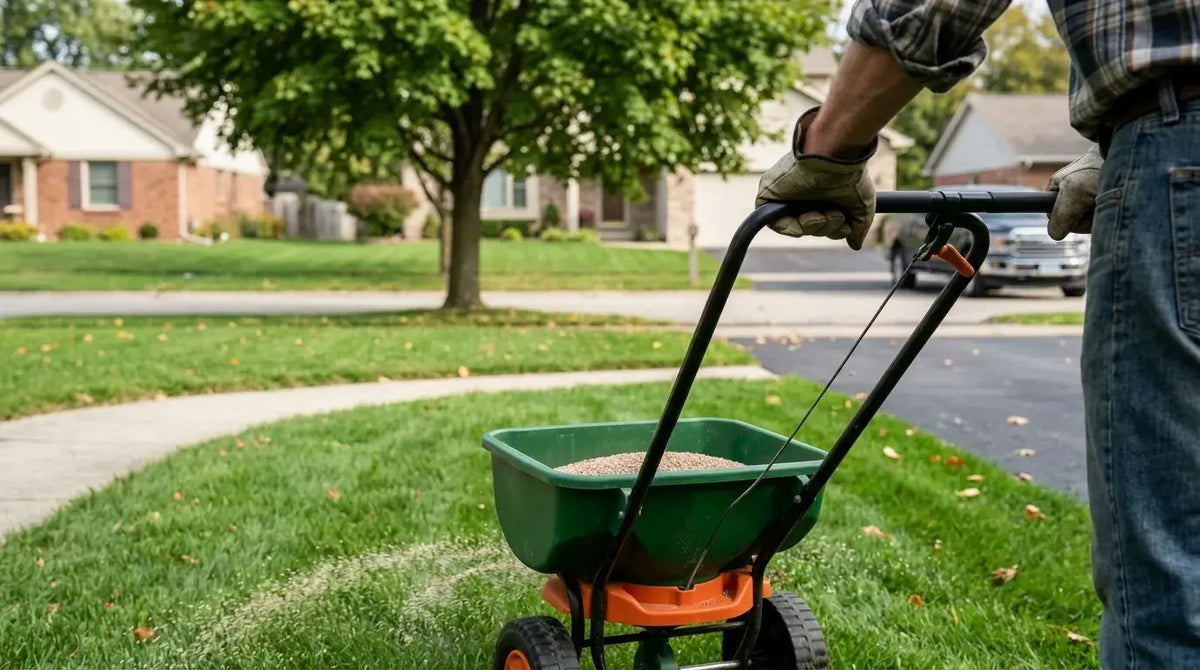


The best time to spray weed killer is when the product matches your target weed and the weather meets its application requirements. For many liquid post-emergent herbicides, this means treating actively growing weeds during suitable temperatures, with light winds and enough time before rain. Pre-emergent herbicides follow a different schedule because they are applied before the target weeds emerge.
Before spraying, check three things: what weed you want to control, whether your lawn and weather conditions are suitable, and what the product label requires. These checks can help you choose a better application window and reduce the risk of damaging desirable grass or nearby plants.
This guide explains the best time of day to spray weed killer, how rain and temperature affect application, which seasons are suitable for different weeds, and how to tell when it may be too late to treat them.
When Is the Best Time to Spray Weed Killer?
For many post-emergent weed killers, the best time to spray is when the target weeds are actively growing and the weather falls within the product's labeled application conditions. Mild temperatures, light winds, and a suitable rain-free period often help create favorable conditions, but the exact requirements vary by product.
The right timing depends on what you want to control:
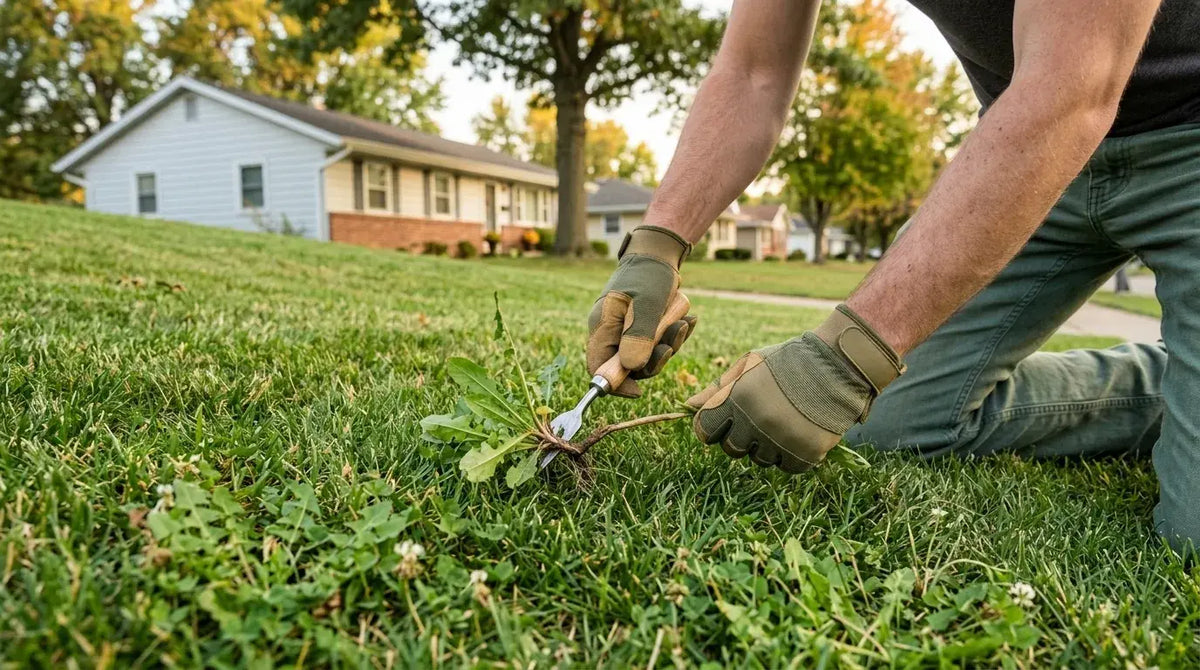
- Visible weeds, such as dandelions: Use a suitable post-emergent herbicide when the weeds are at a susceptible growth stage.
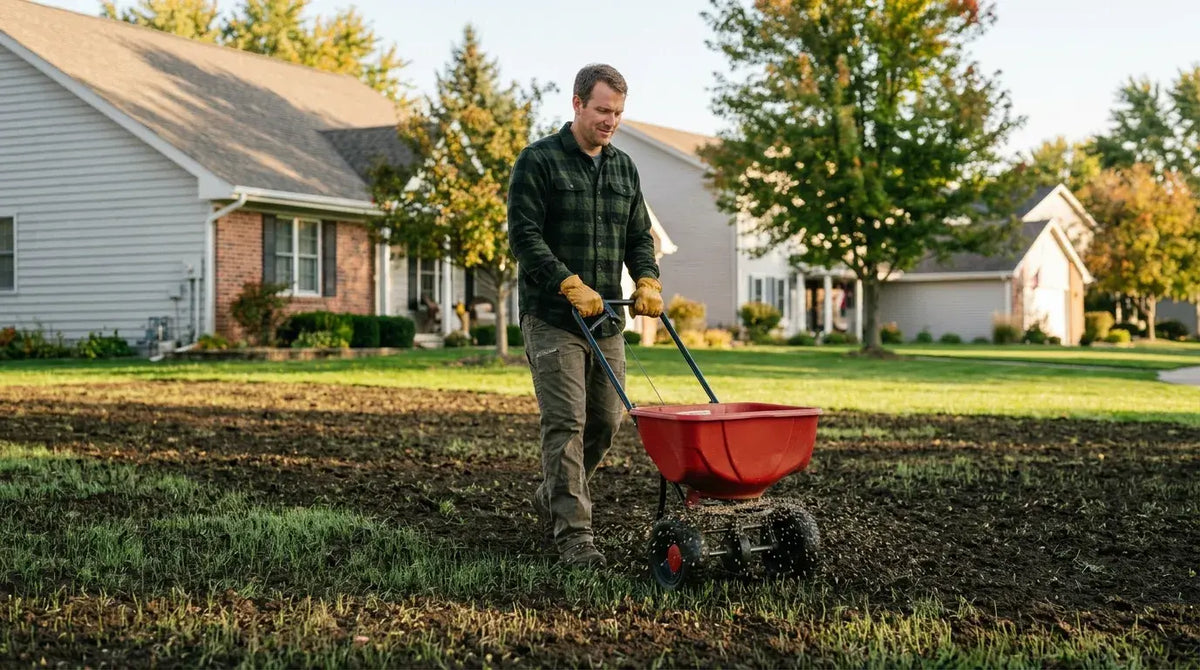
- Crabgrass that has not emerged: Consider an appropriate pre-emergent herbicide before germination, using local timing guidance and the product label.
- Weeds stressed by heat or drought: If the weeds are severely wilted, wait for suitable growing conditions when the product directions allow.
Before applying any herbicide, check its approved lawn types, temperature restrictions, wind precautions, rain-free interval, and watering instructions.
A simple way to choose the right application window is to:
- Identify the weed and determine whether it has already emerged.
- Select a product labeled for that weed and your lawn type.
- Check the weather and apply only when the conditions meet the product's requirements.
There is no single best day that works for every weed killer. Match the product to the weed, then choose a suitable application window.
What Is the Best Time of Day to Spray Weed Killer?
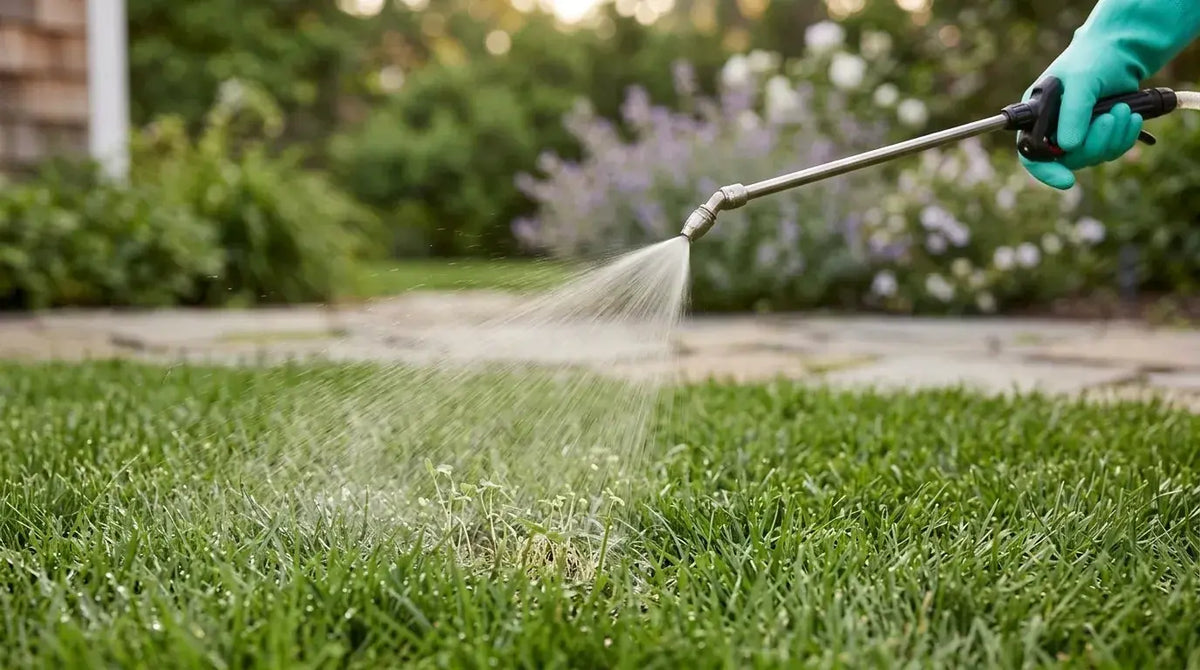
For many liquid post-emergent weed killers, midmorning after the dew has dried or a cooler part of the afternoon can be a good time to spray. The best window depends on temperature, wind, weed condition, and the product's application instructions.
|
Time of Day |
When It May Be Suitable |
What to Watch For |
|
Midmorning |
After dew has dried and before temperatures become too hot |
Wet foliage, wind, and temperature limits |
|
Afternoon |
When temperatures are moderate and winds are light |
Heat stress and drought-stressed weeds |
|
Early evening |
When conditions remain suitable for the product |
Changing winds, temperature inversions, and drying requirements |
|
Midday |
When temperatures and other conditions meet the product label |
Excessive heat, plant stress, and spray drift |
These are general guidelines, not a universal ranking. Always follow the weed killer's label, which may specify different conditions for application.
Is Morning the Best Time to Spray Weed Killer?
Midmorning can be a good option after the morning dew has dried and before temperatures rise too high. Many liquid herbicides applied directly to weed leaves need suitable foliage conditions for effective application.
If leaves are heavily covered in dew, wait until they dry when the product directions call for dry foliage. However, some granular broadleaf weed-and-feed products require moist leaves so the granules stick to the weeds. The correct moisture conditions therefore depend on the formulation.
Is It Better to Spray Weeds in the Afternoon or Evening?
Afternoon can work well when temperatures are moderate, weeds are not severely stressed, and winds are light. On particularly hot days, waiting for cooler conditions may be preferable.
Early evening can also be suitable, but it is not automatically the best time. Avoid spraying when changing winds or a temperature inversion could increase the risk of spray drift. Also consider the product's rain-free requirements and any other restrictions that apply after application.
Should You Spray Weed Killer in the Middle of the Day?
Midday spraying is not always wrong, but excessive heat can make some applications less suitable and increase the risk of injury to desirable plants.
Temperature restrictions vary by product. For example, Iowa State University Extension advises avoiding applications of the broadleaf herbicides covered in its guidance when temperatures above 85°F are forecast within 24 hours. This is specific guidance for the products discussed by the extension service, not a universal cutoff for every weed killer.
If conditions fall outside the product's permitted range, wait for a more suitable window.
Is It Better to Spray Weeds Before or After Rain?
For many liquid post-emergent weed killers, it is best to spray when you have enough time before the next rainfall for the product to be absorbed. Rain too soon after application may wash herbicide off weed leaves and reduce control. Some pre-emergent herbicides, however, need rainfall or irrigation to activate.
|
Weather Situation |
What Should You Do? |
Why It Matters |
|
Rain is forecast soon |
Delay spraying if the product requires a rain-free period |
Rain may wash liquid herbicide off weed leaves before sufficient absorption |
|
You have just sprayed and rain is approaching |
Check the label for rainfastness and required rain-free time |
The impact depends on the product and how long it has had to dry or be absorbed |
|
Rain has stopped |
Wait until foliage is dry if required, and check that weeds are suitable for treatment |
Wet leaves, saturated ground, or stressed weeds may affect application suitability |
|
You are applying a pre-emergent herbicide |
Follow the product's watering or activation instructions |
Some products need rainfall or irrigation to work properly |
How Long Should Weed Killer Have to Dry Before Rain?
There is no single rain-free interval for all weed killers. Some products become rainfast relatively quickly, while others need a longer period without rain. Drying and absorption are not necessarily the same thing.
For example, Iowa State University Extension recommends that no rain be forecast for 24 hours when applying the broadleaf herbicides covered in its lawn-care guidance. This recommendation should not be applied to every herbicide.
Check the product label for its specific rainfastness instructions. If unexpected rain occurs, do not automatically apply another dose; first check the label for guidance on rain shortly after treatment and restrictions on repeat applications.
Can You Spray Weed Killer After It Rains?
Often, yes. For liquid herbicides applied to weed foliage, wait until the leaves have dried if required by the product directions. Also check whether the weeds are in a suitable growth stage and whether the forecast allows the next application to meet its rain-free requirements.
If the weeds are severely wilted after a prolonged dry period, they may not respond well to some herbicides until they recover.
Pre-emergent products follow different rules: some need rainfall or irrigation after application. Follow the specified watering instructions rather than treating all herbicides alike.
The bottom line: For liquid products that target visible weeds, allow the required rain-free period. After rainfall, spray only when conditions meet the product's requirements.

What Is the Best Season to Apply Weed Killer to Your Lawn?
The best season depends on the target weed and whether you are preventing weeds from emerging or treating existing growth. Spring is often important for preventing summer annual weeds, while fall can be an effective time to treat certain perennial broadleaf weeds. Summer and winter applications depend more heavily on local conditions and weed growth.
|
Season |
What It May Be Best For |
What to Consider |
|
Spring |
Preventing susceptible weeds before germination and treating suitable emerging weeds |
Time pre-emergent applications around local germination conditions |
|
Summer |
Treating visible weeds when conditions are suitable |
Heat and drought stress may limit application |
|
Fall |
Treating certain actively growing perennial broadleaf weeds |
Avoid waiting until weeds become dormant |
|
Winter |
Limited treatment opportunities for dormant weeds |
Some weeds may remain treatable in mild climates |
When Should You Apply Weed Killer in Spring?
Spring is an important window for both pre-emergent and post-emergent herbicides, but the timing depends on the target weed.
For pre-emergent products, apply before susceptible weeds germinate. Crabgrass prevention, for example, is often timed using local soil conditions rather than a fixed calendar date. University of Minnesota Extension uses soil temperatures around 55°F as a regional cue for crabgrass germination and pre-emergent timing. This is a regional example, not a universal threshold for every location or product.
For post-emergent products, treat existing weeds when they are at a susceptible growth stage and weather conditions meet the label requirements.
Is Summer a Good Time to Spray Weed Killer?
Summer can be suitable if weeds are appropriate for treatment and the weather meets the product's requirements. Excessive heat and drought stress can make some applications less effective or increase the risk of injury to desirable plants.
Check temperature restrictions and assess the weeds before spraying. If they are severely wilted, waiting until they recover may be preferable when the product directions allow.
Why Fall Can Be a Good Time to Control Certain Weeds
Fall can be an effective time to treat certain perennial broadleaf weeds, including dandelions, while they are still actively growing. Some perennial weeds move resources toward their roots as the season changes, making fall treatment a useful strategy with appropriate herbicides.
However, fall is not automatically best for every weed. Treatment may become less effective as weeds stop growing or enter dormancy. Local climate, weed species, and product instructions should guide the decision.
Should You Spray Weed Killer in Winter?
Winter is generally less suitable for treating weeds that are dormant, frost-damaged, or barely growing. Many post-emergent herbicides rely on active plant growth for effective uptake and movement within the weed.
Conditions vary across the United States, though. In mild climates, some weeds may continue growing and remain treatable if the product label permits application.
For pre-emergent products, follow the recommended timing for the target weed's germination period instead of assuming that winter is always too early or too late.
The bottom line: Use seasonal timing as a guide, not a fixed calendar. Consider spring for preventing certain weeds, fall for treating some perennial weeds, and summer or winter treatment only when the target weeds and application conditions are suitable.
When Is It Too Late to Spray for Weeds?
It may be too late to get good results from many post-emergent weed killers when target weeds have stopped growing, become dormant, or suffered severe cold or drought damage. However, flowering, frost, and the time of year do not automatically mean you have missed your chance.
Is It Too Late to Spray Weeds After They Flower?
No. Flowering does not automatically mean it is too late to spray weeds. Some weeds remain susceptible to post-emergent herbicides after flowering begins, provided they are still growing and the product is appropriate for that stage.
The greater concern is whether the weed has already produced mature seeds. Spraying may kill or suppress the plant, but it may not prevent mature seeds from spreading or germinating later. Removing seed heads before seeds disperse can help reduce future weeds.
Is It Too Late to Spray After Frost or During Dormancy?
Not necessarily after a light frost, but treatment may become less effective when weeds stop actively growing. Frost damage and dormancy can reduce the suitability of some post-emergent herbicides.
Before spraying, assess the weeds:
- Still green and growing: Treatment may be possible if the product and weather conditions permit it.
- Frost-damaged or severely wilted: Wait for recovery when appropriate and permitted by the label.
- Dormant or no longer growing: Consider waiting for a more suitable treatment window.
A warmer afternoon does not automatically make dormant weeds suitable for treatment.
Is It Too Late to Apply Pre-Emergent Weed Killer?
It depends on whether the target weeds have already germinated. Pre-emergent herbicides are generally intended to prevent susceptible weeds from establishing, so they may not control weeds that have already emerged.
For example, if crabgrass is already growing, a typical crabgrass pre-emergent application may be too late to control those plants. A product specifically labeled for post-emergent crabgrass control may be an alternative, provided it is suitable for your lawn.
How Weather and Temperature Affect Weed Killer Performance
Weather influences both herbicide performance and application safety. Temperature, wind, and the condition of the target weeds are especially important.
- Temperature: High temperatures can make some applications less suitable and increase the risk of injury to desirable plants. Low temperatures may slow weed growth and reduce the effectiveness of some post-emergent herbicides. Follow the product's temperature restrictions rather than relying on a universal temperature range.
- Wind: Strong or gusty winds can carry spray droplets away from the target and onto flowers, shrubs, vegetables, or neighboring lawns. Avoid spraying when wind conditions make drift difficult to control, and follow the label's wind precautions.
- Humidity and droplet drying: Hot, dry conditions can cause small droplets to evaporate more quickly, potentially reducing the amount of spray reaching the target. Humidity alone, however, does not determine whether conditions are suitable.
- Temperature inversions: During an inversion, cooler air is trapped near the ground beneath warmer air. Under some inversion conditions, fine spray droplets can remain suspended and move away from the target. Follow label warnings and avoid spraying when inversion conditions create unacceptable drift risk.
- Drought stress: Severely wilted weeds may absorb some herbicides less effectively. If the product directions allow, waiting until the weeds recover may improve the suitability of treatment.
Before spraying, check the current weather and forecast, assess the target weeds, and confirm that all conditions fall within the product's instructions.
When to Apply Different Types of Weed Killer to Your Lawn
The best application time depends on the type of herbicide, the target weed, and the grass growing in your lawn. First determine whether you need to prevent weeds from emerging or control existing weeds. Then confirm that the product is suitable for your grass.
|
Herbicide Type |
Main Purpose |
When to Apply |
Important Consideration |
|
Pre-emergent |
Prevents susceptible weeds from establishing |
Before target weeds germinate |
May interfere with lawn seeding or overseeding |
|
Post-emergent |
Controls weeds that have already emerged |
At a susceptible growth stage under suitable conditions |
Many products work best on actively growing weeds |
|
Selective |
Targets certain weeds while allowing specified grasses to tolerate the treatment when used correctly |
When both the weed and grass type are covered by the label |
Not every selective herbicide is safe for every grass species |
|
Non-selective |
Controls a broad range of plants it contacts, depending on the active ingredient |
Only in labeled areas where the treatment is appropriate |
Contact with desirable grass may cause damage |
These are two separate classification systems: pre-emergent and post-emergent describe the stage of weed control, while selective and non-selective describe the range of plants a product can affect.
Pre-Emergent vs. Post-Emergent Weed Killers
Choose a pre-emergent herbicide when your goal is to prevent susceptible weeds from emerging. Choose a post-emergent herbicide when you need to control weeds that are already growing.
Pre-emergent timing depends on the target weed's germination period, local conditions, and product instructions. Some products also require rainfall or irrigation after application.
Post-emergent products target existing weeds. The ideal growth stage varies by weed species and herbicide, so confirm that the product is labeled for your target weed.
Choosing the Right Weed Killer for Your Lawn Type
A product that is safe for one lawn grass may injure another. Identify your grass type—for example, Kentucky bluegrass, tall fescue, Bermudagrass, or St. Augustinegrass—and confirm that the herbicide is approved for that grass and intended use.
This is especially important for selective herbicides. Non-selective products require particular care because they can damage desirable grass and other plants they contact.
If you plan to seed or overseed, check the label before applying a pre-emergent herbicide. Some products interfere with grass seed germination or establishment, and product-specific waiting periods may apply.
Before application, confirm that the product:
- Lists the target weed for control.
- Is approved for your lawn grass and intended use.
- Permits application under your current conditions.
- Provides clear instructions for seeding, watering, mowing, and repeat applications.
Identify the weed, determine whether it has already emerged, and verify that the herbicide is suitable for your lawn grass. Correct product selection comes before choosing the application date.
Looking for the best weed killer for your lawn, see our guide “Best Weed Killer for Lawns: Top Picks for Different Weeds and Grass Types”.
Common Weed Killer Timing Mistakes to Avoid
Even if you choose the right weed killer, poor timing can reduce its effectiveness or increase the risk of lawn damage. Before spraying, check these common mistakes.
1. Spraying Without Checking the Weather
A convenient time is not always a suitable time to spray. Excessive heat, strong or gusty winds, and an approaching rainstorm can make some applications less effective or increase the risk of spray drift.
What to do instead: Check the forecast and the product label before applying. Confirm the temperature limits, wind precautions, and required rain-free interval for your specific herbicide.
2. Treating Weeds When They Are Stressed or Dormant
Many post-emergent herbicides work best when target weeds are actively growing. Weeds that are severely wilted from drought, damaged by frost, or dormant may respond poorly to some treatments.
What to do instead: Check the condition of the weeds, not just their appearance. If they are severely stressed, wait for suitable growing conditions when the product directions allow.
3. Using the Wrong Type of Weed Killer
A pre-emergent herbicide generally prevents susceptible weeds from establishing, while a post-emergent herbicide targets weeds that have already emerged. A product that controls one weed may not control another, and some products can injure certain lawn grasses.
What to do instead: Identify the weed, confirm your grass type, and choose a product labeled for both the target weed and the intended lawn use.
4. Ignoring Rainfall and Watering Instructions
Rain shortly after applying some liquid post-emergent herbicides may reduce control. On the other hand, certain pre-emergent products need rainfall or irrigation for activation.
What to do instead: Follow the product's rain-free interval and watering instructions. If unexpected rain occurs, check the label before deciding whether another application is necessary.
5. Mowing Too Close to Application
Mowing can remove weed foliage that a foliar herbicide needs to contact. Depending on the product, mowing immediately before or after treatment may reduce effectiveness or conflict with the application instructions.
What to do instead: Check the label for mowing restrictions. Some products specify how long to wait before and after application, so do not rely on one universal waiting period.
6. Applying More Herbicide to Make Up for Poor Timing
Using a higher rate or repeating an application too soon does not necessarily improve weed control. It may damage the lawn, increase exposure, or violate the product directions.
What to do instead: Apply only the labeled rate and follow the specified interval before retreatment. If the first application appears ineffective, check whether the weed was correctly identified, whether conditions were suitable, and whether the product is labeled for that weed.
Frequently Asked Questions
1. How Long After Spraying Weed Killer Can It Rain?
The required rain-free interval depends on the product. Some herbicides need more time without rain than others, so check the label for its rainfastness instructions rather than assuming that a fixed number of hours applies to every product.
2. How Long Does Weed Killer Take to Work?
The time needed to see results varies by product, weed species, growth stage, and weather. Some weeds may begin showing symptoms within a few days, while others take longer. Follow the product directions and avoid applying another dose earlier than the label allows.
3. How Long Should Pets and Children Stay Off the Lawn After Spraying Weed Killer?
There is no single waiting period for every weed killer. Follow the product label's re-entry instructions, including any requirements about keeping people and pets away until the treated area has dried. If the label specifies a longer interval or additional precautions, follow those directions.
4. Should I Mow Before or After Applying Weed Killer?
It depends on the product. Mowing too close to application can remove foliage that a foliar herbicide needs to contact. Check the label for instructions on how long to wait before and after treatment, and avoid assuming that one mowing schedule applies to every herbicide.
Did you like this article? Add us as a preferred source to find us more easily on Google.