



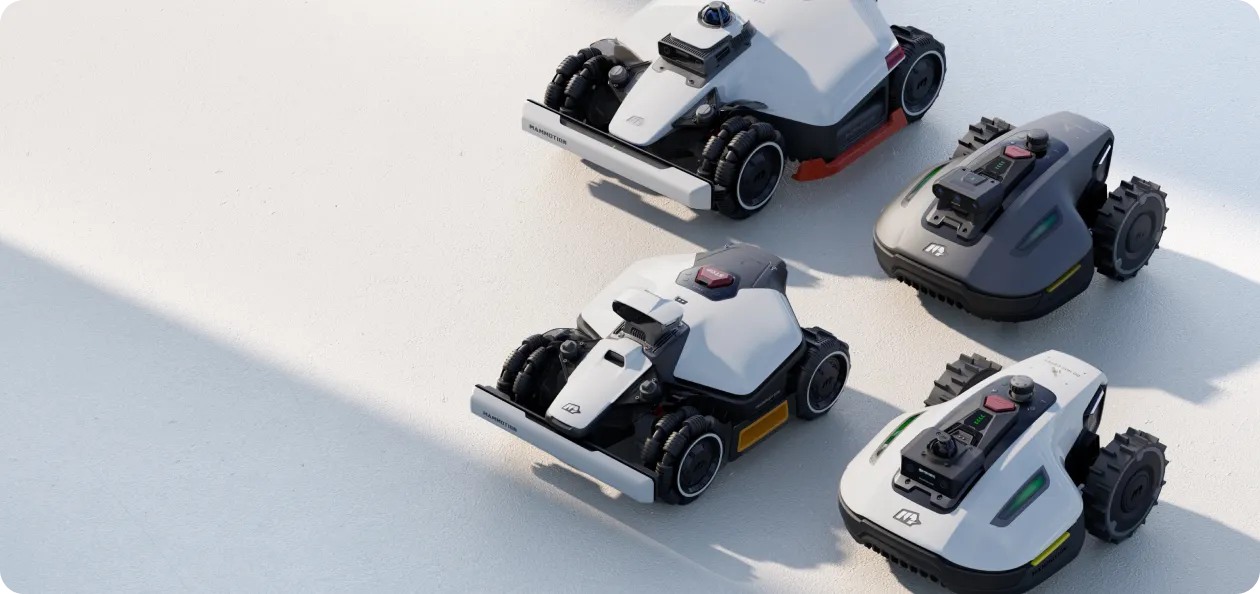
Robot lawn mowers have been around for decades, but for many homeowners, they remained more frustrating than convenient. Machines would get stuck in the same spots, miss patches of grass along fences, or demand constant remapping and supervision. The difference today isn’t bigger blades or longer battery life—it’s artificial intelligence.
AI-powered robot lawn mowers don’t just move in random patterns; they learn the layout of your lawn, recognize obstacles, and adapt their mowing patterns over time. For homeowners tired of babysitting their machines or manually fixing missed areas, AI offers a practical solution.
In this article, we’ll explore how AI works in robot lawn mowers, the real-world benefits it provides, and the limitations you need to know before upgrading to an AI-powered mower.
What “AI” Means in a Robot Lawn Mower
When most homeowners hear “AI” in a robotic lawn mower, they imagine a futuristic machine that thinks like a human. In reality, AI in this context is much more practical—and much more useful. It refers to onboard software and sensors that allow the mower to perceive its environment, learn from it, and make real-time decisions without constant human intervention.
At its core, AI enables the mower to recognize obstacles such as trees, garden beds, toys, and even pets. It can learn the shape and size of your lawn, gradually optimizing its mowing patterns to cover every area efficiently. Some AI systems also adjust mowing schedules based on grass growth, weather, or shade, ensuring your lawn stays healthy without unnecessary passes.
Modern AI robotic mowers operate through a combination of edge AI—decisions made directly on the device for immediate responsiveness—and, in some cases, cloud AI, which improves navigation and mapping over time via software updates or data analysis. This combination ensures the mower is both reactive and adaptive, making lawn care more hands-off than ever before.
How AI Actually Improves Robot Mowers' Mowing Performance
Artificial intelligence in robotic lawn mowers isn’t just a marketing buzzword—it fundamentally changes how these machines care for your lawn. For homeowners, the improvements are immediately noticeable, especially when compared to older, non-AI models that often left gaps, collided with obstacles, or required constant supervision.
1. Smarter navigation and coverage
One of the biggest frustrations with traditional robotic mowers is the random mowing pattern. They move in straight lines or simple back-and-forth routes without really “understanding” the lawn. AI-powered mowers learn the layout of your yard, gradually optimizing routes to cover every section efficiently.

2. Obstacle detection and avoidance
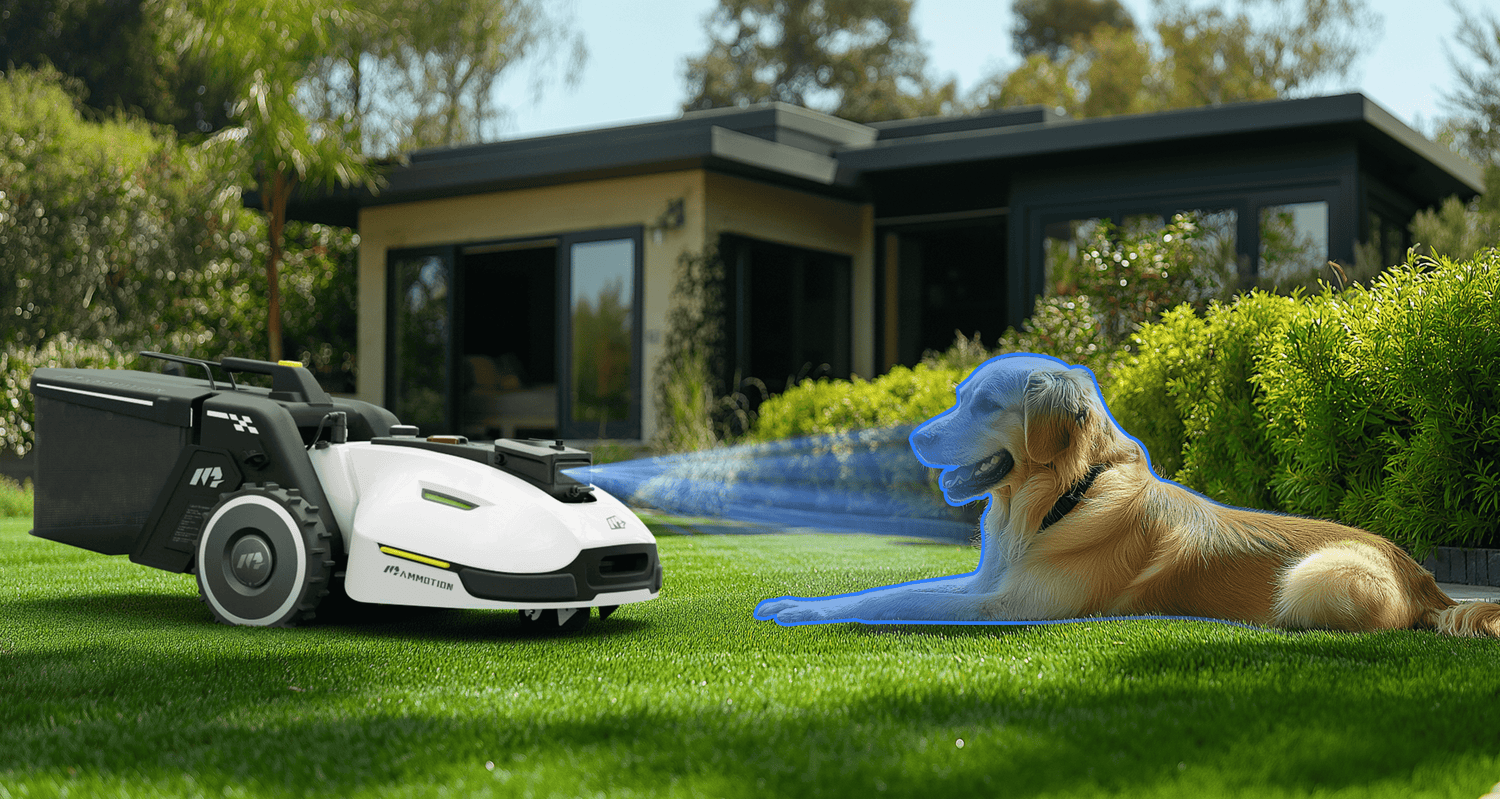
AI allows mowers to identify and react to obstacles like trees, garden beds, children’s toys, and even pets. Over time, the mower remembers where these obstacles are typically located, reducing repeated collisions. Some advanced models use vision-based AI to distinguish between permanent structures and temporary objects, allowing the mower to navigate around items like a ball left on the lawn without user intervention.
3. Adaptive mowing schedules
Beyond physical navigation, AI can adjust mowing frequency and patterns based on real-time conditions. AI can adjust frequency and routes based on grass growth, shade, or weather conditions. Your lawn stays healthy, and the mower avoids unnecessary passes.
4. Slope and terrain management
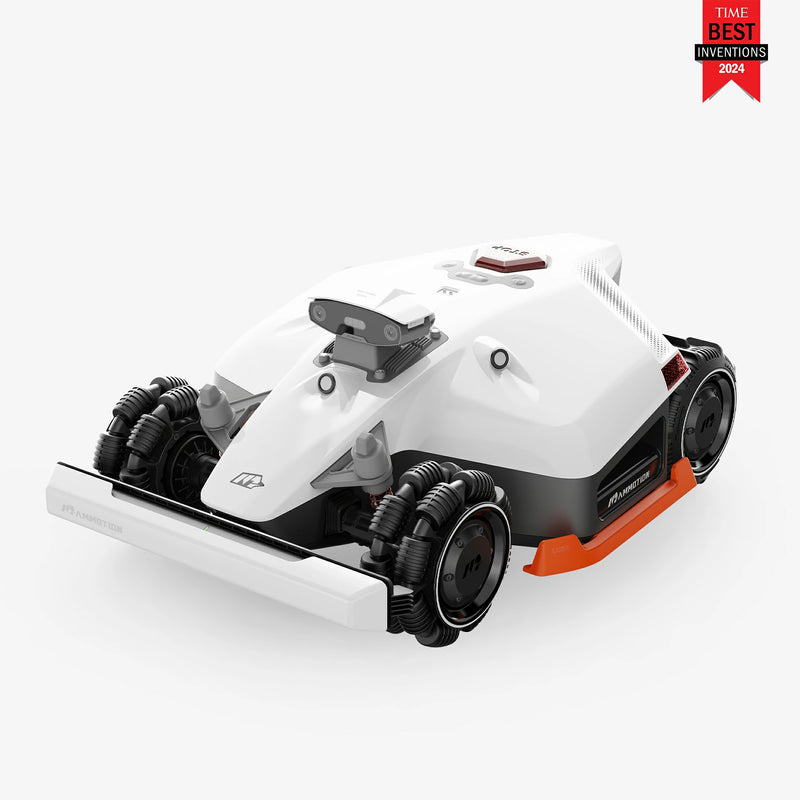
Uneven lawns and sloped areas pose a challenge for traditional mowers. AI enables the mower to detect inclines, adjust speed, and regulate traction, preventing wheel spin and minimizing stress on grass blades. Specifically, an AWD robot mower not only protects the lawn but also reduces the risk of the mower getting stuck or tipping.
5. Learning over time
Perhaps the most important benefit is the machine’s ability to improve over repeated mowing cycles. Unlike fixed-pattern mowers, AI-powered models continuously refine their approach, learning which areas need extra attention, avoiding previously encountered obstacles, and completing mowing cycles faster and more efficiently.
In practical terms, AI transforms a robotic mower from a machine that simply moves on the lawn to a true, autonomous lawn-care assistant. Homeowners spend less time fixing mistakes, monitoring the mower, or manually trimming edges, and more time enjoying a consistently healthy, well-groomed lawn.
Types of AI Used in Today’s Robot Lawn Mowers
Not all AI is the same, and understanding the types of artificial intelligence in robotic mowers helps homeowners make informed decisions. Modern mowers combine several AI systems to navigate, learn, and adapt efficiently.
1. Vision-Based AI
Many AI robot lawn mowers use cameras or optical sensors to “see” their environment, like Mammotion robot mowers. Vision-based AI allows the mower to detect obstacles such as trees, garden beds, toys, and pets in real time. This technology is especially useful in cluttered yards or suburban lawns where obstacles frequently change.
2. RTK + AI Mapping
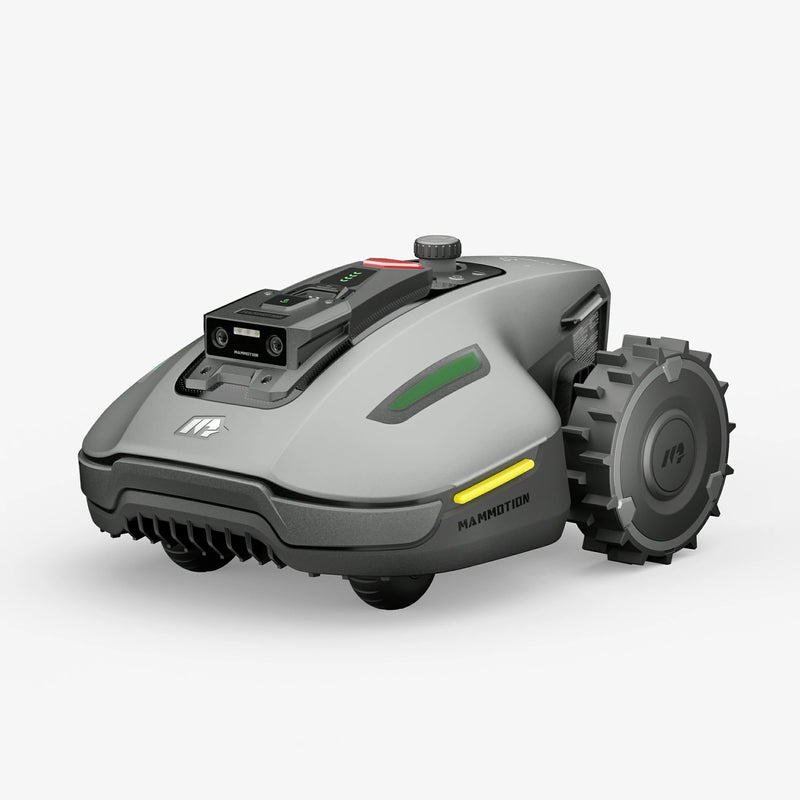
Real-Time Kinematic (RTK) GPS technology, combined with AI, allows mowers to map the lawn with centimeter-level accuracy. AI interprets this mapping data to plan optimized mowing routes, remember lawn boundaries, and avoid problem areas. For example, the Mammotion YUKA mini Vision robot lawn mower only needs to be guided from its charging station. It will automatically explore, learn, and build detailed maps of up to three zones while memorizing transition paths between areas, achieving full-coverage cleaning.
3. Behavioral Learning AI
Some robotic mowers go a step further by using behavioral learning algorithms. This AI analyzes past mowing cycles to recognize patterns such as choke points, steep slopes, or dense patches of grass. The mower then adjusts its behavior over time, slowing down where the grass is thick, taking alternate routes to avoid repeated obstruction, and improving overall efficiency.
4. Adaptive Scheduling AI
This type of AI manages the mower’s timing and frequency. By monitoring grass growth, sunlight, shade, and even weather conditions, the mower can automatically decide when and how often to mow each section of the lawn. This ensures optimal lawn health while saving energy and extending battery life.
By combining these AI types, robotic lawn mowers move beyond simple automation. They think, learn, and adapt to the unique characteristics of each yard, making them more reliable, efficient, and convenient for homeowners who want a consistently well-maintained lawn without constant oversight.
Where AI Still Struggles in Robotic Mowers
While AI has dramatically improved robotic lawn mowers, it’s not perfect. Understanding its limitations helps homeowners set realistic expectations and avoid frustration.
Low light and glare: Many AI systems rely on cameras or optical sensors, which can struggle in dim light, direct sunlight, or glare. However, you can opt for either the Dual-Sensor Fusion System (RTK + Vision / LiDAR + Vision) or Mammotion's newly introduced Tri-Sensor Fusion System (LiDAR+RTK+Vision with automatic switching). This approach compensates for the limitations inherent in relying solely on AI Vision.
Dense tree coverage and complex landscapes: Yards with heavy tree canopies, shrubs, or irregular terrain can interfere with GPS signals or sensor readings. Even advanced AI may take longer to map these areas accurately or may require occasional human intervention to avoid missed spots.
Temporary or soft obstacles: While AI can often distinguish between permanent and temporary obstacles, smaller or soft objects like hoses, toys, or pets can still confuse the mower. Some AI systems will stop or reroute unnecessarily, requiring occasional oversight.
Setup and boundary limitations: Despite learning capabilities, AI mowers still need initial setup and boundary calibration. Incorrect placement of virtual boundaries, perimeter wires (if used), or zones can affect performance, especially in irregularly shaped yards.
Maintenance and software updates: Like any technology, AI requires proper maintenance. Sensors, cameras, and wheels need cleaning, and software updates may be necessary to maintain optimal functionality.
In short, AI improves efficiency and adaptability, but it doesn’t eliminate all challenges. Homeowners should view AI as a tool that reduces effort rather than a completely hands-off solution. Recognizing these limitations ensures realistic expectations and a smoother, more satisfying lawn care experience.
Is an AI-powered Mower Worth It for Homeowners?
Deciding whether to invest in an AI-powered robotic lawn mower depends largely on your yard’s size, layout, and maintenance expectations. While AI adds convenience and efficiency, it also comes with a higher upfront cost compared to traditional robotic mowers.
Small, flat lawns: For compact lawns with minimal obstacles, the benefits of AI are less pronounced. AI can still optimize mowing patterns and reduce human oversight, but the cost-to-benefit ratio may be lower. But it can save your time and efforts, that's enough.
Large or irregular lawns: AI truly shines in larger yards or lawns with complex layouts. Homeowners with trees, flower beds, slopes, or irregular boundaries will notice fewer missed areas, more efficient mowing cycles, and less time spent supervising the mower. The ability to learn the yard over time ensures more consistent results.
Pet and child households: AI excels at obstacle detection, which reduces the risk of collisions with toys, pets, or garden features. This adaptability makes AI mowers safer and less stressful for families who can’t monitor the mower constantly.
Busy homeowners: If you have limited time for lawn care, AI offers a significant convenience advantage. It reduces manual intervention, remembers obstacles, and adapts to changes in growth and weather patterns.
Cost consideration: While AI mowers typically cost more than their basic counterparts, the time saved, improved coverage, and reduced lawn stress often justify the investment for homeowners who prioritize a well-maintained lawn with minimal effort.

In short, AI is worth it for larger, complex, or obstacle-heavy lawns, or for homeowners seeking a hands-off, efficient mowing experience. For smaller or simple lawns, traditional mowers may still suffice, though AI adds convenience and adaptability that can enhance overall lawn care.
The Future of AI in Robotic Lawn Care
Artificial intelligence in robotic lawn mowers has already transformed how homeowners maintain their lawns, but the technology continues to evolve. The next generation of AI mowers promises to be even smarter, more efficient, and more adaptable to real-world conditions.
Seasonal and environmental adaptation: AI will increasingly account for seasonal changes, adjusting mowing patterns based on growth rates, soil conditions, and weather. Mowers may optimize routes differently during spring growth compared to late summer, ensuring healthier lawns year-round.
AI-assisted installation and mapping: Setting up a robotic mower can still be challenging for irregular or obstacle-heavy lawns. Next-generation AI will simplify installation through smartphone-assisted mapping, 3D scanning, and automatic boundary recognition, reducing setup time and human error.
Integration with other smart yard devices: AI mowers are likely to become part of broader smart yard ecosystems, working alongside sprinklers, irrigation systems, and other garden robots. Coordinated schedules and data sharing could optimize lawn health and energy efficiency.
Continuous learning and updates: Cloud-connected AI systems will allow mowers to improve over time, receiving software updates and learning from aggregated data to enhance navigation, coverage, and obstacle handling.
While AI will not make mowers completely autonomous in all situations, these advancements will continue to reduce supervision, increase efficiency, and make robotic mowing more reliable. For homeowners, the future points toward lawn care that is smarter, easier, and more adaptive than ever before.
Final Thoughts
AI has transformed robotic lawn mowers from simple automated machines into intelligent, adaptive lawn-care assistants. By learning your yard’s layout, recognizing obstacles, and adjusting mowing patterns and schedules, AI reduces the time and effort homeowners spend maintaining their lawns. While it isn’t perfect—struggling in low light, dense foliage, or with temporary obstacles—its benefits for larger, complex, or obstacle-heavy lawns are clear.
For homeowners with busy schedules, pets, children, or irregular yard layouts, AI-powered mowers provide consistent results, improved coverage, and a hands-off mowing experience that traditional robotic mowers can’t match. As AI technology continues to advance, these mowers will become even smarter, safer, and more efficient, making well-maintained lawns more accessible than ever.
Ultimately, investing in an AI robot lawn mower is about effort saved, reliability gained, and a healthier, more uniform lawn—a practical solution for modern homeowners who want convenience without compromise.

Did you like this article? Add us as a preferred source to find us more easily on Google.