


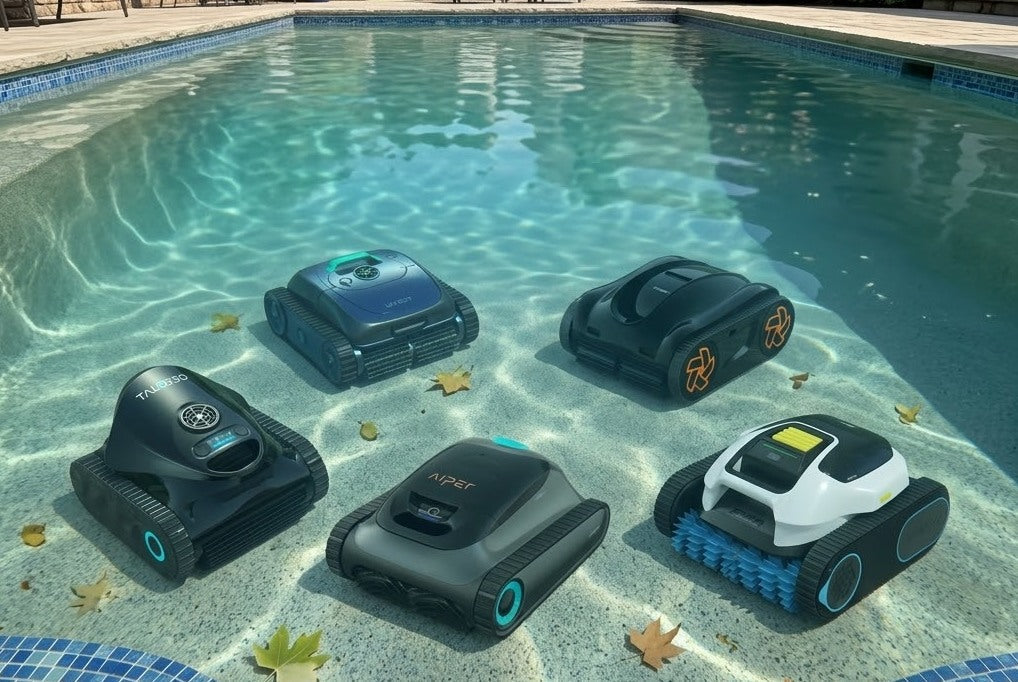
Keeping your pool clean shouldn’t feel like a full-time job. The best robotic pool cleaner can save hours of manual scrubbing while keeping your water crystal clear with minimal effort.
With so many options on the market, especially under $800, choosing the best pool cleaner robot isn’t always easy. Some models focus on powerful suction, while others stand out with smart navigation, wall-climbing ability, or app control.
To make things easier, we tested and compared the best robot pool cleaner options available in 2026—looking at performance, ease of use, and overall value. Below, you’ll find our top picks to help you choose the best pool cleaning robot for your specific needs.
Quick Comparison Table - 5 Best Robotic Pool Cleaners
Choosing the best robotic pool cleaner isn’t just about price—it comes down to runtime, cleaning coverage, smart features, and how well it fits your pool type. Below is a side-by-side comparison of the best pool cleaner robot options under $800, so you can quickly find the best robot pool cleaner for your needs.
⭐ Comparison Table (2026)
|
Feature |
Mammotion Spino E1 |
Aiper Scuba S1 |
Wybot C1 |
Talosbo C1 |
iGarden K36 |
|
Type |
Cordless |
Cordless |
Cordless |
Cordless |
Cordless |
|
Pool Type |
Inground & Above |
Inground |
Inground & Above |
Inground |
Inground & Above |
|
Pool Size |
1600 sq.ft |
1600 sq.ft |
1615 sq.ft |
1615 sq.ft |
/ |
|
Motor |
Triple Brushless Motor System |
2 x Drive Motors 1 x Brushless Filtration Motor |
Triple Drive Motors |
Three-motor system |
Three-motor system |
|
Suction Power |
Max. 5800 GPH |
4200 GPH |
3038 GPH |
4200 GPH |
5810 GPH |
|
Filter Layer |
180 μm Filter Basket + Dual-layer fine filter |
180μm + 3μm Fine Filter Basket |
180μm ultra-fine filter |
180μm filter screen + 35ppi fine filter sponge |
180μ Filter Ultra-Fine Filtration |
|
Cleaning Coverage |
Floor, Wall, Waterline |
Floor, Wall, Waterline |
Floor, Wall, Waterline |
Floor, Wall, Waterline, Slope |
Floor, Wall, Waterline |
|
Navigation System |
SmartArc™ |
WavePath |
S-path and N-path navigation |
Multiple cleaning path options |
Intelligent Path |
|
Runtime |
210 mins |
Up to 180 mins |
150 mins |
180 mins |
Up to 216 mins |
|
Debris Handling |
Leaves, sand, stones, insects |
Fine debris + leaves |
leaves, sand, fine debris, dirt |
Leaves, twigs, hairs, stones |
Leaves, hairs, twigs, gravel |
|
App Control |
Yes |
Yes |
Yes |
Yes |
Yes |
|
Cleaning Modes |
Floor Mode/ Wall Mode/ All Mode/ Eco Mode/ Max Mode |
Floor Mode/ Wall Mode/ Automatic/ Periodic/Eco Mode |
Full/floor/wall/ wall then floor/Eco floor Mode |
ECO/ Turbo/ Floor/ Wall/ Waterline/ Full Pool 和/ Floor-Then-Wall Mode |
Floor / Wall&Waterline/ Wall&Waterline first, then Floor/ Full Coverage Mode |
|
Auto Parking |
Yes |
Yes |
Yes |
Yes |
Yes |
|
Ease of Use |
Very easy (drop & go) |
Easy |
Easy |
Very easy |
Easy |
|
Key Features |
Automatic Waterline Parking; Quick Water Release System; Runtime up to 210 mins |
WavePath Navigation 2.0 |
Double-pass waterline scrubbing; four color battery indicator |
7 cleaning mode; 4 color battery indicator |
Auto-Docking System; Drains Fast, Easy Lift-Out |
|
Price (Official) |
$ 499 |
$569 |
$569.99 ($419.99 deal) |
$499.99 (after discount) |
$ 699 |
|
Best for |
Best Overall Balance |
Trusted Choice for Brand Reputation |
Best value |
Budget Pick |
Long Runtime & Tech |
🔍 Quick Takeaways
- Best overall performance: Mammotion Spino E1 offers the most balanced mix of cleaning power, filtration, and reliability
- Most powerful suction: Mammotion Spino E1 and iGarden K36 lead with the highest GPH
- Best value for money: Wybot C1 delivers solid performance at a lower price point
- Best for budget users: Talosbo C1 and Aiper Scuba S1 are good entry-level options with multiple cleaning modes
- Longest runtime: iGarden K36 and Mammotion Spino E1 stand out for extended cleaning sessions
5 Best Robotic Pool Cleaners in Detail (2026 Tested)
After comparing performance, features, and real-world usability, we’ve selected the best robotic pool cleaner options under $800 that deliver the most value in 2026. Whether you’re looking for advanced automation or a reliable everyday cleaner, there’s an option here for every type of pool owner. Here are the details test of the 5 best pool cleaner robots:
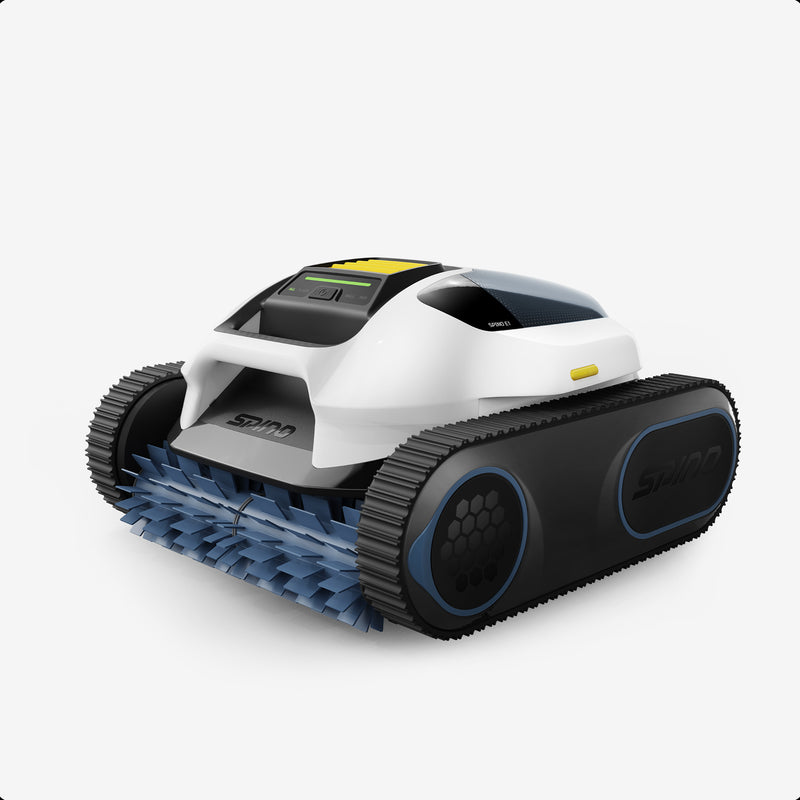
1. Mammotion Spino E1 – Best Smart Robotic Pool Cleaner

⭐ Why We Picked It
The Mammotion Spino E1 Robotic Pool Cleaner stands out for combining strong suction power, long runtime, and intelligent navigation—features that are usually only found in higher-end models. It’s a well-rounded option for users who want a more “hands-off” cleaning experience without going over budget.
Key Features
- SmartArc™ Navigation System for optimized cleaning paths and full pool coverage
- Triple brushless motor system delivering up to 5800 GPH suction power
- Cleans floor, walls, and waterline in one cycle
- Up to 210 minutes runtime with a high-capacity battery
- 5 cleaning modes (Floor, Wall, All, Eco, Max) for different needs
- App control for mode selection and monitoring
Pros |
Cons |
|
|
Test Summary
In testing, the Spino E1 delivered consistently strong cleaning performance, especially in pools with mixed debris like leaves and sand. The extended runtime allowed it to complete full cleaning cycles without interruption, which is a major advantage for medium to large pools.
Its navigation system performed better than typical random-path robots, though like most cleaners in this range, it can occasionally miss tight corners in more complex layouts. Overall, it offers a strong balance of power, coverage, and smart features for its price. Plus, the SPINO E1 robotic pool cleaner is currently on sale for $499—it’s a great deal!
2. Aiper Scuba S1 – Best Brand Reputation Robotic Pool Cleaner

⭐ Why We Picked It
The Aiper Scuba S1 is one of the most well-rounded options in this price range, offering a good balance of cleaning performance, runtime, and filtration. It’s especially suitable for users who want a reliable, “set-and-forget” cleaner for standard in-ground pools.
Key Features
- WavePath™ Navigation 2.0 for structured cleaning patterns and improved coverage
- 4200 GPH suction power for effective debris removal
- Dual-layer filtration system including 3μm ultra-fine filter for small particles
- Cleans floor, walls, and waterline in one cycle
- Up to 180 minutes runtime for medium to large pools
- Multiple cleaning modes including Floor, Wall, Auto, and Eco
Pros |
Cons |
|
|
Test Summary
In testing, the Scuba S1 delivered consistent and predictable cleaning performance, especially in standard rectangular pools. Its WavePath navigation helped reduce missed spots compared to basic random-path robots, and the ultra-fine filter performed well when dealing with sand and smaller debris.
However, compared to higher-powered models, it may require more than one cycle for heavily soiled pools. While it offers a strong “all-around” experience, it focuses more on stability and balance rather than pushing performance limits.
3. Wybot C1 – Best Value Robotic Pool Cleaner

⭐ Why We Picked It
The Wybot C1 is a strong value option that covers all the essentials—wall climbing, waterline cleaning, and app control—at a more accessible price point. It’s a practical choice for users who want solid performance without paying for premium features.
Key Features
- Triple motor system for basic propulsion and cleaning
- Cleans floor, walls, and waterline
- 150-minute runtime suitable for medium pools
- Smart navigation with S-path and N-path cleaning patterns
- App control for mode selection
- Dual-layer filtration for common debris
Pros |
Cons |
|
|
Test Summary
In real-world use, the Wybot C1 performed well for regular maintenance cleaning, handling leaves and dirt effectively in moderately sized pools. Its navigation system is more structured than random cleaners, but still less precise than higher-end models with advanced sensors.
For the price, it delivers strong overall value, but it’s better suited for lighter, more frequent cleaning cycles rather than deep cleaning in a single run.
4. Talosbo C1 – Best Budget Robotic Pool Cleaner

⭐ Why We Picked It
The Talosbo C1 is a budget-friendly option that still includes features like multiple cleaning modes and full coverage cleaning, making it a good entry point for first-time robotic pool cleaner users.
Key Features
- Triple motor system for basic cleaning performance
- Cleans floor, walls, waterline, and slopes
- Up to 180 minutes runtime
- 7 cleaning modes for different scenarios
- Multi-path cleaning options
- Standard + sponge filtration system
Pros |
Cons |
|
|
Test Summary
During testing, the Talosbo C1 handled basic cleaning tasks reliably, especially in simple pool layouts. The multiple cleaning modes are useful, but the actual performance difference between modes is not always significant.
It works best as an entry-level solution for users who want automation without investing in higher-end features, but it may require more frequent cleaning cycles for optimal results.
5. iGarden Pool Cleaner K36 – Best for Runtime & Tech Features

⭐ Why We Picked It
The iGarden K36 stands out for its long runtime and smart feature set, making it a strong option for users who prioritize extended cleaning sessions and app-based control.
Key Features
- Triple motor system for balanced cleaning performance
- Up to 216 minutes runtime (one of the longest in this range)
- Cleans floor, walls, and waterline
- Intelligent path planning system
- Multiple cleaning modes with app control
- Auto-docking and quick water release
Pros |
Cons |
|
|
Test Summary
In testing, the iGarden K36 performed well in long cleaning cycles, making it suitable for larger pools that require extended runtime. It was able to cover most areas effectively in a single session, reducing the need for repeat cleaning.
However, while the feature set is impressive, the navigation system is not as refined as more mature technologies, which can lead to occasional inefficiencies in complex pool layouts.
Related articles:
- Best Cordless Robotic Pool Cleaners in 2026: 7 Top Picks Compared
-
Best Pool Vacuums for Inground Pools in 2026: 7 Options Compared
How to Choose the Best Robotic Pool Cleaner
Choosing the best robotic pool cleaner isn’t just about picking the most powerful model—it’s about finding the right fit for your pool, cleaning needs, and budget. Below are the key factors to consider before making a decision. (Reference article: How to Choose a Robotic Pool Cleaner: A Practical Buying Guide)
1. Pool Type (Above Ground vs Inground)
Not all robotic pool cleaners are designed for every type of pool.
- Above-ground pools are usually smaller and have simpler shapes, so most entry-level or mid-range cleaners will work well.
- Inground pools often require stronger suction, better wall-climbing ability, and more advanced navigation to handle deeper areas and complex layouts.
If you have an inground pool, it’s generally worth choosing a model that supports full coverage (floor, walls, and waterline).
2. Pool Size
Pool size directly affects how long your cleaner needs to run to complete a full cycle.
- Small pools (<1000 sq.ft): Most robotic cleaners with 90–120 minutes runtime are sufficient
- Medium pools (1000–1600 sq.ft): Look for at least 120–180 minutes runtime
- Large pools (>1600 sq.ft): Longer runtime (180+ minutes) helps ensure full coverage
A cleaner with insufficient runtime may require multiple cycles, which reduces convenience.
3. Filtration System
The filter type affects how well your pool stays clean:
- Standard filter: Good for leaves and larger debris
- Ultra-fine or dual-layer filters: Capture sand, dirt, and fine particles
- Ease of cleaning: Top-access filters and removable baskets make maintenance easier
If your pool is near trees or exposed to wind, choosing a cleaner with both strong suction and fine filtration can make a noticeable difference.
4. Cleaning Coverage
Not all robotic pool cleaners clean every part of your pool.
- Floor only: Basic models, suitable for small or above-ground pools
- Floor + walls: Standard for mid-range models
- Floor + walls + waterline: Recommended for most users
Waterline cleaning is especially important, as this is where oils and debris tend to accumulate.
5. Navigation Technology
Navigation plays a major role in how efficiently a pool cleaner works.
- Random path cleaners: Move unpredictably and may miss spots
- Structured navigation (S-path, N-path): More consistent coverage
- Smart/AI navigation: Optimizes cleaning routes and reduces overlap
More advanced navigation systems can clean faster and more thoroughly, especially in larger or irregularly shaped pools.
6. Battery Life (Runtime)
For cordless robotic pool cleaners, battery life determines how much area can be cleaned in one cycle.
- Short runtime (90–120 mins): Best for small pools or light cleaning
- Medium runtime (150–180 mins): Suitable for medium pools
- Long runtime (210+ mins): Ideal for larger pools or heavy debris
Tip: Longer runtime reduces the need for multiple cleaning cycles, saving you time.
7. Cleaning Modes
Different cleaning modes allow flexibility:
- Floor, wall, and waterline modes: Target specific areas
- Eco or energy-saving modes: Reduce power consumption
- Full or automatic modes: Let the cleaner handle everything without intervention
Tip: Multiple modes give you more control and can adapt to different debris types or pool conditions.
8. Ease of Use & Maintenance
A good robotic pool cleaner should save time—not add extra work.
Look for features like:
- Drop-and-go operation (no setup required)
- Top-access filter basket for easy cleaning
- Auto parking near the pool edge
- Quick water release for easier lifting
These small details can make a big difference in everyday use.
9. Budget Considerations
Robotic pool cleaners come in a wide range of prices, but under $800 is a popular segment offering strong value.
- $400–$500: Basic models with essential features
- $500–$700: Balanced performance with better coverage and filtration
- $700–$800: Advanced features like smart navigation and longer runtime
Rather than choosing the cheapest option, it’s often better to focus on overall value and long-term convenience.
Cordless vs Corded Robotic Pool Cleaners
When choosing a robotic pool cleaner, one of the key decisions is whether to go cordless or corded. Each type has advantages and trade-offs depending on your pool setup, cleaning frequency, and personal preference.
Cordless Robotic Pool Cleaner
Advantages |
Disadvantages |
Best Use |
|
|
|
Corded Robotic Pool Cleaner
Advantages |
Disadvantages |
Best Use |
|
|
|
Which One Should You Choose?
- Cordless cleaners are generally better for most residential pools under $800 due to their convenience, smart features, and mobility.
- Corded cleaners can still make sense for smaller, simple pools or for users on a tighter budget.
Most modern robotic pool cleaners under $800, including the ones in our Top 5 list, are cordless, offering a good balance of performance, runtime, and user-friendly operation.
Reference article: Corded vs. Cordless Robotic Pool Cleaner: Which Is Better for Your Pool?
Final Thoughts
Choosing the best robotic pool cleaner in 2026 doesn’t have to be complicated. By considering your pool type, size, debris, runtime needs, and desired features, you can find a cleaner that fits your lifestyle and budget.
From our testing, Mammotion Spino E1 offers the strongest combination of smart navigation, long runtime, and thorough cleaning coverage, making it a top choice for medium to large pools. For users looking for a balanced option at a slightly lower price, the Aiper Scuba S1 delivers consistent performance and reliability. Budget-conscious buyers can still get effective cleaning with the Wybot C1 or Talosbo C1, while the iGarden K36 is notable for long runtime and tech features.
Ultimately, the right robotic pool cleaner depends on your specific pool conditions and cleaning priorities. Paying attention to navigation, filtration, runtime, and ease of use will ensure your pool stays sparkling clean with minimal effort.
Investing in a robotic pool cleaner can save hours of manual work each week and maintain your pool in top condition year-round, giving you more time to enjoy your pool rather than clean it.
Frequently Asked Questions
1. What is the best robotic pool cleaner in 2026?
The best robotic pool cleaner depends on your pool size and cleaning needs. For smart navigation and long runtime, the Mammotion Spino E1 stands out. For a balanced option at a slightly lower price, the Aiper Scuba S1 is reliable. Budget-friendly pools can consider models like the Wybot C1 or Talosbo C1.
2. Are robotic pool cleaners worth it?
Yes. They save significant time and effort compared to manual cleaning, consistently remove debris, and can help maintain water clarity. Over time, the convenience and efficiency often justify the upfront cost.
3. Do robotic pool cleaners clean walls?
Many models do. Mid-range and higher-end cleaners typically clean floor, walls, and waterline, while basic or entry-level models may only handle the floor. Wall-climbing ability is especially important for inground pools.
4. How long do robotic pool cleaners last?
With proper maintenance, most robotic pool cleaners last 2–5 years. Replacing filters, checking for debris, and storing them properly when not in use can extend their lifespan.
5. Which is better, cordless or corded pool cleaner?
Cordless pool cleaners are generally preferred for residential pools due to their convenience, mobility, and smart features. Corded models provide unlimited runtime but are less flexible and require careful cord management.
6. How often should I run a robotic pool cleaner?
For optimal results, run your cleaner 2–3 times per week during peak swimming season. Pools with more debris may require daily cleaning, while smaller or covered pools can be cleaned less frequently.
Did you like this article? Add us as a preferred source to find us more easily on Google.