


A cordless robotic pool cleaner can make routine pool maintenance easier by eliminating the power cable, but the best model depends on your pool size, cleaning coverage, runtime, filtration, and budget. In 2026, cordless options range from value-focused cleaners for pools around 1,600 sq. ft. to premium models designed for larger pools and multi-surface cleaning.
For this guide, we compare seven cordless robotic pool cleaners across practical factors including pool-size ratings, battery runtime, charging requirements, floor/wall/waterline coverage, filtration, navigation, and price. Because manufacturers update pricing and specifications, verify the current model details before purchasing.
Best Cordless Robotic Pool Cleaners in 2026
The best cordless robotic pool cleaner depends on your pool and cleaning priorities, with premium models emphasizing larger coverage and advanced navigation while value models focus on essential floor, wall, and waterline cleaning.
Top Recommendations at a Glance:
- Best Overvalue: Mammotion SPINO E1 Cordless Robotic Pool Cleaner
- Best Overall: Polaris Freedom Plus Cordless Robotic Pool Cleaner
- Best All-in-One: Beatbot AquaSense 2 Pro Cordless Robotic Pool Cleaner
- Best for Large Pools: Dolphin Liberty 600 Cordless Robotic Pool Cleaner
- Best for Fine Debris: Aiper Scuba S1 Pro Cordless Robotic Pool Cleaner
- Best Budget Option: Aiper Scuba S1 (2026 Upgrade) Cordless Robotic Pool Cleaner
- Best for Smaller Inground Pools: Dolphin Liberty 400 Cordless Robotic Pool Cleaner
Best Cordless Robotic Pool Cleaners Compared
The main differences between cordless robotic pool cleaners are their pool-size ratings, cleaning coverage, runtime, charging time, filtration, navigation, warranty, and price.
| Parameter | Mammotion SPINO E1 | Polaris Freedom Plus | Beatbot AquaSense 2 Pro | Dolphin Liberty 600 | Aiper Scuba S1 Pro | Aiper Scuba S1 | Dolphin Liberty 400 |
|---|---|---|---|---|---|---|---|
| Best for | Overvalue | Overall | All-in-one cleaning | Large pools | Fine debris | Budget | Smaller inground pools |
| Pool size | Up to 1,600 sq. ft. | Up to 50 ft (Pool length) | Up to 3,875 sq. ft. | Up to 50 ft (Pool length) | Up to 2,150 sq. ft. / 66 ft | Up to 1,600 sq. ft. / 50 ft | Up to 33 ft (Pool length) |
| Floor cleaning | Yes | Yes | Yes | Yes | Yes | Yes | Yes |
| Wall cleaning | Yes | Yes | Yes | Yes | Yes | Yes | Yes |
| Waterline cleaning | Yes | Yes | Yes | Yes | Yes | Yes | Yes |
| Runtime | Up to 210 min (Floor) | Up to 150 min | Up to 300 min (Floor) | Up to 180 min | Up to 180 min | Up to 270 min (Eco) | Up to 2.5 h |
| Charging time | Approx. 3 h | Approx. 5 h | Approx. 4.5 h | Verify current model | Approx. 4 h | Approx. 3–4 h | Verify current model |
| Suction power | 5,800 GPH | Verify current model | 5,500 GPH | Verify current model | 6,000 GPH | 4,200 GPH | Verify current model |
| Filter capacity | Verify current model | 4 L | 3.7 L | Verify current model | 5 L | 3.5 L | Verify current model |
| Fine filtration | 180 μm | Verify current model | 150 μm + 250 μm | Multi-layer filtration | 180 μm + 3 μm MicroMesh | 180 μm | Fine/ultra-fine options |
| Navigation | SmartArc | Smart navigation | CleverNav AI | Smart navigation | WavePath 2.0 | WavePath 2.0 | Smart navigation |
| App control | Yes | Yes | Yes | Yes | Yes | Yes | Yes |
| Warranty | 2 years | Verify current model | 3 years | 3 years | 2 years | 2 years | 3 years |
| Current listed price | $499 | $1,399 | $2,299 | $1,729 | $1,199.99 | $499.99 | $1,429 |
*Prices and specifications can change. Verify the current product page before publication or purchase.
Best Value: Mammotion SPINO E1 Cordless Robotic Pool Cleaner
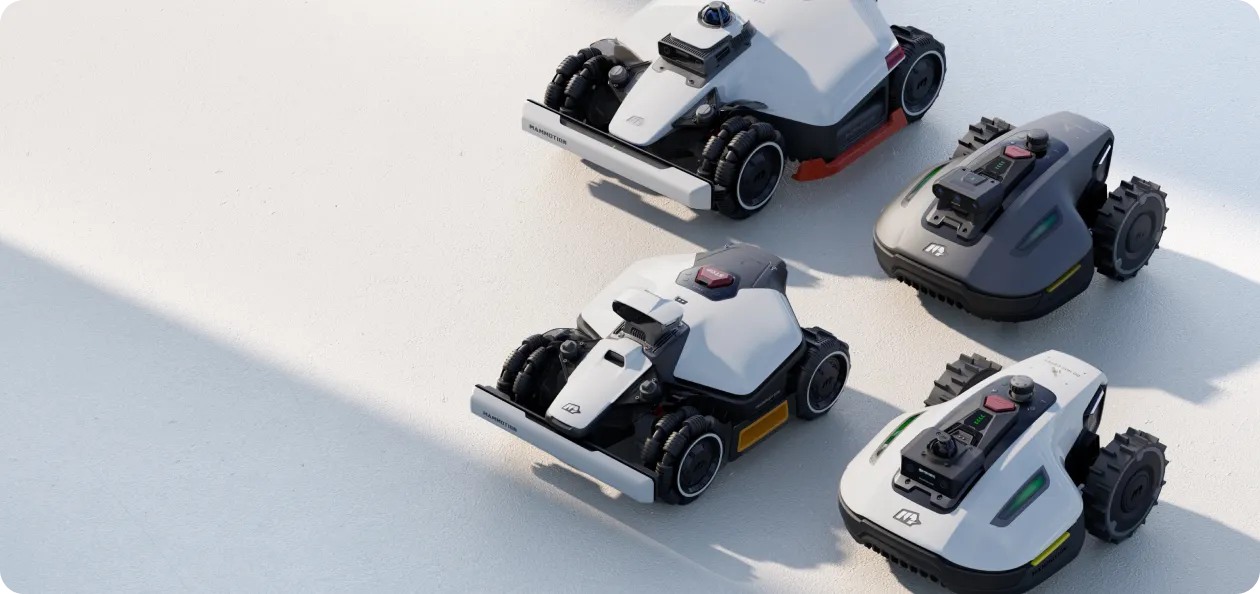
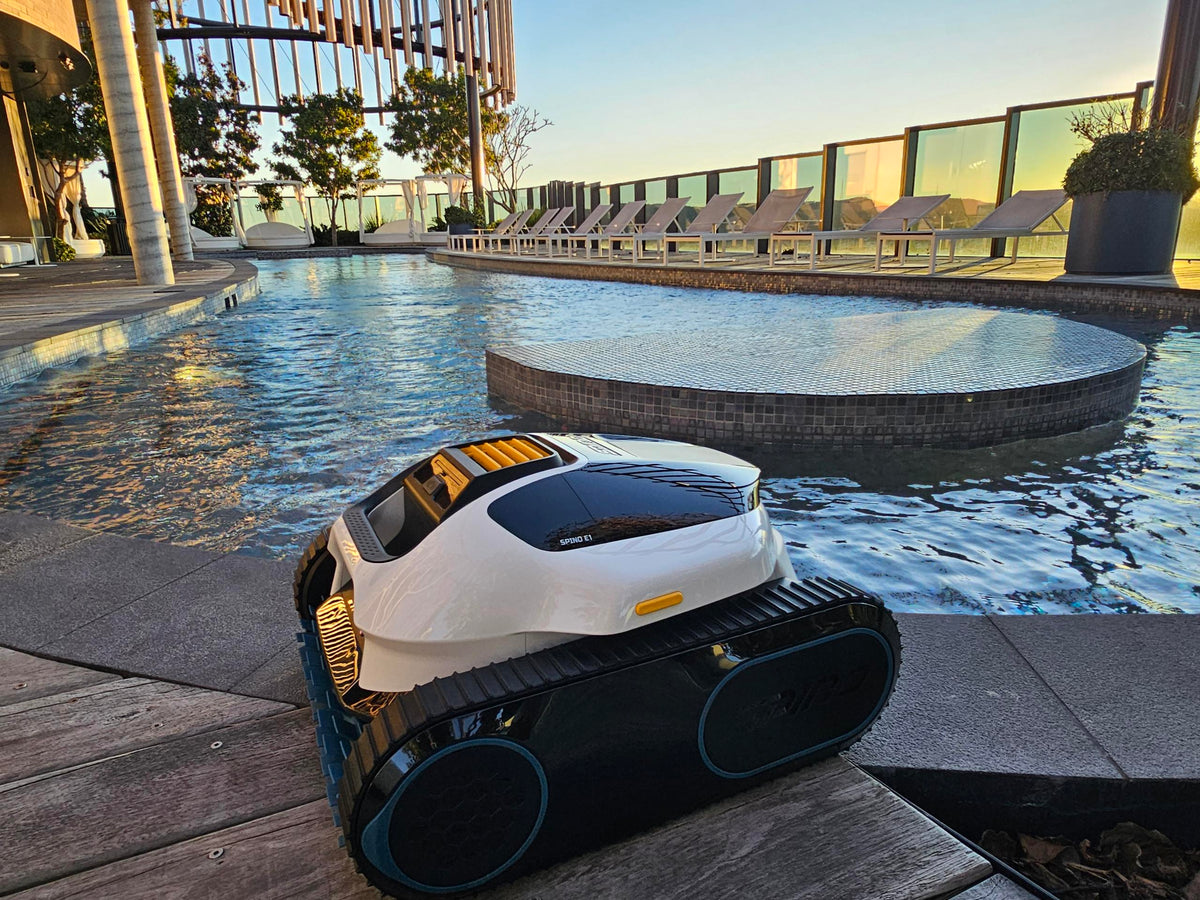
The Mammotion SPINO E1 is a value-oriented cordless robotic pool cleaner designed for pools up to 150 m² (about 1,615 sq. ft.) and supports floor, wall, and waterline cleaning. Mammotion lists up to 210 minutes of floor runtime, up to 180 minutes in wall mode, a 3-hour charging time, 5,800 GPH maximum suction, and a 180 μm filter basket.
Its SmartArc path planning uses 17 sensors, and the robot offers five cleaning modes plus automatic waterline parking. Mammotion also lists a 2-year warranty.
- Best for: Homeowners looking for full floor, wall, and waterline coverage without moving into the highest-priced cordless category.
- Key consideration: Its 150 m² pool-size rating makes it better suited to small and medium residential pools than very large pools.
Best Overall: Polaris Freedom Plus Cordless Robotic Pool Cleaner
The Polaris Freedom Plus is a strong premium cordless option for pool owners who prioritize cable-free operation, structured cleaning, and easier retrieval. Its published specifications include a 2.5-hour cleaning cycle and approximately 5 hours of charging time, with app connectivity and a remote-assisted lift system on the Freedom+ Control configuration.
- Best for: Homeowners who want a premium cordless cleaner with convenient handling and smart features.
- Key consideration: Its battery runtime means large or debris-heavy pools may require more planning than a continuously powered cleaner.
Best All-in-One: Beatbot AquaSense 2 Pro Cordless Robotic Pool Cleaner
The Beatbot AquaSense 2 Pro stands out for combining floor, wall, waterline, and water-surface cleaning in one cordless system. Beatbot rates it for pools up to 3,875 sq. ft. of bottom area and lists 5,500 GPH suction, a 3.7-liter filter basket, a 13,400 mAh battery, and up to 11 hours of continuous surface cleaning.
The 11-hour figure should not be interpreted as 11 hours of conventional submerged pool cleaning; Beatbot specifies it for continuous surface cleaning. The model also uses CleverNav navigation, 22 sensors, automatic surface parking, and app-based control.
- Best for: Large pools and homeowners looking for broader automated cleaning functions beyond floor and wall cleaning.
- Key consideration: Its premium feature set comes with a substantially higher purchase price than value-oriented cordless cleaners.
Best for Large Pools: Dolphin Liberty 600 Cordless Robotic Pool Cleaner
The Dolphin Liberty 600 is designed for larger residential pools, with a published maximum pool length of 50 ft and coverage of the floor, walls, and waterline. Its 3-hour default cleaning cycle makes it a useful option for owners who want cordless operation without moving to a corded system.
- Best for: Larger inground pools where pool length and full-surface coverage are primary considerations.
- Key consideration: Its higher price makes it more appropriate when its larger-pool capability and established feature set are actually needed.
Best for Fine Debris: Aiper Scuba S1 Pro Cordless Robotic Pool Cleaner
The Aiper Scuba S1 Pro combines a 2,150 sq. ft. pool-size rating with up to 180 minutes of battery runtime, 6,000 GPH flow, and a 5-liter filter basket. Its two-stage filtration system uses a 180 μm fine filter and a 3 μm MicroMesh ultra-fine filter, while cleaning modes cover the floor, walls, and waterline.
- Best for: Pool owners who place particular emphasis on filtration and fine-particle collection.
- Key consideration: The 4-hour charging time means battery planning matters if you want to run frequent cleaning cycles.
Best Budget Option: Aiper Scuba S1 (2026 Upgrade) Cordless Robotic Pool Cleaner
The Aiper Scuba S1 is rated for pools up to 1,600 sq. ft. or 50 ft. in length, with up to 180 minutes of battery runtime and 3–4 hours of charging. It provides floor and wall cleaning modes as well as automatic and periodic/eco modes, with 4,200 GPH flow and a 3.5-liter filter basket.
Its filtration specification includes a 180 μm fine filter basket and a 3 μm MicroMesh ultra-fine filter.
- Best for: Pool owners who want cordless operation and broad cleaning capability without stepping up to a premium model.
- Key consideration: Its runtime and 1,600 sq. ft. rating should be matched against your pool dimensions before purchase.
Best for Smaller Inground Pools: Dolphin Liberty 400 Cordless Robotic Pool Cleaner
The Dolphin Liberty 400 is a smaller-pool cordless option with a published maximum pool length of 33 ft and coverage of the floor, walls, and waterline. Its default cleaning cycle is approximately 2.5 hours, making it better suited to smaller pools than models designed around 50-ft or larger pool ratings.
- Best for: Smaller inground pools where full-surface cleaning and cordless convenience are more important than maximum pool capacity.
- Key consideration: Owners of pools approaching or exceeding its rated length should consider a higher-capacity model instead.
Reference article: Best Robotic Pool Cleaner 2026 (Top 5 Tested & Reviewed)
How to Choose the Best Cordless Robotic Pool Cleaner
The best cordless robotic pool cleaner should match your pool size, required cleaning coverage, battery runtime, charging time, filtration needs, navigation system, and budget. (Reference article: How to Choose a Robotic Pool Cleaner: A Practical Buying Guide)
1. Match the Cleaner to Your Pool Size
Choose a cordless pool cleaner with a pool-size rating that comfortably covers your pool rather than relying on the maximum advertised limit.
Manufacturers may describe capacity by pool length, surface area, or both. For example, some models are rated for pools up to 33 or 50 ft long, while others specify coverage in square feet.
When comparing models, check:
- Maximum pool length
- Maximum pool area
- Your pool's actual dimensions
- Pool shape and layout
- Whether one charge is likely to cover the required cleaning cycle
A robot rated for a 50-ft pool does not necessarily mean it will complete every floor, wall, and waterline surface on a single charge. Pool geometry, debris levels, climbing, and the selected cleaning mode can all affect battery use.
2. Check Floor, Wall, and Waterline Coverage
For the most complete automated cleaning, look for a model that specifically supports floor, wall, and waterline cleaning.
Cordless robotic pool cleaners vary significantly in coverage. Some focus primarily on the pool floor, while more advanced models can climb walls and scrub along the waterline.
Before buying, check whether the exact model supports:
- Floor cleaning — removes dirt and debris from the pool bottom.
- Wall cleaning — helps clean vertical surfaces where dirt and algae can accumulate.
- Waterline cleaning — targets the area around the pool's waterline.
- Surface cleaning — available on selected premium models and designed to collect floating debris.
Do not assume that every model in the same product family has identical coverage. Always verify the specifications for the exact model you are considering.
3. Compare Runtime and Charging Time
Runtime should be evaluated together with charging time because a longer battery cycle is less useful if the robot takes substantially longer to recharge.
For example, a cleaner rated for 180 minutes of operation and another rated for 210 minutes may appear similar, but their practical usefulness depends on charging time and cleaning mode.
Also distinguish between:
- Maximum advertised runtime
- Floor-cleaning runtime
- Wall-cleaning runtime
- Combined cleaning runtime
- Surface-skimming runtime
These figures are not directly interchangeable. A manufacturer may advertise a much longer runtime for surface skimming than for submerged floor and wall cleaning.
For large or frequently used pools, prioritize the combination of usable runtime + charging time + pool coverage, rather than choosing the model with the highest runtime number alone.
4. Consider Filtration for Your Pool's Debris
Choose the filtration system based on the type and amount of debris your pool typically collects, not simply the smallest published micron number.
Large leaves and twigs require sufficient basket capacity, while fine dirt, sand, and other small particles place greater demands on filtration.
Consider:
- Filter basket capacity
- Filter type
- Published micron rating
- Fine or ultra-fine filtration options
- How easily the basket can be removed and rinsed
A larger filter basket can be useful for pools surrounded by trees because it reduces how frequently the basket needs to be emptied. For pools with substantial fine debris, a finer filter may be more appropriate.
A micron rating describes the filter media's nominal filtration specification; it does not by itself guarantee better overall pool-cleaning performance.
5. Look at Navigation and Retrieval
A good navigation system can help a cordless robot clean more systematically, while retrieval features can make handling easier when the cleaning cycle is finished.
Depending on the model, navigation may include:
- Pattern-based cleaning
- Smart path planning
- Sensors for detecting pool surfaces
- Obstacle detection
- App-based monitoring or control
- Automatic waterline parking
- Retrieval or lift assistance
These features are particularly relevant for irregularly shaped pools or owners who want less manual intervention.
However, navigation technology should not be treated as a guarantee of 100% coverage. A robot's actual cleaning path can still be affected by pool geometry, steps, ledges, drains, surface conditions, and debris.
6. Consider Battery Management and Ownership
Cordless convenience comes with a battery, so charging habits and long-term battery management should be part of the buying decision.
Before choosing a model, check:
- Charging time
- Charging method
- Manufacturer's storage instructions
- Battery warranty, if separately specified
- Availability of replacement parts
- Filter and brush replacement options
For homeowners who clean their pool several times per week, charging time and storage requirements can matter almost as much as the initial purchase price.
7. Compare the Price With the Features You Need
The right cordless pool cleaner is not necessarily the most expensive model; it is the one that provides the coverage and capacity your pool actually requires.
A useful approach is to divide the market into three broad tiers:
| Budget Tier | What to Prioritize |
|---|---|
| Value | Floor/wall coverage, adequate runtime, basic navigation |
| Mid-range | Full floor/wall/waterline cleaning, larger capacity, better navigation |
| Premium | Larger pool ratings, advanced navigation, broader cleaning modes, additional convenience features |
For example, a medium-size inground pool may not require a premium cleaner rated for substantially larger pools. Conversely, choosing a smaller robot solely because it costs less can be inefficient if its pool-size or runtime limitations require repeated cycles.
Top Recommendations: For buyers comparing value-focused options, the Mammotion SPINO E1 is one model worth considering if its 1,600 sq. ft. pool rating, floor/wall/waterline coverage, up to 210-minute floor runtime, and 3-hour charging time match the requirements of the pool. Verify current specifications and pricing before purchase.

Cordless vs. Corded Robotic Pool Cleaners
Cordless robotic pool cleaners offer easier setup and cable-free handling, while corded models provide continuous power without requiring battery recharging.
| Factor | Cordless Robotic Pool Cleaner | Corded Robotic Pool Cleaner |
|---|---|---|
| Power source | Rechargeable battery | AC power supply |
| Power cable | None in the pool | Required |
| Runtime | Limited by battery capacity | Not limited by onboard battery |
| Charging | Required between cycles | Not required |
| Setup | Quick and cable-free | Requires cable placement |
| Cable management | None | Must manage and store cable |
| Large pools | Depends on runtime and pool rating | Often advantageous for long cleaning cycles |
| Storage | Generally simpler | Includes cable management |
| Mobility | High | Cable can affect handling |
| Upfront cost | Varies widely | Varies widely |
When a Cordless Pool Cleaner Makes More Sense
A cordless cleaner is a strong choice when you prioritize simple deployment, easy handling, and freedom from a floating power cable.
It can be particularly convenient for homeowners who:
- Run the cleaner regularly and want minimal setup
- Prefer not to manage a long cable around the pool
- Need to move the cleaner between storage and the pool frequently
- Have a pool that fits comfortably within the robot's rated capacity
- Want floor, wall, and waterline cleaning without cable management
Cordless models can also be easier to store because there is no pool cable to coil, untangle, or inspect after each cleaning cycle.
When a Corded Robotic Pool Cleaner May Be Better
A corded model may make more sense when continuous operation and avoiding battery recharge are more important than cable-free convenience.
Consider a corded cleaner if you:
- Have a large pool requiring longer cleaning cycles
- Prefer not to wait for battery charging between cycles
- Run extended or frequent cleaning sessions
- Already have a convenient power setup near the pool
- Do not mind managing the power cable
The choice ultimately comes down to priorities. Cordless models emphasize convenience and mobility, while corded models can offer a simpler power strategy for long or repeated cleaning cycles.
For a medium-size pool that falls comfortably within a cordless robot's published capacity, the absence of a power cable can be a meaningful everyday convenience. For very large pools or owners who want uninterrupted operation, a corded cleaner remains worth considering.
Reference article: Corded vs. Cordless Robotic Pool Cleaner: Which Is Better for Your Pool?
How to Get the Most From a Cordless Robotic Pool Cleaner
Regular filter cleaning, proper charging, correct storage, and routine inspection can help a cordless robotic pool cleaner maintain consistent operation over time.
Clean the Filter Basket Regularly
Empty and rinse the filter basket after cleaning cycles when it contains significant debris to maintain water flow and cleaning performance.
A full basket can reduce the amount of debris the robot can collect during its next cycle. Pools surrounded by trees or exposed to heavy seasonal debris may require more frequent basket cleaning.
For fine-particle filtration, rinse the filter according to the manufacturer's instructions and avoid using cleaning methods that could damage the filter media.
Follow the Manufacturer's Charging Instructions
Charge the robot according to the manufacturer's specified procedure and charging environment rather than leaving it connected indefinitely.
Charging requirements vary by model. Check:
- Recommended charging location
- Charging time
- Charger requirements
- Battery temperature limitations
- Storage charge recommendations
Allow the robot and charging equipment to remain dry when required by the manufacturer, and inspect the charger and cable for visible damage before use.
Remove and Store the Robot Correctly
Store the cleaner in a dry, suitable location according to the manufacturer's storage instructions when it is not being used.
Avoid leaving a cordless robot exposed to prolonged direct sunlight, extreme temperatures, or conditions that the manufacturer does not recommend.
If the robot is removed from the pool after a cleaning cycle, use the designated retrieval handle or hook rather than pulling it by components that are not designed for lifting.
Check Brushes, Tracks, and Moving Parts
Inspect the brushes, tracks, rollers, and other accessible components periodically and remove accumulated debris before the next cleaning cycle.
Pay particular attention to:
- Hair and string wrapped around moving parts
- Leaves caught around brushes
- Debris inside the filter basket
- Track or wheel condition
- Damaged or excessively worn components
Replacement intervals depend on usage, pool conditions, and the manufacturer's maintenance guidance, so avoid assuming that every brush or track has the same service life.
Keep the Robot's Cleaning Environment in Mind
A cordless robot performs within the conditions specified for its design, so pool surfaces, steps, ledges, water conditions, and debris levels can affect cleaning results.
Before each cycle, remove unusually large objects that could interfere with the robot and keep the pool chemistry within the ranges recommended for your pool and cleaner.
Routine maintenance cannot eliminate the battery limitations of a cordless system, but it can help ensure that available runtime is used for cleaning rather than dealing with an overloaded filter or obstructed moving parts.
Are Cordless Robotic Pool Cleaners Worth It?
A cordless robotic pool cleaner can be worth the investment if you value cable-free operation, automated cleaning, and convenient handling, but the higher purchase price and battery limitations should fit your pool and cleaning routine.
A Cordless Pool Cleaner Is Worth Considering If:
- You want to avoid managing a power cable in the pool.
- You clean your pool regularly and want to reduce manual vacuuming.
- Your pool fits comfortably within the cleaner's published size rating.
- You need floor, wall, and waterline cleaning.
- You prefer a self-contained robot that can be removed and stored after cleaning.
- The available runtime is sufficient for your normal cleaning cycle.
Consider Another Type of Cleaner If:
- Your pool is very large and requires extended continuous cleaning.
- You do not want to wait for a battery to recharge between cycles.
- Your main priority is the lowest possible upfront cost.
- You already have a suitable setup for a corded robotic cleaner.
- The cordless model you are considering is close to its maximum pool-size rating.
How to Determine If It's Worth Buying
A simple way to evaluate a cordless robotic pool cleaner is to compare total ownership convenience, not just the purchase price.
Ask these five questions before buying:
Ultimately, cordless is most valuable when eliminating cable management improves your pool-maintenance routine. If battery runtime or charging time creates more inconvenience than the cable would, a corded robotic pool cleaner may be the better fit.
Cordless Robotic Pool Cleaner FAQ
Most cordless pool cleaners advertise runtimes from roughly 2 to 3 hours, although some premium models offer longer operation in specific cleaning modes. Check the manufacturer's runtime for the exact mode you plan to use.
Charging time varies by model, with many cordless robotic pool cleaners requiring several hours between cleaning cycles. Compare charging time with runtime when deciding whether a model fits your cleaning schedule.
Yes, some cordless models can clean the floor, walls, and waterline, but coverage varies by model. Always verify the specifications for the exact cleaner rather than assuming every cordless robot supports all three surfaces.
They can be, provided the cleaner's published pool-size rating and runtime are sufficient for the pool. For larger pools, compare maximum pool length or area, runtime, and charging time rather than choosing based on price alone.
Follow the manufacturer's instructions for each model. Some cleaners are designed to remain in the water for specified periods, while others are intended to be removed and stored after a cleaning cycle.
Many robotic pool cleaners are designed for use in saltwater pools, but compatibility varies by model. Check the manufacturer's specifications and warranty conditions before using a particular cleaner in a saltwater pool.
The ideal schedule depends on pool usage, surrounding debris, weather, and water conditions. A pool exposed to leaves and heavy debris may need more frequent cleaning than a covered pool in a low-debris environment.
Battery lifespan depends on the battery type, charging frequency, operating conditions, storage, and usage. Instead of assuming a universal number of years, check the manufacturer's battery warranty and replacement information for the specific model.
Did you like this article? Add us as a preferred source to find us more easily on Google.