





Choosing the best lawn mower for hills depends primarily on slope severity, traction capability, and mower stability rather than cutting power alone. On sloped or uneven terrain, the main challenge is not mowing speed, but maintaining control and preventing slippage or tipping.
This guide compares different mower types—including riding tractors, zero-turn mowers, walk-behind models, and robotic mowers—based on how they perform on gentle, moderate, and steep slopes in real residential conditions.
- Best Riding Lawn Tractor for Hills: Ventrac 4520
- Best Zero-Turn Mower for Hills: Ferris SRS Z3X
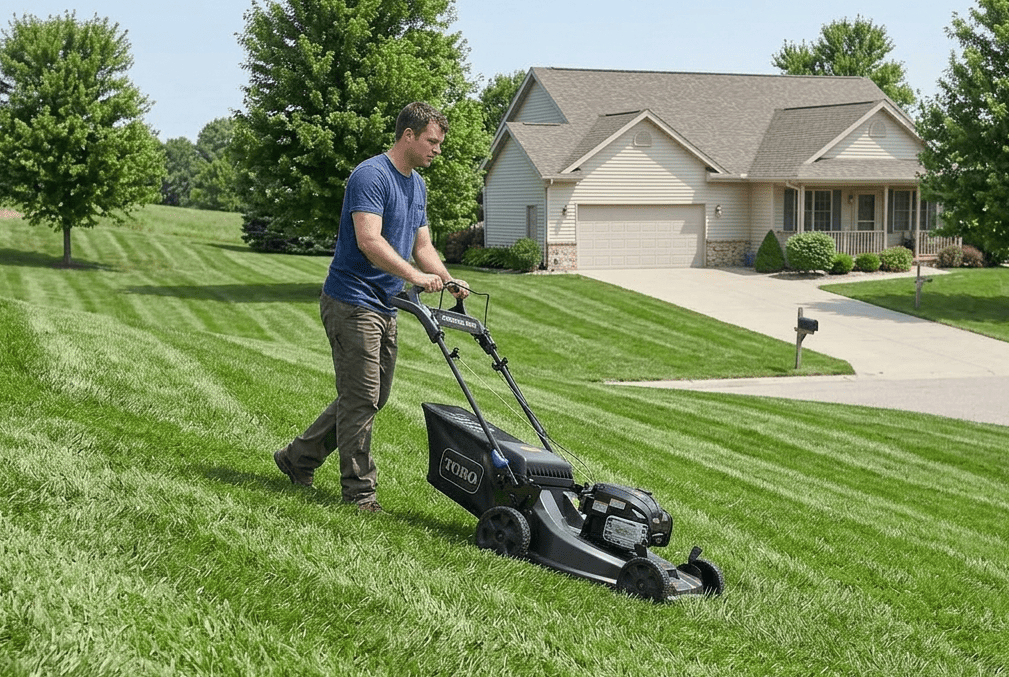
- Best Walk-Behind Mower for Hills: Toro Super Recycler 21"
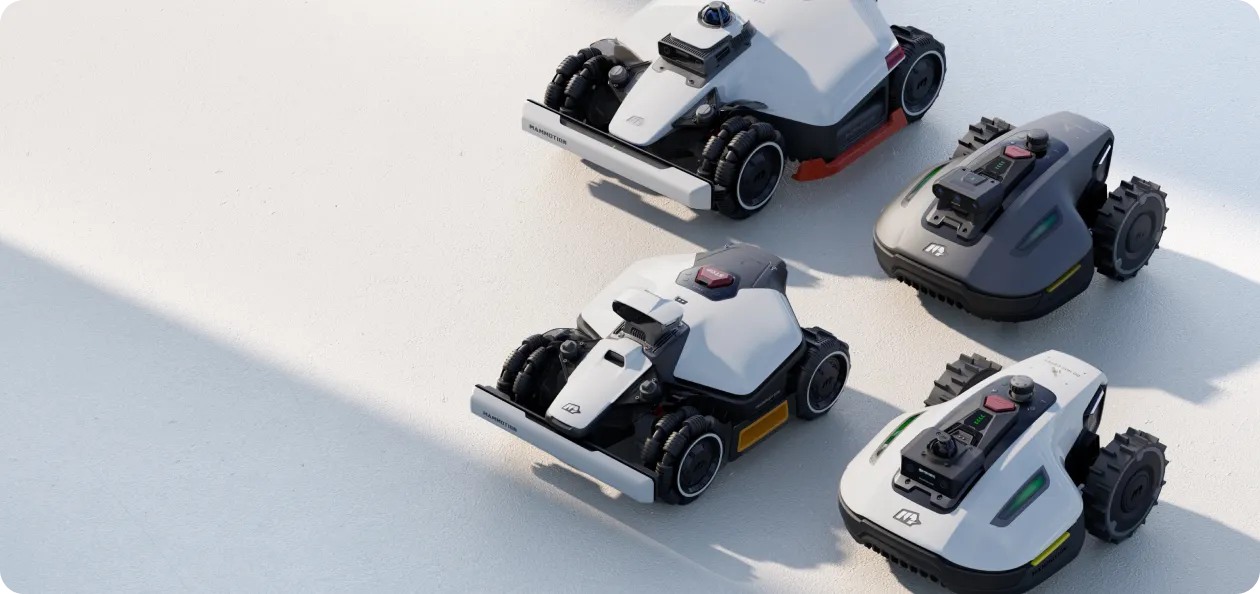
- Best Autonomous AWD Robot Mower for Hills: Mammotion LUBA 3 AWD 5000
Why Hills and Slopes Change Lawn Mower Performance
Lawn mowing on hills is fundamentally different from flat terrain because gravity directly affects traction, balance, and control. As slope increases, the mower’s ability to maintain grip and stability becomes more important than cutting speed or engine power.
Traction Loss Is the Primary Risk on Slopes
On sloped terrain, wheels naturally lose traction as gravity pulls the mower downhill. This can cause slipping, reduced control, or uneven cutting paths, especially on wet or loose soil.
Traction becomes the limiting factor for most mower types before cutting performance becomes an issue.
Stability Matters More Than Cutting Power
On hills, mower stability determines whether the machine can operate safely and consistently. A mower with high cutting power but poor weight distribution can still perform poorly on slopes.
Lower center of gravity and balanced weight distribution are more important than raw engine strength in these conditions.
Side-Slope Mowing Is the Most Difficult Condition
Mowing across a slope (side-to-side) is more challenging than mowing up and down because the mower’s weight is unevenly distributed. This increases the risk of sliding or tipping, especially on steeper gradients.
Most performance differences between mower types become more noticeable in side-slope conditions.
Terrain Surface Conditions Can Change Performance
Soil type, grass density, and moisture level can significantly affect mower behavior on hills. Wet grass or soft soil reduces traction and increases the likelihood of wheel slip, even for high-performance machines.
This is why real-world performance often differs from manufacturer slope ratings.
How to Determine Whether Your Lawn Is a Hill or a Steep Slope
Understanding your lawn’s slope level is essential before choosing a mower, because equipment performance and safety limits vary significantly by incline. In most residential yards, the difference between a gentle hill and a steep slope is more about usability and safety than precise measurement.
Use a Simple Visual and Walking Test
One of the easiest ways to estimate slope is by walking across the lawn in different directions. If walking uphill feels slightly effortful but still stable, the slope is typically considered gentle. If balance begins to feel noticeably affected or steps feel uneven, the slope is likely moderate or steep.
While not precise, this method reflects real mowing conditions more accurately than visual judgment alone.
The 4-Level Slope Classification System
Most residential lawns can be grouped into four practical slope categories based on real-world mower performance rather than exact engineering measurements.
|
Slope Category |
Approximate Angle |
What It Feels Like |
Mowing Difficulty |
|
Gentle Hill |
0–10° |
Slight incline, easy walking |
Low |
|
Moderate Slope |
10–15° |
Noticeable effort when walking uphill |
Medium |
|
Steep Slope |
15–20° |
Balance begins to feel affected |
High |
|
Extreme Slope |
20°+ |
Requires careful footing |
Very High |
This classification is commonly used in residential lawn equipment guidance because it aligns with real mower traction and stability limits.
Pay Attention to Drainage and Water Flow
A practical indicator of slope is how water behaves after rain. If water consistently flows in one clear direction or collects quickly at the bottom of the yard, the slope is likely more significant than it appears visually.
This method is especially useful for identifying gradual slopes that are not obvious at first glance.
When a Lawn Is More Than Just a “Hill”
Some properties combine multiple terrain challenges, such as uneven ground, side slopes, and elevation changes in different zones. In these cases, the lawn should be treated as a mixed-terrain environment rather than a single slope category.
This distinction matters because mower performance can vary significantly depending on how consistent or fragmented the terrain is.
Best Lawn Mower Types for Hills / Steep
Different mower types handle hills in fundamentally different ways. Instead of comparing brands directly, it is more accurate to evaluate how each design behaves under slope conditions, especially in terms of traction, stability, and usable terrain range.
Category Overview and Slope Performance Comparison
|
Mower Type |
Example Model |
Traction System |
Stability Level |
Steep Slope Capability |
Best Use Case |
|
Riding Lawn Tractor |
Ventrac 4520 |
All-wheel / articulated |
Very High |
Excellent (professional slopes) |
Heavy-duty steep terrain |
|
Stand-On / Zero-Turn |
Ferris SRS Z3X |
Commercial tire traction |
High |
Good to Moderate |
Open slopes with speed control |
|
Walk-Behind Mower |
Toro Super Recycler 21" |
Rear-wheel drive |
Medium-High |
Moderate |
Residential hills & narrow slopes |
|
Robot Lawn Mower |
Mammotion LUBA 3 AWD 5000 |
AWD electric drive |
High |
Good to Excellent (depending on terrain) |
Automated slope maintenance |
Best Riding Lawn Tractor for Hills: Ventrac 4520
The Ventrac 4520 is engineered specifically for slope-dominant environments where conventional riding mowers reach stability limits. Its articulated frame design allows all wheels to maintain contact with the ground independently, improving balance on uneven and steep terrain.
Unlike residential tractors, it is built around slope safety and continuous traction rather than cutting speed or simplicity.
Real-World Performance on Steep Terrain
On steep or irregular slopes, the Ventrac maintains consistent ground contact even when the surface changes elevation abruptly. This reduces the likelihood of wheel lift, which is one of the main risk factors in hillside mowing.
It is commonly used in commercial or municipal environments where slope consistency is more important than mowing efficiency per acre.
Best Zero-Turn Mower for Hills: Ferris SRS Z3X

The Ferris SRS Z3X is designed as a commercial stand-on mower that prioritizes maneuverability and speed while improving slope stability compared to traditional zero-turn mowers. Its suspension platform helps reduce operator impact and improves traction consistency.
It represents a middle ground between residential zero-turn mowers and dedicated slope machines.
Real-World Performance on Slopes
On moderate hills, the Z3X performs efficiently with strong directional control and fast mowing capability. However, performance becomes more dependent on operator skill as slope angle increases, particularly on side slopes where weight distribution becomes uneven.
It is more stable than residential zero-turn models but still not designed for extreme incline conditions.
Best Walk-Behind Mower for Hills: Toro Super Recycler 21"

The Toro Super Recycler is designed for residential users who need a compact, high-control mower for uneven or moderately sloped terrain. Its rear-wheel drive system is optimized for traction rather than speed, making it more suitable for controlled hillside mowing.
It focuses on precision and control rather than coverage efficiency.
Real-World Performance on Slopes
On residential hills, especially narrow or segmented lawns, the mower provides strong directional control. Because of its lighter weight and compact design, it is easier to maneuver in areas where riding equipment may struggle.
However, performance is highly dependent on operator effort, especially on longer mowing sessions.
Best Autonomous AWD Robot Mower for Hills: Mammotion LUBA 3 AWD 5000

The LUBA 3 AWD is designed for autonomous operation in complex terrain environments where manual mowing becomes inefficient. Its AWD system is specifically engineered to improve traction on uneven and sloped surfaces; it can handle a 38.6° slope, allowing it to maintain movement consistency across varying terrain types.
Unlike traditional mowers, it operates continuously rather than in single mowing sessions.
Real-World Performance on Slopes
In real-world hillside environments, the AWD system helps maintain forward traction on moderate slopes and uneven ground. Its performance depends heavily on mapping quality and boundary setup, but once configured, it can maintain consistent mowing patterns across segmented terrain.
It is particularly effective in repetitive maintenance scenarios rather than overgrown conditions.

How Different Slope Conditions Affect Mower Suitability
Lawn mower performance on hills is not determined by a single “best machine,” but by how well a mower type matches specific slope conditions. As incline increases, the acceptable range of equipment becomes narrower, and safety considerations become more important than efficiency or speed.
- Gentle Slopes (0–10°): Riding tractor / Zero-turn mower / Walk-behind mower / robotic mower
- Moderate Slopes (10–15°): Riding tractor / Stand-on zero-turn mower / Walk-behind mowers with rear-wheel drive / robotic mower
- Steep Slopes (15–20°): Commercial-grade slope tractor / AWD robotic mower
- Extreme Slopes (20°+): Specialized slope mower / AWD robotic mower(depend on parameters)
Gentle Slopes (0–10°)
Gentle slopes are typically manageable for most residential mower types. Traction loss is minimal, and stability issues are rarely a concern under normal dry conditions.
In this range, riding tractors, zero-turn mowers, walk-behind mowers, and robotic mowers can all operate effectively, with differences mainly coming from mowing efficiency rather than safety limitations.
Moderate Slopes (10–15°)
Moderate slopes introduce noticeable traction and stability demands, especially during side-to-side mowing. At this level, equipment design starts to matter more than user preference.
Riding tractors with stable weight distribution, stand-on zero-turn mowers, walk-behind mowers with rear-wheel drive, and AWD robotic mowers are generally more suitable. Operator control and terrain consistency become key factors in performance.
Steep Slopes (15–20°)
Steep slopes significantly reduce the safe operating range for most residential mowers. Traction becomes inconsistent, and stability risks increase, particularly on uneven or damp surfaces.
At this level, only equipment with enhanced stability design or AWD traction systems tends to perform reliably. Commercial-grade slope tractors and specialized AWD robotic systems are typically more suitable than standard residential zero-turn or riding mowers.
Extreme Slopes (20°+)
Extreme slopes are generally beyond the safe operating range of most consumer-grade lawn mowers. At this level, traction loss, tipping risk, and control limitations become significant safety concerns.
Only specialized slope equipment designed specifically for extreme terrain is typically appropriate. In many residential cases, these areas are maintained using alternative methods or specialized machinery rather than standard lawn mowers.
Key Factors That Matter Most for Choosing a Lawn Mower for Hills
When choosing a lawn mower for hills or steep slopes, performance is determined less by raw cutting power and more by how well the machine maintains traction, stability, and control under gravity-influenced conditions. These factors directly affect safety and usability on uneven terrain.
Traction Is the Most Critical Factor
Traction determines whether a mower can maintain forward movement without slipping on inclined surfaces. On hills, even small reductions in grip can lead to loss of control, especially on wet or loose soil.
Rear-wheel drive systems, wider tires, and AWD configurations generally provide better traction performance in sloped environments.
Stability Reduces the Risk of Tipping or Sliding
Stability refers to how well a mower maintains balance when operating across or along a slope. Machines with a lower center of gravity and balanced weight distribution are generally more stable on uneven terrain.
Stability becomes especially important when mowing side slopes, where uneven weight distribution increases the risk of sliding.
Slope Handling Capability Defines Usable Terrain Range
Every mower type has a practical slope limit beyond which performance and safety degrade significantly. This limit is influenced by design, weight, and drivetrain configuration rather than cutting ability.
Understanding this range helps match the mower type to the appropriate lawn condition instead of relying solely on manufacturer specifications.
Maneuverability Affects Real-World Efficiency
On hilly terrain, maneuverability is not just about turning radius but also about how easily the mower can adjust direction while maintaining control. Tight or obstacle-heavy slopes require more frequent adjustments, which can expose weaknesses in stability or traction.
Machines that are easy to control in confined or uneven spaces generally perform better in complex hill environments.
Operator Control vs Automation Balance
Some mower types rely heavily on direct operator input, while others introduce partial or full automation. On hills, higher operator control can improve precision, but automation can reduce fatigue and reduce inconsistent movement patterns.
The optimal balance depends on terrain complexity and user experience level.
Limitations of Manufacturer Slope Ratings of Mower
Manufacturer slope ratings are useful as a general reference, but they do not fully reflect real-world mowing conditions on hills. These ratings are typically determined under controlled testing environments, which often differ significantly from residential terrain.
Understanding these limitations is important when evaluating mower suitability for sloped or uneven lawns.
Controlled Testing Conditions vs Real Terrain
Most slope ratings are based on ideal surface conditions such as dry, firm, and uniform ground. In real residential environments, however, lawns often include uneven soil, soft patches, and variable grass density.
These differences can significantly affect traction and stability, making real-world performance less predictable than official specifications suggest.
Weather Conditions Are Not Fully Reflected in Ratings
Moisture levels such as wet grass or damp soil are rarely accounted for in manufacturer slope ratings. However, these conditions can greatly reduce traction and increase sliding risk, especially on steeper inclines.
As a result, a mower that performs well under dry conditions may behave differently after rain or during seasonal changes.
Side-Slope Stress Is Often Underestimated
Many slope ratings focus on up-and-down incline performance rather than lateral (side-slope) stability. In practice, side-slope mowing places more uneven load on the machine, which can increase the risk of loss of control.
This is one of the key reasons why real-world performance may differ from published slope limits.
Lawn Complexity Is Not Captured in Standard Ratings
Real lawns often include a combination of slopes, obstacles, transitions, and segmented zones. These factors introduce operational complexity that is not reflected in standardized slope measurements.
Because of this, mower performance should always be evaluated in the context of the full terrain layout rather than slope angle alone.
Final Technical Summary of Lawn Mower Types for Hills
Lawn mower suitability for hills is ultimately determined by how each machine balances traction, stability, and slope handling capability under real-world terrain conditions. As slope severity increases, the range of suitable equipment narrows, shifting from general residential mowers to designs specifically engineered for stability and controlled movement on uneven ground.
Slope tractors such as Ventrac-class machines represent the highest level of stability for steep and complex terrain, while commercial stand-on zero-turn mowers offer a balance between maneuverability and moderate slope performance. Walk-behind mowers provide strong control in smaller residential areas where precision and traction are more important than coverage efficiency, and AWD robotic mowers introduce an automated approach that can maintain consistent mowing patterns on moderate to steep slopes when properly configured.
Across all categories, no single mower type is universally optimal for all hillside conditions. The most appropriate choice depends on slope severity, terrain complexity, and the level of stability required to maintain safe and consistent operation.
Frequently Asked Questions
1. What type of mower is best for steep hills?
For steep hills, slope-rated riding tractors, commercial stand-on mowers, and AWD robotic mowers are generally more suitable because they are designed to maintain control on uneven or inclined terrain. The best option depends on slope severity and how consistent the terrain is.
2. Are zero-turn mowers bad on hills?
Zero-turn mowers are not inherently bad on hills, but their performance depends heavily on slope angle and surface conditions. They work well on gentle to moderate slopes, but stability can decrease on steeper or uneven terrain, especially during side-slope mowing where weight distribution becomes uneven.
3. Can you mow a 20-degree slope?
A 20-degree slope is considered steep in residential conditions, and not all lawn mowers are designed to operate safely at this angle. Only slope-rated or specialized equipment is typically suitable, while most standard residential mowers may exceed their safe operating limits at this level.
4. How steep of a hill can a zero-turn mower go up?
Most residential zero-turn mowers are generally suitable for gentle to moderate slopes (0° - 20°), but performance varies significantly by model and design. As slope increases, traction and stability limitations become more noticeable, especially on uneven or wet surfaces. Always follow manufacturer slope guidelines, but real-world conditions may reduce safe operating limits.
5. What type of mower is best for uneven or hilly terrain?
Walk-behind mowers provide better control in tight or irregular areas, while slope-rated riding tractors and AWD robotic mowers perform better on larger or more complex landscapes with elevation changes. For uneven or hilly terrain, the best mower type depends on the complexity of the surface.
6. What's the best lawn mower for uneven ground?
There is no single best mower for all uneven ground conditions. Equipment choice depends on whether the terrain is gently uneven, moderately sloped, or highly irregular. In general, stability-focused machines and AWD systems perform better than speed-oriented designs.
7. What are the hidden downsides of a zero-turn mower?
Zero-turn mowers offer high efficiency and maneuverability, but they can be less stable on slopes compared to other designs. Their rear-wheel steering system can also make them more sensitive to traction loss on uneven terrain, which may require more experienced operation in hilly environments.
Did you like this article? Add us as a preferred source to find us more easily on Google.