


Most lawn mower batteries are 12 volts.
Gas-powered riding lawn mowers, lawn tractors, and zero-turn mowers typically use a 12V battery to start the engine. However, battery-powered lawn mowers often use 40V to 80V lithium battery systems, while robotic lawn mowers commonly operate on 18V to 36V batteries.
If you're checking a mower battery for replacement or troubleshooting, the easiest way to confirm the voltage is to look at the battery label or test it with a multimeter.
Lawn Mower Battery Voltage by Type
The voltage of a lawn mower battery varies depending on the type of mower and its power system. While most traditional models use 12V batteries, modern electric and robotic mowers use higher-voltage lithium battery packs.
Below is a clear breakdown:
|
Mower Type |
Typical Voltage |
Battery System |
Notes |
|
Riding Lawn Mower |
12V |
Lead-acid |
Used for engine starting |
|
Lawn Tractor |
12V |
Lead-acid |
Standard automotive-style battery |
|
Zero-Turn Mower |
12V |
Lead-acid |
May use deep-cycle or starter battery |
|
Gas Push Mower (Electric Start) |
12V |
Lead-acid |
Starter only, not propulsion |
|
Battery Push Mower |
40V–80V |
Lithium-ion |
Power cutting motor directly |
|
Robotic Lawn Mower |
18V–36V |
Lithium-ion system |
Fully autonomous operation |
Are Lawn Mower Batteries Always 12 Volts?
No. While most gas-powered riding lawn mowers, lawn tractors, and zero-turn mowers use 12V batteries, not all lawn mowers follow the same voltage standard.
Battery-powered push mowers often use 40V, 56V, 60V, or 80V lithium battery systems to power the motor directly. Robotic lawn mowers typically operate on integrated lithium batteries ranging from 18V to 36V.
That's why the answer depends on the type of mower you own.
Why Most Lawn Mower Batteries Are 12 Volts
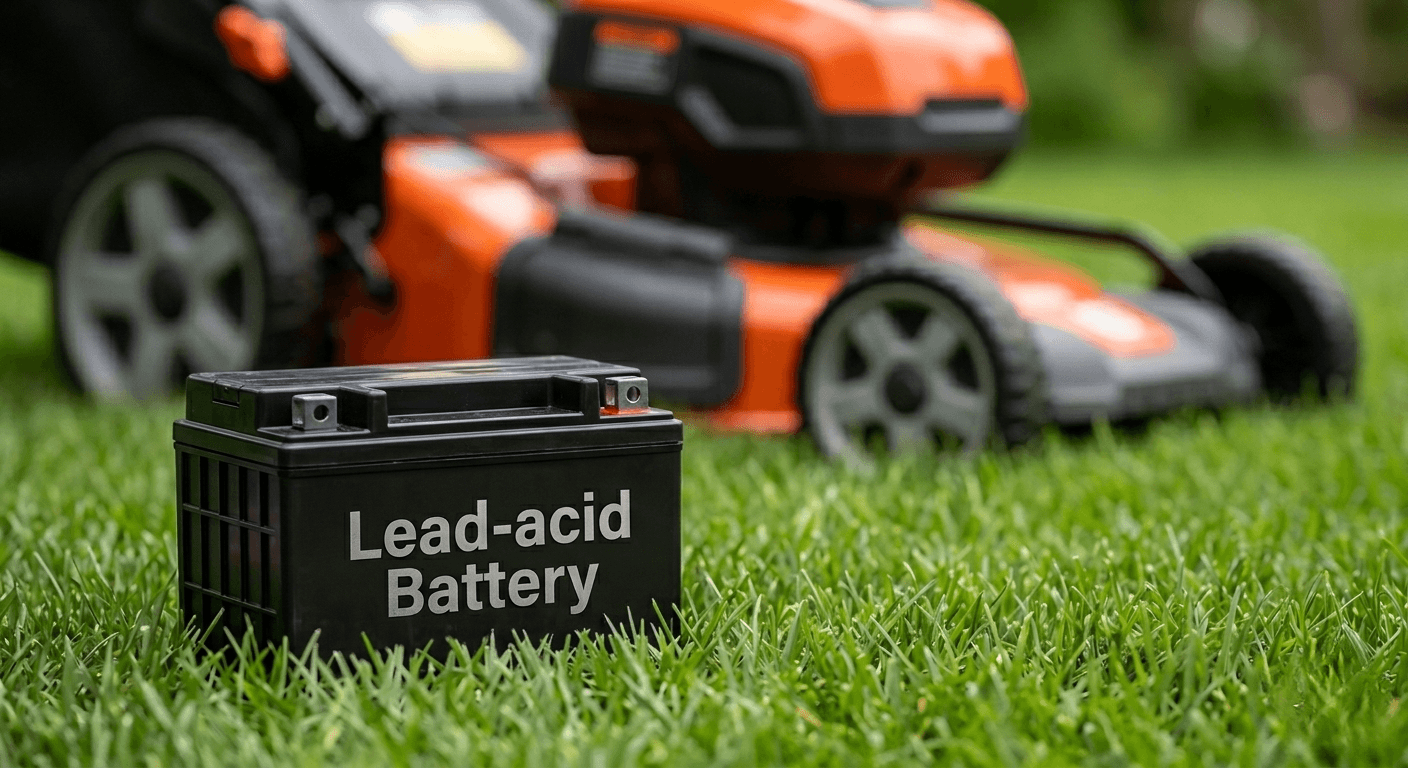
Most traditional gas-powered lawn mowers and riding mowers use 12-volt batteries because they are designed primarily for starting small internal combustion engines, not powering the cutting system itself.
A 12V system is ideal for this purpose for several reasons:
Designed for engine starting, not propulsion
In gas-powered riding mowers, the battery is not used to drive the wheels or blades.
Instead, it is used to:
- Start the engine (similar to a car)
- Power basic electrical components (lights, ignition system)
Once the engine is running, the mower is powered by gasoline, not electricity.
Industry standard inherited from automotive systems
12V batteries are widely used because:
- They are similar to car starter batteries
- Parts are cheap and widely available
- Charging systems are standardized
- Replacement is easy for consumers
This makes 12V the most practical and cost-efficient choice.
Good balance between power and size
A 12V battery provides:
- Enough current for engine ignition
- Compact size for mower chassis
- Low cost compared to higher-voltage systems
Going higher voltage would be unnecessary for a starter-only system.
Separation between “starting system” and “cutting system”
In gas-powered mowers:
- Engine runs on gasoline
- Battery only starts engine
In contrast:
- Electric mowers use battery to power everything (motor + blade)
- This is why electric models use much higher voltage systems (40V–80V).
Standardization across the industry
Most major manufacturers (such as John Deere, Toro, Cub Cadet) use 12V systems for consistency.
How to Check Lawn Mower Battery Voltage
You can check a lawn mower battery voltage using a simple digital multimeter or by reading the battery label.
This helps you understand whether the battery is healthy, weak, or failing.
Method 1: Use a multimeter (most accurate)
To measure battery voltage:
- Set the multimeter to DC voltage (20V range)
- Connect the red probe to the positive terminal (+)
- Connect the black probe to the negative terminal (−)
- Read the voltage on the screen
Typical readings for a 12V lawn mower battery:
- 12.6V – 12.8V → Fully charged
- 12.4V – 12.5V → Good condition
- 12.2V → Partially charged
- 12.0V or lower → Weak or discharged
- Below 11.8V → Likely failing battery
Method 2: Check the battery label
Most lawn mower batteries will clearly show:
- “12V” printed on the case
- Sometimes also Ah rating (amp-hours)
This confirms the system voltage without tools.
Method 3: Check your mower manual
The owner’s manual will specify:
- Battery voltage (12V or system voltage range)
- Compatible replacement type
- Charging requirements
What does battery voltage actually mean?
Battery voltage is not just a number — it is an indicator of battery state and health.
- Higher voltage → fully charged and stable
- Lower voltage → discharged or aging battery
- Consistently low voltage → battery degradation
In other words, voltage helps you understand whether your mower starting issues are caused by the battery or another system.
Signs of a Bad Lawn Mower Battery & When to Replace It
A lawn mower battery may still show some voltage, but fail under load or lose its ability to start the engine.
Here are the most common signs of a weak or failing battery:
⚠️ Common signs of a bad lawn mower battery
1. Slow engine cranking
The engine turns over very slowly or struggles to start.
2. Clicking sound when turning the key
You hear a clicking noise, but the engine does not start.
3. Frequent need for jump starts
The mower starts only after being jump-started.
4. Battery voltage drops quickly
Even after charging, voltage falls below normal levels within a short time.
5. Dim lights or weak electrical output
If your mower has lights, they appear dim or flicker.
When should you replace a lawn mower battery?
You should consider replacing the battery if:
- Voltage consistently stays below 12.0V
- Battery is more than 3–5 years old
- It cannot hold a charge overnight
- The mower requires repeated jump starts
Important insight: Voltage is not the full story
A battery may still show around 12.2V, but still fail under load.
This is because:
- Voltage measures static charge
- Starting the engine requires high current (load performance)
That’s why weak batteries often fail only during startup, not when tested at rest.
- Related article: How Long Do Lawn Mower Batteries Last
Can You Jump Start or Charge a Lawn Mower Battery?
Yes, most 12-volt lawn mower batteries can be jump started using a car battery or a portable jump starter.
However, it must be done carefully to avoid damaging the electrical system.
How to safely jump start a lawn mower battery
- Turn off both the mower and the car (if using a vehicle)
- Connect red (positive) cable to the mower battery first
- Connect the other red clamp to the car battery positive terminal
- Connect the black (negative) cable to the car battery
- Attach the other black clamp to a metal ground on the mower frame
- Start the mower engine
- Remove cables in reverse order
⚠️ Important safety notes
- Only jump start 12V systems
- Never use higher voltage batteries
- Do not let clamps touch each other
- Avoid repeated jump starts (it indicates a failing battery)
Can you charge a lawn mower battery?
Yes. Most lawn mower batteries can be charged using a 12V battery charger.
Charging basics
- Use a smart charger if possible
- Typical charging voltage: around 13.8V–14.4V
- Full charge voltage: about 12.6V–12.8V (resting state)
How long does it take to charge?
- Small battery: 4–8 hours
- Larger riding mower battery: 6–12 hours
Do Robotic Lawn Mowers Use the Same 12V Battery System?
No. Robotic lawn mowers do not use a simple 12-volt starter battery system like traditional gas-powered mowers.
Instead, they use integrated lithium-ion battery systems designed to power the entire machine, not just start an engine.
What voltage do robotic lawn mowers use?
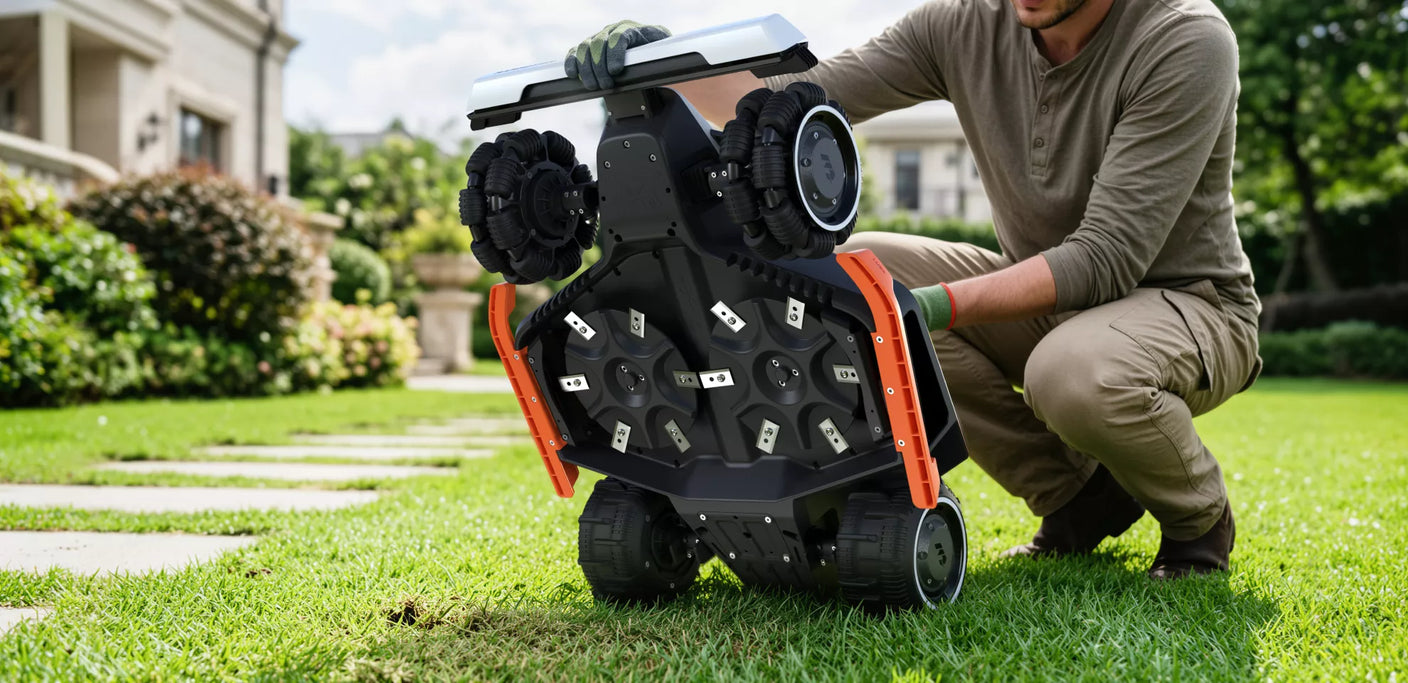
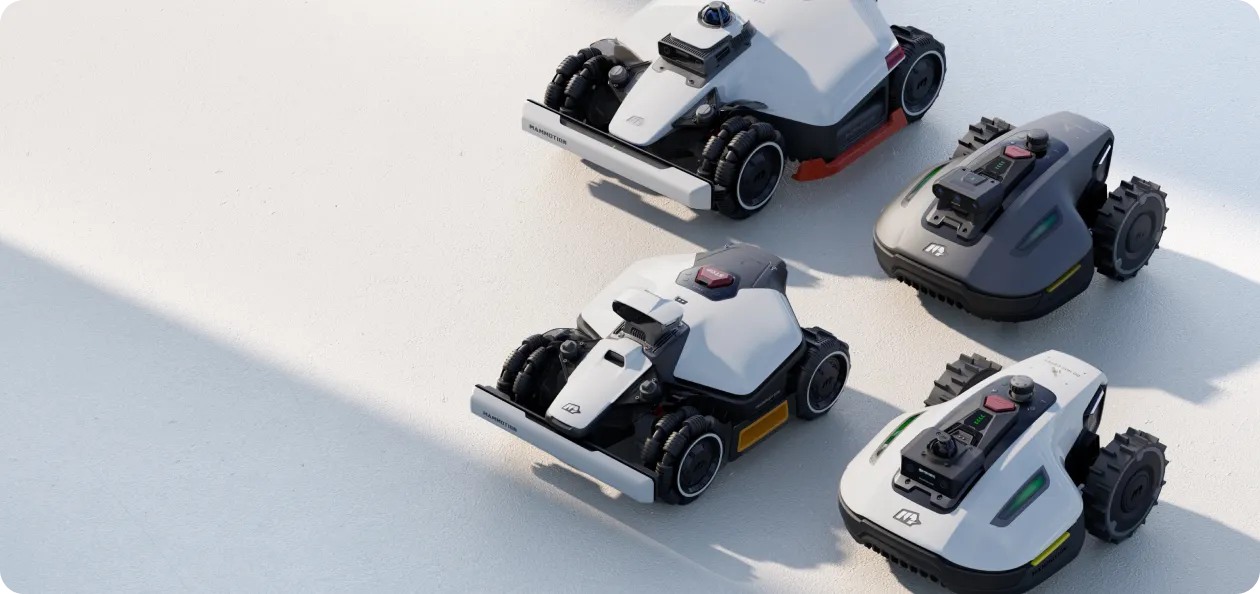
Most robotic lawn mowers operate using 18V to 36V lithium battery systems, depending on the model and manufacturer. Like Mammotion LUBA 3 AWD 5000 features a 21.6V 15Ah lithium battery.
Unlike 12V lead-acid batteries used in gas mowers, robotic mowers rely on:
- High-efficiency lithium battery packs
- Continuous charge-and-run cycles
- Automated docking and recharging systems

Key comparison: Traditional vs Robotic mower batteries
|
Feature |
Gas Lawn Mower |
Robotic Lawn Mower |
|
Battery role |
Start engine only |
Power entire system |
|
Voltage |
12V |
18V–36V |
|
Battery type |
Lead-acid |
Lithium-ion |
|
Charging method |
Manual |
Automatic docking |
|
Usage pattern |
Occasional use |
Frequent cycles |
Final Thoughts
Most lawn mower batteries are 12 volts, especially in gas-powered riding mowers and lawn tractors, where the battery's primary job is to start the engine.
However, modern lawn mower technology has expanded beyond the traditional 12V system. Battery-powered push mowers commonly use 40V to 80V lithium batteries, while robotic lawn mowers typically operate on 18V to 36V battery systems designed to power the entire machine.
If you're unsure about your mower's battery voltage, the easiest solution is to check the battery label, owner's manual, or measure the voltage with a multimeter.
Understanding your mower's battery voltage can help you diagnose starting problems, charge the battery correctly, and choose the right replacement when needed.
Frequently Asked Questions
1. What voltage should a fully charged lawn mower battery read?
A fully charged 12V lawn mower battery should typically read 12.6V to 12.8V when the engine is off and the battery has been resting.
If the reading is significantly lower, the battery may need charging or further testing.
2. Are all lawn mower batteries 12 volts?
No. While most gas-powered riding lawn mowers, lawn tractors, and zero-turn mowers use 12V batteries, electric and robotic lawn mowers often use higher-voltage lithium battery systems.
3. Can a lawn mower battery be too weak even if it shows 12 volts?
Yes. Voltage alone does not always indicate battery condition. A battery may show close to 12V at rest but still fail when starting the engine if it cannot deliver enough current under load.
4. Can I use a car battery in a lawn mower?
Only if both systems are 12V and the battery physically fits the mower.
However, lawn mower batteries and automotive batteries are designed for different applications, so a direct replacement is not always recommended.
5. How long does a lawn mower battery last?
Most lawn mower batteries last between 3 and 5 years, depending on:
- Usage frequency
- Charging habits
- Storage conditions
- Battery type
Proper maintenance can help extend battery life.
6. Can a Lawn Mower Use a 6V Battery?
Most modern lawn mowers use 12V batteries, not 6V batteries.
Some older garden equipment and vintage riding mowers may have used 6V electrical systems, but these are uncommon today. Using the wrong battery voltage can prevent the mower from starting and may damage electrical components.
Always replace a lawn mower battery with the voltage specified by the manufacturer.
Did you like this article? Add us as a preferred source to find us more easily on Google.