
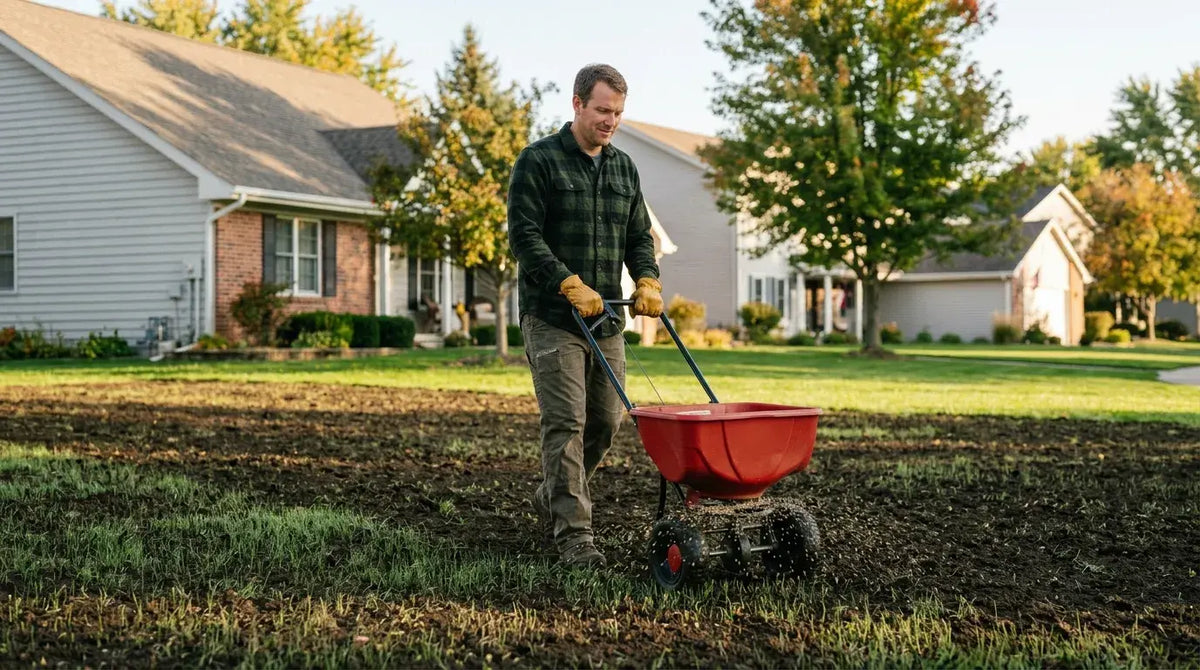
Knowing when to fertilize new grass depends on how you establish your lawn. Grass seed may need starter fertilizer at planting, followed by another application several weeks after germination if additional nutrients are needed. New sod generally needs time to root into the underlying soil before receiving more fertilizer.
The right timing depends on your grass type, soil fertility, initial fertilizer application, and local climate. This guide explains when to fertilize new grass seed and sod, how to choose the right fertilizer, and which common mistakes to avoid.
When to Fertilize New Grass?
For seeded lawns, starter fertilizer is often applied at planting, with a follow-up application typically recommended about 3–6 weeks after germination, depending on the grass, soil conditions, and initial fertilizer application. For new sod, it is generally best to wait until the roots begin establishing in the underlying soil—often at least 4 weeks after installation, although local recommendations vary.
|
Lawn type |
When to consider fertilizing |
What to check first |
|
New grass seed |
At planting, if needed; then often 3–6 weeks after germination |
Seedling growth, initial fertilizer, and soil nutrient levels |
|
New sod |
Generally after at least 4 weeks, following local recommendations |
Root establishment, pre-applied fertilizer, and grass condition |
These timelines are starting points, not universal deadlines. Iowa State University Extension recommends considering additional fertilizer 3–4 weeks after germination when seedlings are about 1–1.5 inches tall. Purdue Extension gives a general follow-up interval of 4–6 weeks after germination. For sod, Purdue recommends waiting at least four weeks, while University of Florida IFAS Extension advises waiting 30–60 days under Florida conditions.
The main rule is to check what fertilizer has already been applied, determine whether additional nutrients are needed, and follow local university Extension guidance and the product label.
Once your new lawn is established, its fertilization schedule will depend on grass type, climate, and seasonal growth. See our guide to when to fertilize your lawn and how often to fertilize your lawn for seasonal recommendations by grass type and region.
When to Fertilize New Grass Seed
For newly seeded lawns, apply starter fertilizer at planting if recommended by a soil test or local guidance. If additional fertilizer is needed, a follow-up application is often considered 3–6 weeks after germination, depending on the grass species, soil conditions, and initial fertilizer used.
Should You Fertilize Before Planting Grass Seed?
You can fertilize before planting grass seed if your soil needs additional nutrients. Ideally, get a soil test before preparing the lawn. The results can help you determine whether nitrogen, phosphorus, or potassium is needed and how much to apply.
Starter fertilizer is not essential for every new lawn. In particular, avoid automatically choosing a high-phosphorus formula. Phosphorus should be applied when soil-test results or local recommendations indicate a need, and state or local restrictions may limit its use.
If you apply fertilizer before seeding, follow the product directions for application rates and timing. Avoid applying another dose simply because the grass has not emerged yet.
When to Apply Fertilizer After Grass Seed Germinates
Count from germination rather than from the day you sowed the seed. Germination time varies by grass species and growing conditions, so the calendar date alone is not a reliable guide.
Iowa State University Extension recommends considering additional fertilizer about 3–4 weeks after germination, when seedlings are approximately 1–1.5 inches tall. Purdue Extension suggests a general interval of 4–6 weeks after germination. These are regional recommendations, so follow guidance suited to your grass type and location.
How to Tell If New Grass Is Ready for Another Application
Healthy establishment matters more than following a rigid calendar. Look for steady seedling growth and check whether the grass has reached the stage recommended for your region.
Also consider soil moisture, temperature, and the lawn's overall condition. Fertilizer cannot compensate for poor watering, unsuitable growing conditions, or nutrient levels that are already adequate.
Before applying more fertilizer, check:
- Seedling development: The grass is growing steadily and has reached the stage recommended by your local Extension service.
- Initial fertilizer application: You know whether starter fertilizer was applied and when another application is appropriate.
- Nutrient requirements: A soil test or local guidance indicates that additional fertilizer would benefit the lawn.
If you used starter fertilizer at planting, do not automatically repeat the application. Follow the product label and account for the nutrients already supplied.
When to Fertilize New Sod
For most newly sodded lawns, wait at least 4 weeks before applying additional fertilizer, unless local recommendations or the sod supplier advise otherwise. Some regions recommend waiting longer. For example, University of Florida IFAS Extension recommends waiting 30–60 days after installation under Florida conditions. The right timing depends on your grass type, local climate, and whether the sod was fertilized before delivery.
Before fertilizing new sod, check whether fertilizer was applied before delivery and confirm that the roots are establishing in the underlying soil.
When Can You Fertilize New Sod?
Use the 4-week mark as a starting point, not an automatic feeding date. Before fertilizing, gently lift a corner of the sod. If you feel resistance, the roots may be establishing in the underlying soil. If the sod lifts easily, give it more time and continue following the recommended watering schedule.
Once the sod is rooting and growing well, check the supplier’s instructions and local university Extension recommendations to determine whether additional fertilizer is needed.
Should You Fertilize Sod Right After Installation?
Usually, you should not apply extra fertilizer immediately after installation without checking whether it is needed. Sod may already have received fertilizer during production, and its roots need time to establish. Applying more too soon can be unnecessary and may increase nutrient loss, especially with frequent irrigation.
The rule of thumb: Consider fertilizing new sod after at least four weeks, but confirm that it is rooting and check local recommendations before applying more.
What Fertilizer Should You Use for New Grass?
The best fertilizer for new grass depends on the soil's nutrient levels and whether you planted seed or installed sod. Starter fertilizer can help supply nutrients during establishment, but not every lawn needs the same formula or additional phosphorus.
Start with a soil test when possible. It provides a better basis for choosing fertilizer than selecting a product simply because it is labeled “starter” or has high nutrient numbers.
Do You Need Starter Fertilizer for New Grass?
Starter fertilizer may be useful when planting grass seed if your soil needs additional nutrients. However, it is not automatically necessary for every lawn.
If your soil already contains sufficient phosphorus, a high-phosphorus starter formula may offer little benefit. University of Maryland Extension recommends basing fertilizer applications on soil-test results and notes that local laws may apply to phosphorus use.
For new sod, check whether fertilizer was applied before delivery. If the turf has already received nutrients, adding more immediately after installation may be unnecessary.
How to Choose the Right N-P-K Ratio
The three numbers on a fertilizer label represent nitrogen (N), phosphorus (P), and potassium (K). Each supports different aspects of plant growth, but the right balance depends on your soil and lawn’s needs.
- Nitrogen (N): Supports leafy growth and helps new grass establish.
- Phosphorus (P): Supports root development, but should be applied when soil-test results or local rules indicate it is appropriate.
- Potassium (K): Supports overall plant function and stress tolerance.
Choose a fertilizer based on the nutrients your lawn needs rather than the highest numbers on the bag. Follow the label's application rate, and check state or local restrictions before applying phosphorus.
If you are unsure which formula to use, a soil test and recommendations from your local university Extension service can help you make an informed choice.
Common Mistakes When Fertilizing New Grass
Fertilizing new grass at the wrong time or applying too much can interfere with establishment and waste nutrients. Avoid these common mistakes to help your new lawn develop healthy roots and steady growth.
Fertilizing Again Too Soon
Applying fertilizer before the recommended interval has passed can add nutrients the grass does not yet need. This is especially important if you used starter fertilizer when seeding or if your sod was fertilized before delivery. Check the product label and local Extension guidance before applying another dose.
Using Too Much Fertilizer
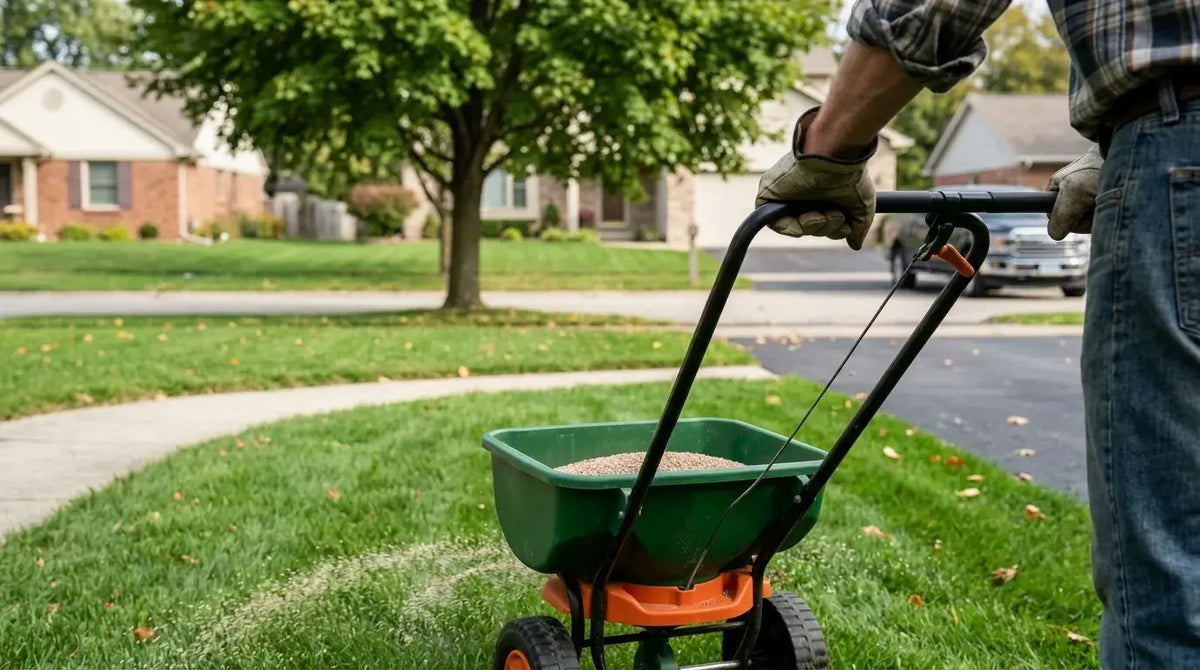
More fertilizer does not mean faster establishment. Excessive application can damage grass, contribute to nutrient runoff, and waste money. Measure your lawn area, follow the label rate, and use a spreader to distribute granular fertilizer evenly.
Assuming Every New Lawn Needs High-Phosphorus Fertilizer
Starter fertilizer is not automatically the best choice for every lawn. Use a soil test to determine whether phosphorus is needed, and check local restrictions before applying it. Choose a fertilizer based on your lawn’s nutrient needs rather than the highest N-P-K numbers.
Ignoring Watering and Local Conditions
New grass needs suitable moisture to establish, but fertilizer cannot compensate for poor watering, unsuitable temperatures, or weak root development. Water according to the needs of your seed or sod, and adjust your fertilizing schedule to your grass type and regional recommendations.
The key takeaway: Fertilize according to your lawn’s establishment stage and nutrient needs—not simply because a certain number of days has passed.
Frequently Asked Questions
1. When to Fertilize a New Lawn?
For grass grown from seed, a follow-up application is often considered about 3–6 weeks after germination if additional nutrients are needed. For new sod, a common starting point is to wait at least 4 weeks after installation. Local recommendations may call for different timing.
2. When to Fertilize New Grass Seed in Spring?
Apply starter fertilizer at seeding if soil-test results or local guidance indicate it is needed. Consider follow-up fertilizer after seedlings have established, using the recommended interval for your grass type. Avoid applying fertilizer simply because spring has arrived.
3. Can You Fertilize New Grass Too Early?
Yes. Fertilizing too soon after an initial application may add unnecessary nutrients and can damage grass if the product is overapplied. Check what fertilizer was already used and follow the recommended application interval.
4. Should You Fertilize New Sod Right Away?
Usually, you should not automatically apply more fertilizer immediately after installation. Sod may already have received nutrients before delivery, so check the supplier’s instructions and wait until the roots begin establishing before considering another application.
Did you like this article? Add us as a preferred source to find us more easily on Google.