


Knowing when to fertilize lawn helps you maintain healthy growth, improve lawn color, and prepare your grass for changing weather. The best time to apply fertilizer depends on your grass type, local climate, and the season.
Cool-season grasses generally benefit most from fall fertilization, while warm-season grasses typically need fertilizer during late spring and summer when growth is active. Spring feeding may also be beneficial, but applying fertilizer too early or during heat and drought stress can do more harm than good.
This guide explains when to fertilize your lawn in spring, summer, and fall, how timing differs between cool-season and warm-season grasses, and what homeowners in states such as Michigan, Ohio, Minnesota, Colorado, and Texas—and in areas such as Houston and Florida—should consider.
Spring Fertilization: When to Fertilize Lawn in Spring
Spring fertilization can take place from February through June in some regions, but timing depends on grass type and local temperatures. Warm-season grasses should be fertilized after spring green-up, while cool-season grasses in colder regions often benefit from waiting until later in spring.
Early Spring Fertilization
Timing: February–April in warmer regions; later in colder areas.
Early spring fertilizer is typically applied between February and April in warmer regions, once the grass has greened up and started growing actively. In colder regions, wait until the lawn is growing actively rather than applying fertilizer based on the calendar alone.
Fertilizing too early can provide little benefit when cool temperatures limit grass growth. For example, the University of Minnesota Extension recommends spring fertilization from May through late June for Minnesota lawns, rather than applying fertilizer too early. This timing is a regional example, not a universal schedule for every cool-season lawn.
Late Spring Fertilization
Timing: Generally April–June, depending on region and grass type.
Late spring, generally April through June, is another potential fertilization window. Warm-season lawns may be ready once they are fully green and growing steadily, while cool-season lawns in northern areas may need a later schedule based on local recommendations.
Scotts lists April through June for its late-spring application, often six to eight weeks after an early-spring feeding. However, this is part of its product-specific lawn care program, not a requirement to fertilize every lawn twice in spring. Before applying more fertilizer, consider any previous applications, follow the product label, and avoid unnecessary nitrogen applications as temperatures rise.
Summer Fertilization: When to Fertilize Lawn in Summer
Timing: June–August for many actively growing warm-season lawns.
Summer fertilization for warm-season grasses such as Bermuda, St. Augustine, and Zoysia typically takes place from June through August, when the lawn is actively growing and has adequate moisture. Cool-season grasses, including Kentucky bluegrass and tall fescue, generally should not receive routine nitrogen fertilizer during midsummer heat.
In Texas, established warm-season lawns may benefit from summer feeding when needed, but avoid fertilizing during hot, dry periods when the grass is under stress.
In Florida, local fertilizer restrictions may limit when lawn fertilizer can be applied. Check city and county rules before treating your lawn.
Fall Fertilization: When to Fertilize Lawn in Fall
Timing: Late August through October for many cool-season lawns; earlier in fall for warm-season lawns, depending on local conditions.
Fall is a key fertilization season for cool-season grasses because it supports recovery from summer stress and healthy growth before winter. In Colorado, for example, bluegrass lawns commonly receive fall fertilizer from late September through early November at lower elevations, with earlier applications in mountain areas.
Warm-season grasses need a different schedule. Finish nitrogen applications while the lawn is still actively growing and early enough to meet local recommendations for the expected first frost. In Texas, recommended cutoff dates vary by region, so homeowners should follow Texas A&M AgriLife guidance rather than one statewide calendar.
Avoid fertilizing dormant or frozen grass. For more detail on pre-winter treatments, see our guide to [winterize lawn with fertilizer].
When to Fertilize Your Lawn by Grass Type
The best time to fertilize your lawn depends on whether you have cool-season or warm-season grass. Cool-season grasses generally benefit most from fall fertilization, while warm-season grasses are typically fertilized from late spring through summer. Spring and fall applications may also be appropriate depending on grass type, local climate, and lawn needs.
When to Fertilize Cool-Season Grass
Cool-season grasses, including Kentucky bluegrass, tall fescue, and perennial ryegrass, are generally fertilized in spring and fall, with late summer through fall being the most important window.
|
Season |
Typical Timing |
Guidance |
|
Early spring |
February–April in warmer regions; later in colder regions |
Fertilize only when active growth and local recommendations support it. |
|
Late spring |
April–June |
A spring application may be appropriate; avoid excessive nitrogen as temperatures rise. |
|
Summer |
June–August |
Avoid routine nitrogen during midsummer heat, especially under drought stress. |
|
Fall |
Late August–November, depending on region |
Often the most important fertilization window. Follow local guidance for late-fall applications. |
Fall fertilization helps cool-season lawns recover from summer stress and supports healthy growth before winter. In northern states, the exact timing varies with local temperatures and the first expected frost. For example, Iowa State University Extension identifies spring, mid-September, and late October to early November as possible application windows in Iowa, while advising against summer fertilization of cool-season lawns.
When to Fertilize Warm-Season Grass
Warm-season grasses, including Bermuda, St. Augustine, and Zoysia, are generally fertilized from late spring through summer, after spring green-up and the start of active growth. Applications should taper off as the grass approaches dormancy, according to local recommendations.
|
Season |
Typical Timing |
Guidance |
|
Early spring |
February–April in warmer regions |
Wait until the grass is actively growing. |
|
Late spring |
April–June |
Begin fertilizing once active growth is established. |
|
Summer |
June–August |
Fertilize as needed when moisture is adequate and the lawn is not stressed. |
|
Fall |
Early to mid-fall, depending on region |
Follow local cutoffs and stop nitrogen applications before dormancy approaches. |
Warm-season lawns make the best use of fertilizer during their active growing season. In Texas, for example, the appropriate start and end dates vary across the state, so homeowners should follow local Texas A&M AgriLife Extension recommendations rather than use one statewide calendar.
When to Fertilize Lawn by Region
Lawn fertilization timing varies across the United States. Climate and grass type determine when to apply fertilizer, so use these regional guidelines to find the best time to fertilize your lawn in your area.
Northern and Midwest United States
- Michigan: If you're wondering when to fertilize your lawn in Michigan, fall is generally an important fertilization window for cool-season grasses, while spring applications should be timed to active growth.
- Ohio: When to fertilize your lawn in Ohio depends on the grass type and local conditions. For cool-season lawns, late spring and fall are common fertilization windows, with fall often the priority.
- Minnesota: When to fertilize your lawn in Minnesota is largely determined by the cool growing season. Late spring, generally May through late June, and fall are key windows. Avoid fertilizing too early in spring or during midsummer heat.
Mountain West
- Colorado: When to fertilize your lawn in Colorado depends on elevation and grass type. Cool-season lawns, such as Kentucky bluegrass, generally benefit most from fall fertilization, but mountain areas may require earlier timing.
Southern United States and Gulf Coast
- Texas: If you're deciding when to fertilize your lawn in Texas, fertilize warm-season grasses after spring green-up and once active growth begins. The timing varies across the state.
- North Texas: When to fertilize your lawn in North Texas depends on spring temperatures and grass growth. Warm-season lawns can often begin receiving fertilizer in late April or May, once active growth is established.
- Houston: When to fertilize your lawn in Houston depends on the grass variety and local conditions. Warm-season lawns commonly begin spring fertilization around April, once active growth resumes. Check local fertilizer restrictions before applying.
- Florida: When to fertilize your lawn in Florida depends on the region and grass species. North and Central Florida lawns commonly begin spring fertilization around April, while South Florida's longer growing season can allow a different schedule. Local fertilizer restrictions may limit application dates.
Regional Fertilization Timing Tips
- For Michigan, Ohio, and Minnesota, cool-season grasses such as Kentucky bluegrass and tall fescue generally benefit from fall fertilization. Minnesota Extension specifically cautions against early-spring and midsummer applications.
- In Colorado, fall is the preferred fertilization season for bluegrass lawns. Colorado State University Extension recommends late September through early November at lower elevations, with earlier timing in mountain areas.
- In Texas, the timing depends on local frost dates and when warm-season grass resumes active growth. Texas A&M AgriLife guidance places the first fertilizer application after the lawn has greened up and been mowed several times; its regional schedule ranges from March in the Rio Grande Valley to June in Amarillo.
- In Florida, timing varies by region and grass species. UF/IFAS recommends an initial application around early April in Central Florida and mid-April in North Florida for bermudagrass, while South Florida may support year-round growth. Check local fertilizer restrictions before applying.
Frequently Asked Questions
1. What Month Should You Start Fertilizing?
Cool-season lawns may receive a spring application around April through June in many northern areas, although fall is often the most important fertilization period. Warm-season lawns are generally fertilized after they green up and begin actively growing, often in late spring. Use local Extension recommendations rather than following a fixed month everywhere.
2. Should You Fertilize Before or After It Rains?
Apply fertilizer before a light rain if the forecast is reliable, or water the lawn after applying it. Avoid fertilizing before heavy rain, which can wash nutrients off the lawn and into storm drains or waterways. If heavy rain has just passed, wait until the lawn and soil can be managed without creating runoff, and check the product label before applying.
3. How Do I Know When My Lawn Needs Fertilizer?
Slow growth, pale color, or a thin lawn can indicate a nutrient problem, but these symptoms can also result from drought, poor drainage, disease, pests, or compacted soil. A soil test is the most reliable way to identify nutrient needs and choose an appropriate fertilizer.
4. When Should You Not Fertilize Your Lawn?
Do not fertilize when grass is dormant, frozen, drought-stressed, or struggling in extreme heat. Avoid applying fertilizer before heavy rain, which can cause runoff and nutrient loss. You should also avoid unnecessary applications if you have already applied the recommended amount for the season. Always follow the fertilizer label and check local rules, which may restrict application during certain periods.
5. Should You Put Fertilizer on Wet or Dry Grass?
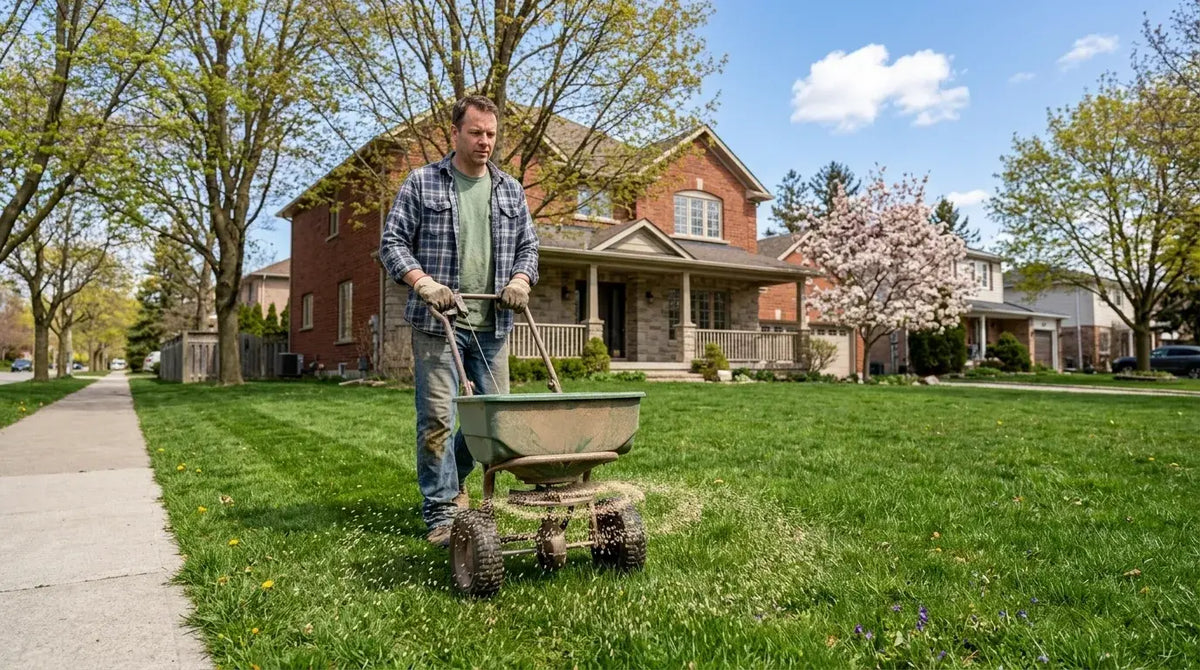
For most granular lawn fertilizers, apply to dry grass so the granules spread more evenly and are less likely to stick to wet blades. Then water the lawn according to the product label to move the fertilizer into the soil. Some products have different application instructions, especially combination fertilizers that also contain weed control, so check the label before applying.
6. How Long Can Fertilizer Sit on a Lawn Before Watering?
There is no single waiting period for every fertilizer. Many granular fertilizers should be watered in soon after application, while some weed-and-feed products need to remain on the leaf surface for a specified period. Follow the label for the exact product rather than leaving fertilizer on the lawn for a set number of hours.
Did you like this article? Add us as a preferred source to find us more easily on Google.