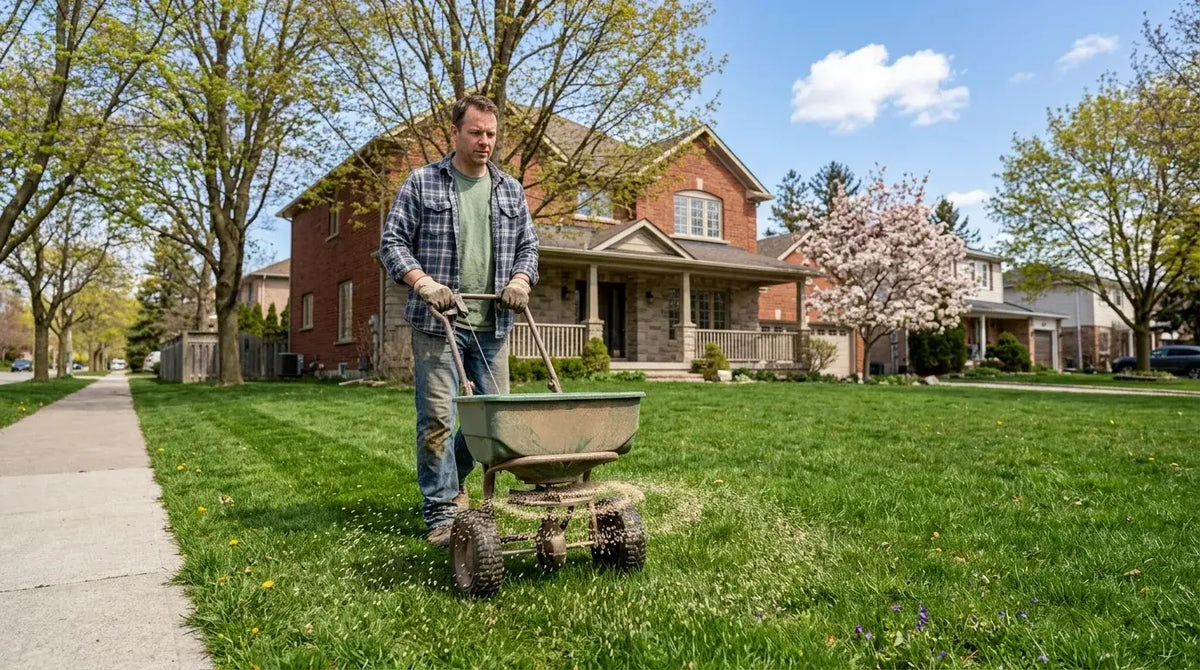






Applying too much fertilizer can cause brown or yellow patches, damage grass roots, and, in severe cases, kill sections of your lawn. The good news is that some over-fertilized grass can recover with the right treatment.
The best way to fix an over-fertilized lawn depends on how much fertilizer you applied, whether excess granules remain on the grass or soil, and how well your soil drains. Learn how to recognize fertilizer damage, take the right recovery steps, and prevent over-fertilization in the future.
Can You Over Fertilize Your Lawn?
Yes. Applying more fertilizer than your lawn needs can damage grass. Excess soluble salts can make it harder for roots to absorb water, causing grass to wilt, turn brown, or die even when the soil contains moisture.
The effects depend on the fertilizer type, application rate, and growing conditions. Over-fertilization commonly occurs in three ways:
- Too much fertilizer across the lawn: Excess fertilizer can expose a large area to damaging salt concentrations and unnecessary nutrients.
- Fertilizer spills or overlapping spreader passes: Concentrated deposits can cause localized injury, while uneven applications may create visible differences in grass color.
- Excessive nitrogen: Too much nitrogen can stimulate rapid leaf growth and increase the risk of nutrient loss when fertilizer is applied beyond the lawn’s needs.
Over-fertilization does not necessarily mean the entire lawn is beyond saving. Recognizing the symptoms and understanding how the fertilizer was applied can help you determine the appropriate next step.
For information on the timing and frequency of fertilization, please refer to our guides on when to fertilize your lawn, when to fertilize new grass, and how often to fertilize your lawn.
What Happens If You Over Fertilize Your Lawn?
Over-fertilizing can cause brown patches, yellowing, wilting, root injury, and excessive grass growth. The effects depend on the fertilizer applied, how much was used, and how evenly it was distributed.
Fertilizer Burn and Brown Grass
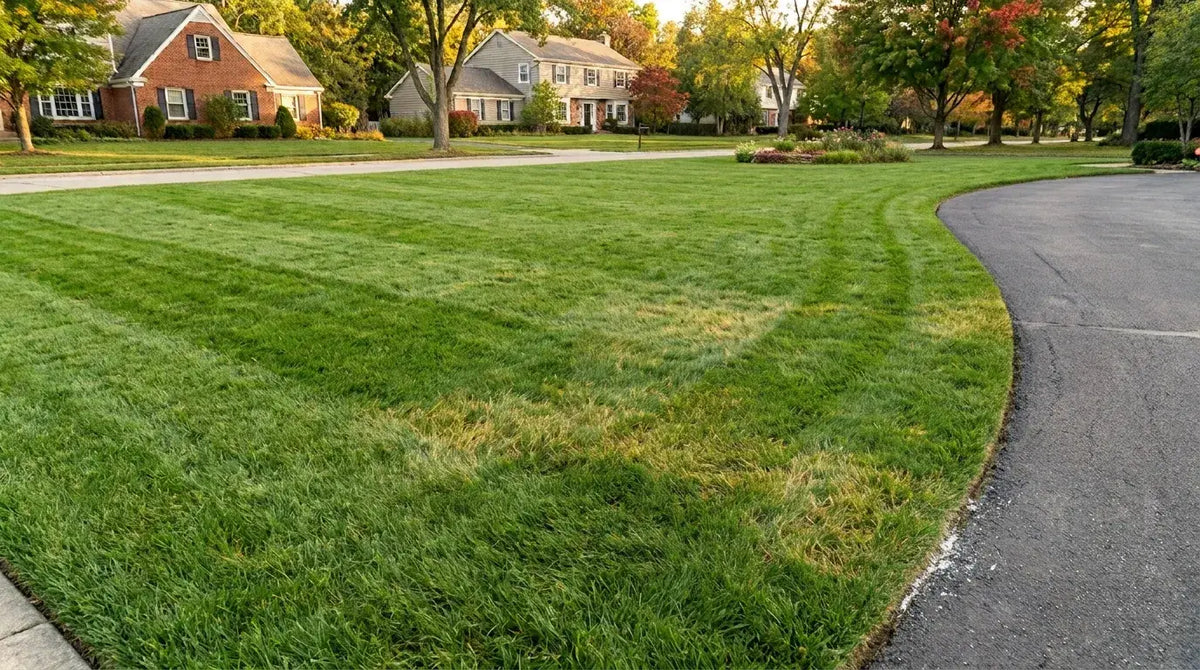
Fertilizer burn can make grass look scorched, leaving brown or dead patches where fertilizer salts have accumulated at high concentrations. Damage is often most noticeable around fertilizer spills or areas that received too much product.
Severe fertilizer injury can kill grass in affected spots. However, brown patches alone do not confirm fertilizer burn, so consider when the symptoms appeared and how the fertilizer was applied.
Yellowing, Wilting, and Root Damage
Over-fertilized grass may turn yellow, wilt, or become dry and brown. In more severe cases, fertilizer injury can damage roots and interfere with the plant’s ability to absorb water and nutrients, slowing recovery.
These symptoms can resemble drought stress or other lawn problems. Yellow or wilted grass should therefore be assessed alongside soil moisture, drainage, recent fertilizer applications, and other visible signs.
Excessive Growth and Nutrient Runoff
Excess nitrogen can stimulate rapid leaf growth, causing grass to grow faster and require more frequent mowing. However, rapid growth alone does not prove that a lawn has been over-fertilized.
Excess fertilizer can also increase the risk of nutrient runoff or leaching, particularly when heavy rain or excessive irrigation moves nutrients away from the root zone. Applying fertilizer at the recommended rate helps reduce unnecessary nutrient loss and the risk of environmental contamination.
How to Tell If Your Lawn Has Too Much Fertilizer
To determine whether your lawn has too much fertilizer, look at when the symptoms appeared, how the damage is distributed, and whether the application rate exceeded the product label. No single symptom confirms fertilizer injury, so consider several clues together.
Look for Burned Patches and Spreader Stripes
Examine the lawn for patterns that may be linked to a recent fertilizer application.
- Brown, scorched patches: These may indicate fertilizer burn, especially near a spill or an area that received a concentrated application.
- Alternating dark-green and light-green stripes: These may indicate uneven fertilizer coverage, with treated areas appearing greener than areas that received less fertilizer.
- Brown damage along spreader paths: Overlapping passes may cause injury if too much fertilizer accumulates in the same area.
Timing also matters. Symptoms that appear soon after fertilizing make fertilizer injury more plausible, but the pattern and timing alone cannot confirm the cause.
Check for Excess Fertilizer Granules
Inspect the grass and soil for visible fertilizer granules, particularly around damaged areas, along spreader paths, and near places where the product may have spilled. Concentrated piles or unusually heavy deposits suggest uneven application.
Review the fertilizer label and your application records to check how much product was used and whether the rate matched the recommended coverage. Note whether the lawn was watered or exposed to rain after application.
Visible granules do not automatically mean the lawn has been damaged, and their absence does not rule out fertilizer injury. Some products dissolve quickly, so application history and damage patterns remain important clues.
Rule Out Drought, Disease, and Other Causes
Before treating the lawn, consider other problems that can produce similar symptoms.
- Drought stress: Grass may wilt or turn brown when the soil lacks sufficient moisture. Check the soil rather than relying on leaf color alone.
- Lawn disease: Some diseases cause irregular patches, spots, or lesions. Look for distinctive symptoms and whether the damage continues to spread.
- Drainage problems: Grass in persistently wet or poorly drained soil may yellow or decline even when fertilizer has been applied correctly.
- Possible fertilizer injury: Damage that appears shortly after fertilizing and follows a spill or application pattern makes fertilizer burn more plausible.
If the cause remains unclear, avoid applying more fertilizer or using treatments at random. Review your recent lawn-care activities and consult a local university Extension service or qualified lawn-care professional if needed.
How to Fix Over-Fertilized Lawn
To fix an over-fertilized lawn, first remove any concentrated fertilizer deposits you can still see. Then assess the soil’s drainage and the risk of runoff before deciding whether watering is appropriate. Finally, monitor the damaged grass to determine whether it can recover or needs repair.
|
Your situation |
What to do |
|
Excess fertilizer granules are still visible |
Carefully remove concentrated piles where practical, without spreading them to unaffected areas. |
|
The fertilizer has dissolved or entered the soil |
Check drainage and runoff risk before deciding whether additional watering is appropriate. |
|
Damage is limited to spills or overlapping spreader passes |
Focus on the affected areas rather than automatically treating the entire lawn. |
|
Grass is severely brown or appears dead |
Avoid additional fertilizer and assess whether the grass can recover before repairing the area. |
These situations can overlap. For example, a fertilizer spill may leave visible granules and cause severe damage in one spot. Address the remaining excess first, then choose the next step based on soil conditions and the extent of the injury.
Remove Excess Fertilizer Granules
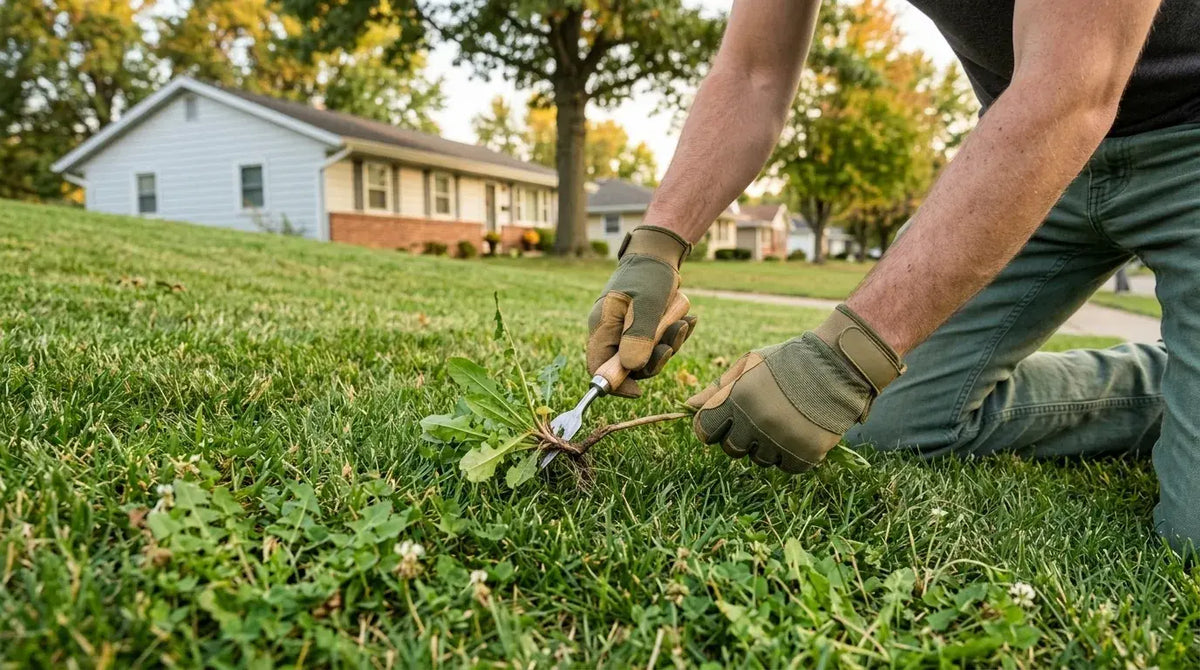
If concentrated piles of granular fertilizer are still visible, carefully remove as much excess as practical without spreading it across the lawn. Follow the product label and use appropriate tools or protective equipment as directed. Do not sweep or wash fertilizer into storm drains or nearby waterways.
Removing visible excess is especially important after a spill or uneven application. However, some granules may dissolve quickly, so their absence does not rule out fertilizer injury.
After removing the excess, consider the fertilizer type, amount applied, and soil drainage before deciding whether to water.
When and How to Water the Lawn
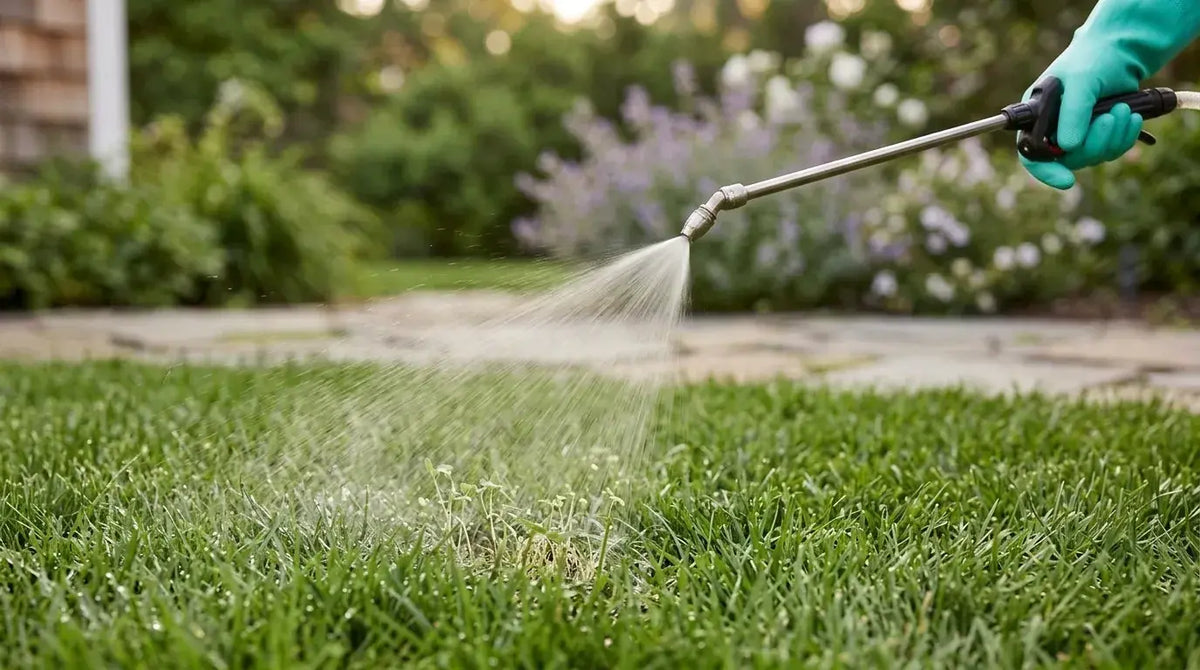
Watering may help dilute and move excess soluble fertilizer salts deeper into well-drained soil, reducing their concentration around grass roots. However, additional water is not appropriate for every lawn.
Before watering, consider three factors:
- Soil drainage: Well-drained soil may allow excess soluble salts to move below the root zone. Poorly drained or compacted soil may remain saturated, adding stress to damaged roots.
- Slope and runoff: Avoid excessive irrigation that could carry fertilizer into storm drains, driveways, or nearby waterways.
- Fertilizer type and amount: Different products behave differently. Check the label and seek local university Extension guidance if you are unsure how to respond.
The University of Maryland Extension describes irrigating an over-applied area to help leach excess salts, including repeated applications of about 1 inch of water in suitable conditions. This should not be treated as a universal prescription. Consider drainage, slope, local conditions, and runoff risk before following that approach.
If watering is appropriate, apply it in a controlled manner without creating standing water or runoff. Do not apply more fertilizer to compensate for the damage.
What to Do About Localized Fertilizer Damage
If fertilizer injury is concentrated around a spill or along overlapping spreader passes, focus your assessment on those areas. Check whether granules remain, whether the soil drains adequately, and whether the surrounding grass is still healthy.
Do not assume the entire lawn needs the same treatment. Where the fertilizer has already dissolved, the appropriate response depends on the product, soil conditions, and severity of the injury. Allow the grass to respond to suitable care before deciding whether additional intervention is necessary.
When to Repair or Reseed Damaged Areas
Grass may recover if its roots and growing points remain viable, but severely damaged or dead turf may need repair.
Monitor the affected area under suitable growing conditions. If new growth appears, give the grass more time to recover. If the area remains bare and the grass is no longer viable, prepare the soil and reseed with a grass type suited to your region, or replace the damaged turf where appropriate.
Before reseeding, address the original cause of the damage and follow the seed or sod product’s establishment instructions. Do not automatically add starter fertilizer or another nutrient product; determine whether additional nutrients are needed before applying them.

Will Over-Fertilized Grass Grow Back?
Over-fertilized grass can recover if the damage is limited and the grass plants remain alive. Recovery depends on the severity of fertilizer injury, the condition of the roots and growing points, the grass type, and whether growing conditions support new growth.
Grass that looks brown or stressed is not necessarily dead. Assess the affected area over time rather than deciding whether to replace the turf based on color alone.
Signs Your Grass May Recover
Look for these signs when assessing an over-fertilized lawn:
- New green growth: Fresh blades or shoots suggest that surviving grass is beginning to recover.
- Damage is no longer spreading: If the affected area stops expanding after the original problem is addressed, the grass may be stabilizing.
- Some green tissue remains: Grass that retains living growth may recover, although green color alone does not guarantee that the roots are healthy.
- Surrounding grass remains healthy: Healthy grass around a damaged patch can help you identify the extent of the injury, but it does not prove that the affected grass will recover.
Continue monitoring the lawn under suitable growing conditions. Recovery speed varies with the severity of the damage, grass species, season, and local weather, so avoid relying on a fixed recovery timeline.
When to Consider Reseeding or Replacing Turf
Reseeding or replacing turf may be necessary when grass is dead and no longer produces new growth under suitable conditions. Large areas of severely damaged turf may also require repair if the original grass cannot fill in.
Before repairing the lawn, confirm that the fertilizer problem has been addressed and that conditions are suitable for establishing new grass. Choose a seed or turf variety adapted to your region and existing lawn.
Do not automatically apply more fertilizer to encourage recovery. Additional nutrients will not revive dead grass and may worsen the problem if the soil already contains excess fertilizer. If the cause of the damage or the condition of the grass remains uncertain, seek advice from a local university Extension service or qualified lawn-care professional.
How to Prevent Over-Fertilizing Your Lawn
Preventing lawn fertilizer damage starts with applying the right product at the correct rate and distributing it evenly. A few simple checks before and during application can help you avoid excess fertilizer, uneven growth, and unnecessary nutrient loss.
Follow the Fertilizer Label
Check the product label for the recommended application rate, coverage area, and frequency. Applying more fertilizer than recommended will not necessarily make grass healthier and may damage it.
Avoid fertilizing more often than directed. If you are unsure whether your lawn needs another application, review your previous applications or consider a soil test before adding more nutrients.
Measure Your Lawn and Calibrate Your Spreader
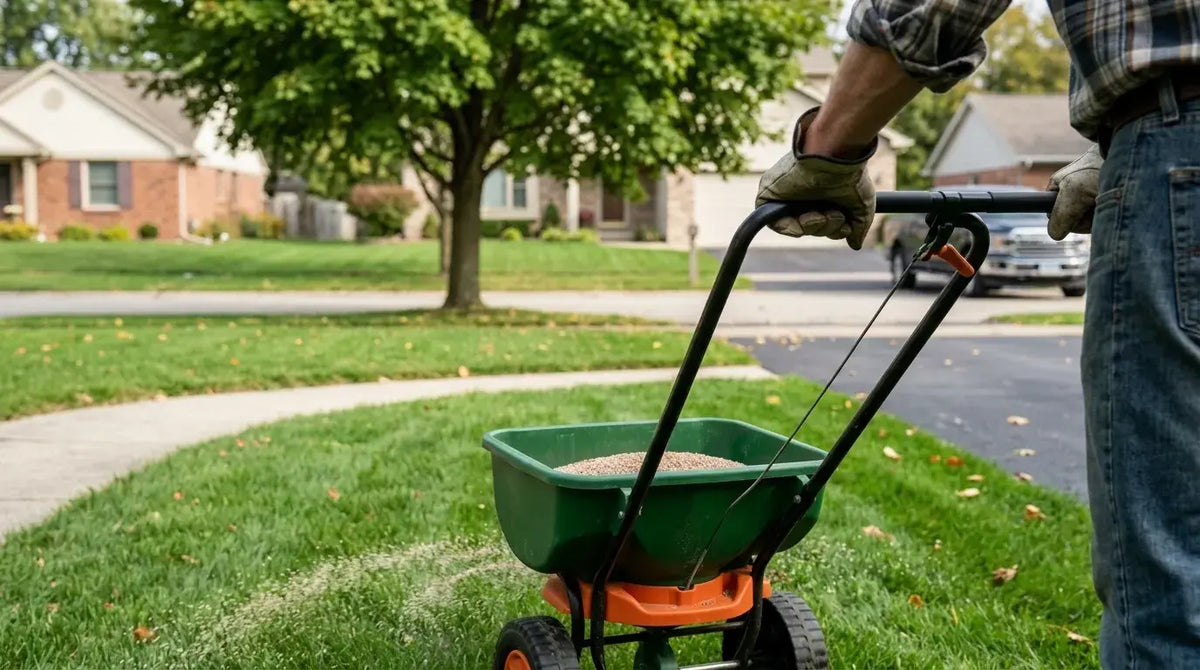
Measure the area you plan to fertilize so you can calculate the correct amount of product. Follow the spreader manufacturer’s instructions and the fertilizer label to select the appropriate setting.
Remember that settings vary by product and equipment. When practical, test the spreader over a measured area to check that you are applying fertilizer at the intended rate.
Apply Fertilizer Evenly and Track Applications
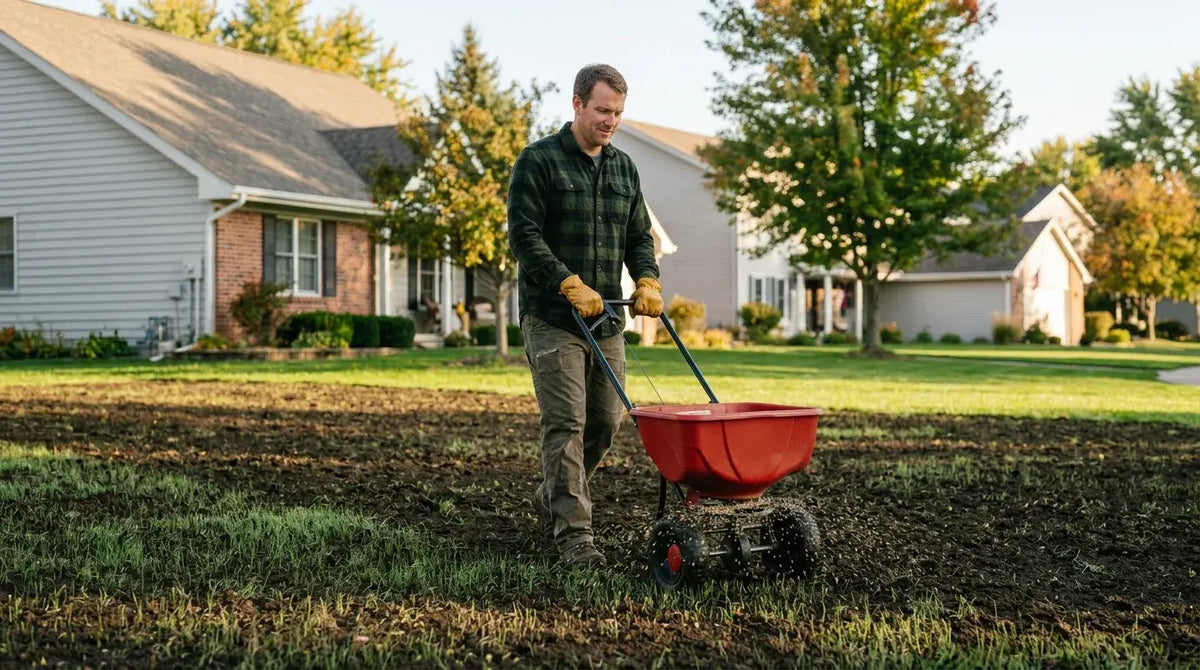
Use a consistent spreading pattern to avoid overlapping passes and concentrated deposits. Clean up spills promptly, keep fertilizer away from storm drains and waterways, and avoid application when heavy rain could wash nutrients away.
Record the fertilizer product, application date, and amount used. These notes help you avoid accidental repeat applications, especially when multiple people care for the same lawn.
Do not apply extra fertilizer simply because some areas look less green; first check whether the cause is uneven coverage, watering, or another lawn problem.
Use Soil Tests to Guide Fertilizer Decisions
A soil test can help identify nutrient needs and imbalances, reducing guesswork when choosing a fertilizer. Pale or slow-growing grass does not always mean the lawn needs more nutrients.
Use soil test results and local university Extension recommendations to guide your fertilizer choices. Apply only the nutrients your lawn needs, since requirements vary by grass type, climate, and growing conditions.
Frequently Asked Questions
1. Can You Over Fertilize a Lawn?
Yes. Applying too much fertilizer can cause fertilizer burn, damage grass roots, and create brown or dead patches. The risk depends on the product, application rate, soil conditions, and how evenly the fertilizer is distributed. Always follow the label and apply only what your lawn needs.
2. Can You Over Fertilize Your Grass With Liquid Fertilizer?
Yes. Liquid fertilizer can also damage grass if it is applied at too high a concentration or at a rate that exceeds label directions. Measure the product carefully, follow the recommended dilution and application rate, and avoid overlapping applications that could concentrate fertilizer in certain areas.
3. What Should You Do If You Over Fertilize Your Lawn?
First, check whether excess fertilizer granules are still visible and remove concentrated deposits where practical. If the fertilizer has dissolved, assess soil drainage and runoff risk before deciding whether watering is appropriate. Avoid adding more fertilizer, and monitor the lawn before deciding whether damaged areas need repair.
4. Can Too Much Fertilizer Kill Grass?
Yes. Severe over-fertilization can kill grass by causing fertilizer burn and damaging roots or other essential plant tissues. Mildly affected grass may recover if the growing points and roots remain viable, while severely damaged areas may need reseeding or turf replacement. Assess the extent of the damage before deciding how to repair the lawn.
Did you like this article? Add us as a preferred source to find us more easily on Google.