





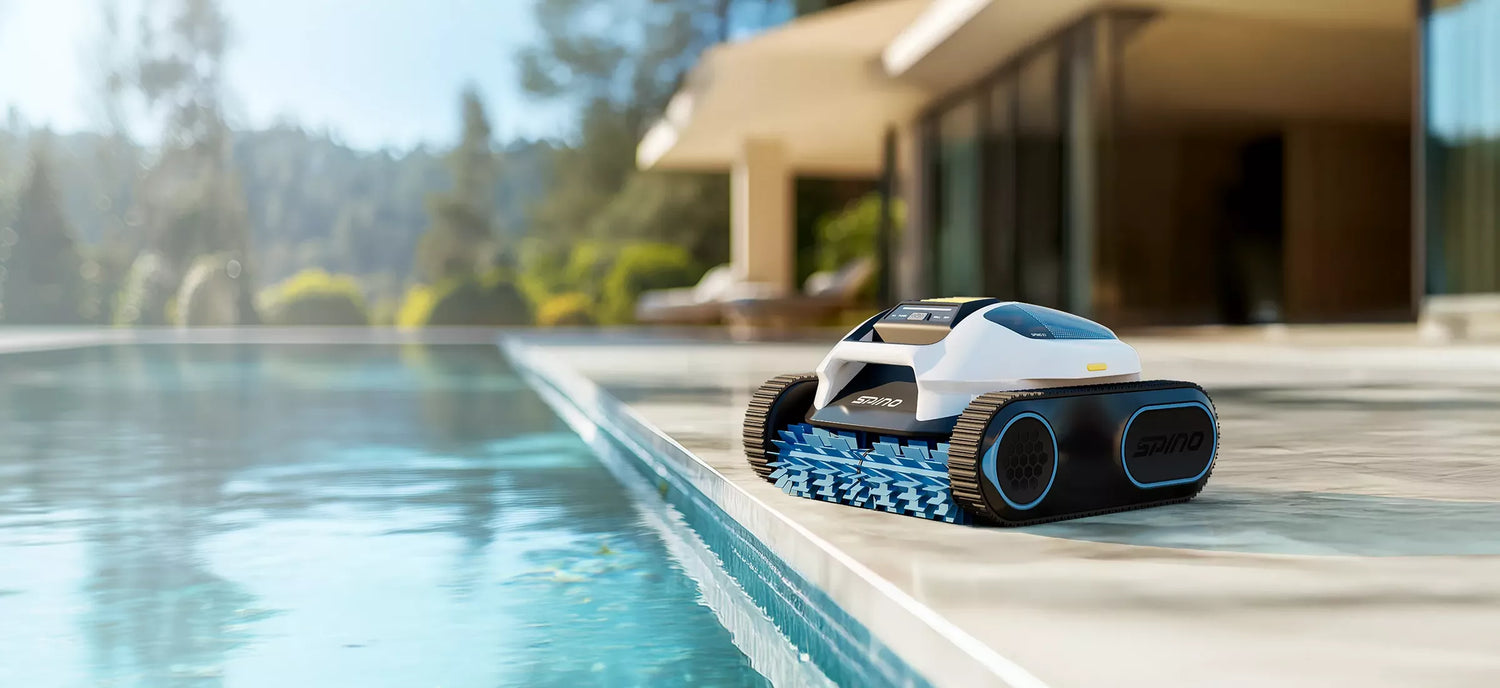
Choosing between the three main automatic pool cleaner types—suction-side, pressure-side and robotic—comes down to how each system gets power, where it sends collected debris, and how closely it depends on your pool’s existing equipment. The right option also depends on your pool size, surface, typical debris and required cleaning coverage.
Suction-side cleaners use the pool’s circulation system, while pressure-side cleaners rely on return-line pressure and robotic pool cleaners operate with their own motor and filtration system. Before comparing models, check your pool’s pump, filter, suction line, return line and cleaning requirements, rather than assuming one cleaner type is universally better.
The sections below break down how each automatic pool vacuum type works, what equipment it uses and which pool conditions may make one approach more suitable than another.
| Pool Cleaner Type | How It Operates | Main System Dependency | Debris Collection |
|---|---|---|---|
| Suction-Side Pool Cleaner | Uses suction from the circulation system | Pool pump and filtration system | Typically through the pool filter |
| Pressure-Side Pool Cleaner | Uses water pressure from the return system | Return line; some setups may require a booster pump | Commonly a separate debris bag |
| Robotic Pool Cleaner | Uses its own motor and filtration system | Less dependent on the pool's circulation system | Built-in filter |
The three categories of automatic pool vacuums can perform similar basic jobs, but their equipment requirements and maintenance routines can differ significantly.
What is an Automatic Pool Cleaner?
An automatic pool cleaner is a device designed to remove dirt and debris from a swimming pool with minimal manual cleaning. Unlike a manual pool vacuum, it can move through the pool and perform cleaning with limited hands-on effort. Automatic pool cleaners generally include suction-side, pressure-side and robotic pool cleaners, although the exact terminology can vary between manufacturers and retailers. A robotic pool cleaner operates independently with its own motor and filtration system, while suction-side and pressure-side cleaners rely more heavily on the pool’s existing circulation equipment.
In other words, automatic pool vacuum and automatic pool cleaner can overlap in everyday usage, but automatic pool cleaner is the broader category when comparing suction-side, pressure-side and robotic systems.
Suction-Side Pool Cleaners: How They Work and Who They Suit
Suction-side pool cleaners connect to a skimmer or dedicated suction line and use the pool pump to create the water flow that moves the cleaner and carries collected debris into the pool’s filtration system.
This design means the cleaner itself does not need a separate drive motor, but the pool pump needs to operate while the cleaner is working. A typical cleaning cycle may run for several hours, so the practical consideration is not just the cleaner's purchase price but also how its operation interacts with the pump, skimmer and pool filter.
How Suction-Side Pool Cleaners Work
A suction-side pool cleaner uses water flow created by the pool pump to move around the pool, while collected debris is carried through the suction line and into the pool’s existing filtration system. The basic cleaning path is straightforward:
When the pool pump creates suction, water and debris are drawn through the cleaner. The cleaner uses that water flow for movement while dirt and debris continue through the circulation system, eventually reaching the pool's filter.
This creates an important maintenance consideration: the debris does not disappear—it becomes part of the load handled by the pool's existing filtration system.
When a Suction-Side Pool Cleaner Makes Sense
A suction-side cleaner can make sense for a pool that already has a suitable suction connection and an owner who is comfortable using the existing circulation and filtration system for automated cleaning.
Consider a suction-side cleaner when:
- Your pool has a dedicated suction line or compatible skimmer connection.
- The pool pump already runs for the required circulation schedule.
- Your typical debris consists largely of dust, sand and smaller particles.
- You want a relatively simple cleaner with few additional system components.
- You are prepared to monitor the pool filter and pump basket as debris accumulates.
The main trade-off is system dependency. Because suction-side cleaning uses the pool's pump and filtration system, choosing this type means considering not only whether the cleaner can reach the areas you want cleaned, but also how frequently debris will need to be removed from the filter and baskets.
Pressure-Side Pool Cleaners: How They Work and Who They Suit
Pressure-side pool cleaners use return-line water pressure to move and collect debris, while some models require a dedicated booster pump to reach their specified flow and pressure; the exact requirement depends on the cleaner and the pool’s existing equipment.
Unlike suction-side cleaners, pressure-side models commonly collect debris in an attached debris bag, reducing the amount of larger debris sent directly into the pool’s main filter. The exact system requirements vary by model; for example, some pressure-side setups use a 3/4 HP booster pump, while others are designed around existing return-line pressure.
How Pressure-Side Pool Cleaners Work

A pressure-side pool cleaner uses pressurised water from the return system to move around the pool and collect debris, usually directing larger debris into a dedicated bag rather than the pool’s main filter. The basic operating path is:
Clean, pressurised water returning to the pool powers the cleaner's movement and cleaning action. The cleaner then captures debris in its own collection bag, which can be removed and emptied separately from the pool's main filtration system.
This setup can be particularly relevant for pools surrounded by trees or landscaping, where larger leaves and other debris may accumulate regularly. Some current pressure-side cleaners are specifically designed with large intake openings and high-capacity debris bags for heavier debris loads.
When a Pressure-Side Pool Cleaner Makes Sense
A pressure-side cleaner can be worth considering when your pool has a suitable return-line setup and you want a dedicated debris collection system rather than sending all collected material through the main pool filter.
Consider a pressure-side cleaner when:
- Your pool has a compatible pressure-side or dedicated return connection.
- The pool regularly collects leaves, larger debris or material from surrounding landscaping.
- You prefer a separate debris bag that can be removed and emptied independently.
- Your existing equipment can provide the required water flow.
- You are prepared to account for a booster pump if the selected model requires one.
A booster pump should never be assumed to be mandatory for every pressure-side cleaner. It is a model- and pool-system-dependent requirement, so check the manufacturer's installation specifications before buying. For example, Pentair lists a 3/4 HP booster pump for one of its pressure-side systems, demonstrating why the existing equipment setup matters.
Robotic Pool Cleaners: How They Work and Who They Suit
Robotic pool cleaners use their own drive motor, water pump and filtration system, so the cleaning cycle does not depend on the pool’s main pump or filter to provide suction or power, although normal pool circulation and water treatment still remain necessary.
Unlike suction-side and pressure-side cleaners, a robotic pool cleaner operates as an independent unit inside the pool, using its drive system to move and its internal filtration system to capture debris. Depending on the model, cleaning cycles can range from around 1–3.5 hours, while coverage may include the floor, walls and waterline.
It also has corded and cordless robotic pool cleaners; the supporting guide is Corded vs. Cordless Robotic Pool Cleaners: Which Is Better for You?
How Robotic Pool Cleaners Work

A robotic pool cleaner uses its own drive motor, pump and internal filter to move through the pool and collect debris, separating the cleaning cycle from the suction or pressure connections used by traditional automatic cleaners.
A typical robotic pool cleaner combines several systems in one unit:
- Drive system: Motors and wheels or tracks move the cleaner across the pool surface.
- Brush system: Brushes loosen dirt and debris from the pool surface.
- Internal pump: Draws water and debris into the cleaner.
- Built-in filter: Captures debris before filtered water is returned to the pool.
- Navigation system: Sensors and programmed algorithms help determine the cleaner's movement and coverage.
The cleaning process can therefore be understood as:
This changes where the maintenance burden sits. Instead of sending collected debris through the pool's main filtration system, the owner generally removes and cleans the robot's own filter basket or cartridge after use or when it becomes loaded with debris.

What Robotic Pool Cleaners Can Clean
A robotic pool cleaner's coverage depends on its specific design, so buyers should check whether the model is rated for the pool floor, walls, waterline and other areas rather than assuming every robotic cleaner provides the same coverage.
| Cleaning Area | What to Check |
|---|---|
| Pool Floor | Whether floor cleaning is supported and for which pool surfaces |
| Pool Walls | Wall-climbing capability and maximum slope |
| Waterline | Whether dedicated waterline cleaning is supported |
| Steps & Benches | Whether the cleaner can navigate these specific shapes |
| Pool Surface | Compatibility with concrete, fibreglass, vinyl, tile or other surfaces |
For example, one current cordless robotic pool cleaner specifies coverage of floor, walls and waterline, a maximum operating depth of 3 m, and compatibility with several pool surfaces. Those are product-specific specifications rather than universal standards for robotic pool cleaners.
This distinction matters when comparing products: “robotic” describes how the cleaner operates, not exactly what every model can clean. A pool with steep walls, steps, unusual geometry or a particular surface should always be matched against the manufacturer's stated coverage and operating limits.
Consider a manual pool vacuum or a robotic pool vacuum, for supporting guide: Manual Pool Vacuum vs Robotic Pool Cleaner: Which Is Better for Your Pool?.
Suction-Side vs Pressure-Side vs Robotic Pool Cleaners
The main difference between suction-side, pressure-side and robotic pool cleaners is where the cleaning power comes from, where collected debris is stored, and how much each cleaner depends on the pool’s existing circulation and filtration equipment.
A suction-side cleaner uses the pool’s suction system, while a pressure-side cleaner uses return-line pressure and may require a booster pump depending on the model and installation. A robotic cleaner operates independently with its own motor and filtration system, so the three categories can differ substantially in setup and ongoing maintenance.
Automatic Pool Cleaner Comparison
| Factor | Suction-Side Pool Cleaner | Pressure-Side Pool Cleaner | Robotic Pool Cleaner |
|---|---|---|---|
| Power source | Pool suction | Return-line water pressure | Independent motor and pump |
| Pool connection | Skimmer or suction line | Return/pressure line | No suction or return-line connection |
| Main system dependency | Pool pump + filtration system | Pool circulation + pressure system | Independent cleaning system |
| Debris collection | Usually pool filter | Commonly separate debris bag | Built-in filter |
| Booster pump | Generally not required | Model/system dependent | Not required for cleaning |
| Main maintenance load | Pool filter + pump basket | Debris bag + pool system | Internal filter |
| Floor cleaning | Model dependent | Model dependent | Model dependent |
| Wall cleaning | Model dependent | Model dependent | Model dependent |
| Waterline cleaning | Model dependent | Model dependent | Model dependent |
The most important distinction is where the cleaning work goes after debris is picked up. Suction-side cleaners send debris through the pool’s filtration system, pressure-side cleaners commonly use a separate collection bag, while robotic cleaners capture debris in their own filter.
Where Does the Cleaning Work Go?
Think of the three systems as different ways of distributing the workload:
- Suction-side: the pool pump creates suction, while the pool filter handles the collected debris.
- Pressure-side: return-line water pressure drives the cleaner, with many models collecting debris in a dedicated bag.
- Robotic: the cleaner supplies its own movement and filtration, with debris remaining inside the robot's filter.
This distinction matters because the cleaner itself is only one part of the maintenance system. A pool with heavy leaf fall, for example, may place a different burden on a filter basket than a pool that mainly collects fine dust or sand.
Cleaning coverage should also be treated separately from cleaner type. A robotic pool cleaner is not automatically a floor-and-wall-and-waterline cleaner, just as a suction or pressure cleaner should not be assumed to reach every part of a pool; always verify the floor, wall, waterline, steps and pool-surface compatibility for the specific model.
For a direct comparison between the two types, the supporting guides are Suction vs Robotic Pool Cleaner: Which Is Better? and Pressure vs Robotic Pool Cleaner: Which Is Better?
Automatic Pool Cleaner: Which Cleaner Is Right for Your Pool?
There is no single best automatic pool vacuum for every pool; the right choice depends on your existing equipment, typical debris, pool surface and shape, required cleaning coverage, and how much maintenance you want the system to handle.
Before choosing, identify your pool’s pump, filter, suction line and return line, then consider the areas that actually need cleaning. Pool size can also matter—for example, a 10,000-gallon pool and a 30,000-gallon pool may have very different equipment and cleaning requirements—but there is no universal gallon threshold that determines which cleaner type is correct.
Automatic Pool Cleaner Decision Matrix
| If Your Priority Is… | Start by Considering… | Check Before Buying |
|---|---|---|
| You already have a suitable suction connection | Suction-Side Pool Cleaner | Skimmer or dedicated suction line, pump and filter |
| Your pool is set up for return-side cleaning | Pressure-Side Pool Cleaner | Return pressure and whether a booster pump is required |
| You want the cleaner to operate independently of the pool circulation system | Robotic Pool Cleaner | Power setup, filter capacity and cleaning cycle |
| Your pool collects lots of leaves or larger debris | Pressure-Side or suitable Robotic Cleaner | Debris-bag/filter capacity and intake design |
| Fine dust or small particles are a major issue | Suction-Side or suitable Robotic Cleaner | Filtration capability and filter maintenance |
| You need wall or waterline cleaning | A model specifically rated for those areas | Wall-climbing and waterline specifications |
| Your pool has unusual steps, benches or complex geometry | A model with appropriate navigation and coverage | Manufacturer's coverage and surface specifications |
| You want to minimise dependence on the main pool system | Robotic Pool Cleaner | Independent motor and filtration system |
The important point is to choose the system that fits the pool, rather than automatically choosing the most sophisticated category. Current buying guidance also emphasises matching cleaner selection to pool size, surface, debris load and filtration requirements instead of relying on a generic “best cleaner” ranking.
To learn more about the advantages and disadvantages of automatic pool cleaners, refer to the supporting guide: Pros and Cons of Automatic Pool Cleaners.
Pool Equipment and Debris Should Be Checked Before Choosing
Before choosing an automatic pool vacuum, check the pool’s circulation equipment, size, surface, shape, typical debris and required cleaning areas so the cleaner’s connection, filtration and coverage match the actual pool rather than a generic category.
Start with the equipment already installed: identify whether the pool has a suitable suction line, return line, pool pump and pool filter, then consider how much debris the pool typically receives. Pool dimensions and surface type also matter, particularly when comparing models with different cleaning-area or pool-size limits.
Automatic Pool Cleaner Pre-Purchase Checklist
The most useful pre-purchase checks are pool dimensions, surface, shape, debris type, existing circulation equipment, required cleaning coverage and the cleaner’s operating limits.
- Pool size: Record the maximum length, width and relevant depth rather than relying only on the pool's approximate volume.
- Pool shape: Note steps, benches, ledges, slopes, tight corners and other areas that may affect cleaner movement.
- Pool surface: Check compatibility with surfaces such as fibreglass, concrete, tile or vinyl.
- Existing equipment: Identify the pool pump, pool filter, suction line and return line.
- Debris type: Consider whether the pool mainly collects leaves, sand, dust, pollen or mixed debris.
- Cleaning coverage: Confirm whether the specific model is designed for the floor, walls, waterline, steps or benches.
- Maintenance: Check how the filter, debris bag or other collection components are removed and cleaned.
- Operating requirements: Verify connection, power, water-depth and other manufacturer-specified limits.
The debris question deserves particular attention because it affects the ongoing maintenance burden. A pool surrounded by trees may produce frequent large-leaf loads, while a pool exposed to wind or nearby landscaping may collect finer dust and sand; the relevant question is therefore not simply whether a cleaner can pick up debris, but where that debris is collected and how often the collection system needs attention.
Finally, remember that an automatic pool cleaner handles physical debris rather than replacing water treatment. Pool owners still need to monitor water chemistry and maintain appropriate filtration and circulation; CDC guidance recommends maintaining pool pH at 7.0–7.8 and routinely checking disinfectant levels.
FAQ: Automatic Pool Cleaner Types
The three main automatic pool cleaner types are suction-side, pressure-side and robotic pool cleaners. They are primarily differentiated by their power source, connection to the pool system and method of collecting debris.
A suction-side cleaner uses suction from the pool's skimmer or dedicated suction line, while a pressure-side cleaner uses water pressure from the return system. Their debris collection also differs: suction-side cleaning generally sends debris into the pool's filtration system, whereas pressure-side models commonly use a separate debris bag.
No, a booster pump is not universally required for every pressure-side cleaner, because the requirement depends on the specific cleaner and pool equipment configuration. Check the manufacturer's required flow, pressure and pump specifications before installation rather than assuming a booster pump is necessary.
A robotic pool cleaner does not need the pool pump to power its cleaning movement because it has its own motor and filtration system. However, the pool's normal circulation and filtration still need to operate according to the pool manufacturer's and equipment manufacturer's maintenance requirements.
There is no universal best cleaner for leaves because the suitable choice depends on the amount and size of debris, the cleaner's intake design and its debris-storage capacity. Pressure-side cleaners with dedicated debris bags and robotic cleaners with appropriately sized filters can both be considered for pools exposed to heavy leaf fall.
No, wall and waterline cleaning are model-specific capabilities, not universal features of every robotic pool cleaner. Before buying, check the manufacturer's specifications for floor, wall, waterline, steps and pool-surface compatibility.
The best automatic pool cleaner depends on your existing circulation equipment, pool size and shape, surface, typical debris, required cleaning areas and preferred maintenance routine. Start by checking your pool pump, filter, suction or return connections, then compare those requirements with the specifications of individual cleaners.
Did you like this article? Add us as a preferred source to find us more easily on Google.