



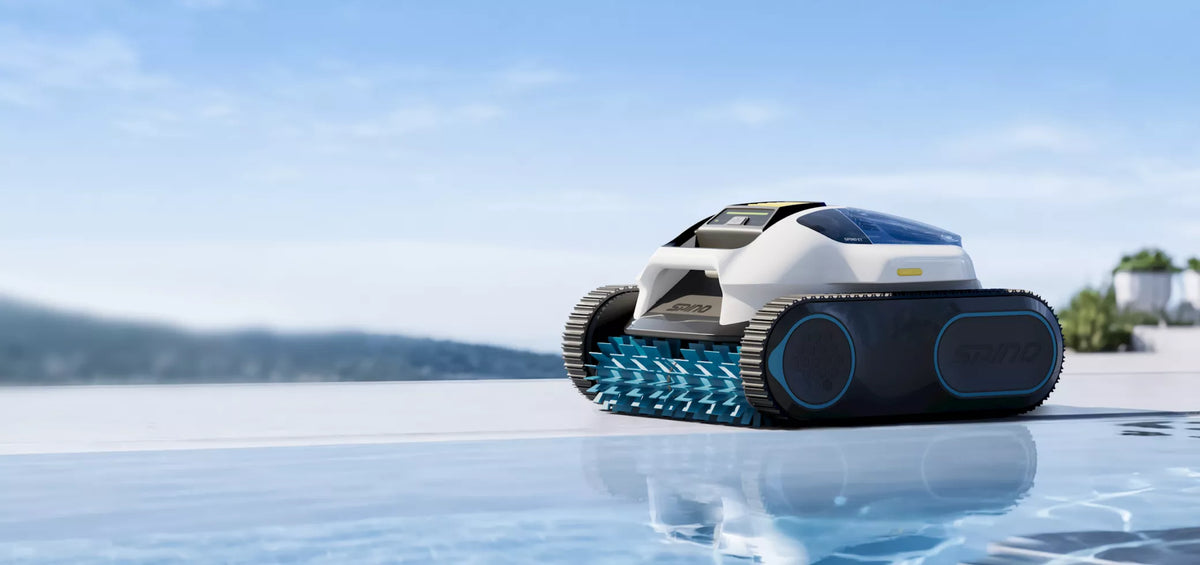
A robotic pool cleaner is a self-contained pool-cleaning system that uses its own motor, brushes, filtration, and navigation to remove debris from the pool. The right model depends on pool size, surface, shape, debris load, cleaning coverage, runtime, and maintenance requirements.
Unlike suction-side or pressure-side cleaners, robotic pool cleaners generally operate independently of the pool’s main circulation system. But “robotic” does not automatically mean every model can clean every part of every pool. Floor, wall, waterline, steps, slopes, and different pool surfaces can require different capabilities.
This FAQ answers the most important questions about robotic pool cleaners, including how they work, what pools they can clean, what they cost to operate, how cordless and corded models differ, and what to check when a cleaner does not perform as expected.
Robotic Pool Cleaner Basics: How Do Pool Cleaning Robots Work?
A robotic pool cleaner is a self-contained cleaning machine that uses an onboard motor, brushes, filtration system, and navigation system to collect debris without relying on the pool’s main circulation system.
1. What Is a Robotic Pool Cleaner?
A robotic pool cleaner is a self-contained machine that uses an electric motor, brushes, and an onboard filtration system to remove debris from pool surfaces. Depending on the model, it may clean the floor, walls, and waterline without relying on the pool’s main circulation system. How to Choose a Robotic Pool Cleaner: A Practical Buying Guide
2. How Does a Robotic Pool Cleaner Work?
A robotic pool cleaner moves across the pool, brushes debris from the surface, draws water through its internal system, and captures debris in an onboard filter or basket. Its drive and navigation systems determine how it moves through the pool during each cleaning cycle.
3. Does a Robotic Pool Cleaner Use the Pool Pump?
Most robotic pool cleaners do not rely on the pool’s main circulation pump for cleaning. The robot uses its own motor and filtration system, while the pool’s circulation equipment continues handling its normal water-circulation and filtration functions.
4. How Does a Robotic Pool Cleaner Collect Debris?
A robotic pool cleaner uses brushes to loosen debris and an internal water-flow system to move that material into a filter or debris basket. The filter type determines how effectively the cleaner can capture different materials, from larger leaves to finer particles.
5. How Does a Robotic Pool Cleaner Know Where to Go?
A robotic pool cleaner follows a programmed or sensor-assisted navigation system, depending on the model. Basic systems may follow predefined movement patterns, while more advanced models can use sensors, algorithms, or mapping technologies to improve pool coverage.
6. What Is the Difference Between a Robotic, Suction-Side, and Pressure-Side Pool Cleaner?
The main difference is how each cleaner is powered and handles debris: robotic cleaners have onboard motors and filtration, suction-side cleaners use the pool’s suction system, and pressure-side cleaners use water pressure from the pool circulation system. Automatic Pool Cleaner Types: Robotic vs Suction vs Pressure
| Cleaner Type | Main Power Source | Debris Handling |
|---|---|---|
| Robotic | Onboard motor/electrical system | Onboard filter or basket |
| Suction-side | Pool suction system | Pool filtration system |
| Pressure-side | Pool return pressure | Cleaner bag or pool system, depending on design |
7. Do Robotic Pool Cleaners Replace the Pool's Main Filtration System?
No. A robotic pool cleaner is designed primarily to remove debris and clean pool surfaces, while the main filtration system handles broader water circulation and filtration. A robot should generally be viewed as a supplemental cleaning system rather than a complete replacement for the pool’s circulation equipment.
Robotic Pool Cleaner Pool Compatibility: What Pools Can a Robot Clean?
A robotic pool cleaner is only suitable when its rated pool size, depth, surface, shape, and cleaning coverage match the physical conditions of your pool.
8. Can a Robotic Pool Cleaner Clean an Above-Ground Pool?
Yes, but the specific robot must be rated for above-ground pools because wall geometry, liners, pool depth, and surface transitions can differ from in-ground pools. Always check the manufacturer’s supported pool type and cleaning areas before purchasing.
9. Can a Robotic Pool Cleaner Clean an In-Ground Pool?
Yes. Many robotic pool cleaners are designed for in-ground pools, but compatibility still depends on the pool’s dimensions, surface material, depth, shape, and whether you need floor, wall, or waterline cleaning.
10. Can Robotic Pool Cleaners Work on Vinyl Pools?
Yes, provided the model is specifically compatible with vinyl pool surfaces. The cleaner’s brushes, tracks, traction system, and wall-climbing design should be suitable for the liner to reduce the risk of poor traction or inadequate coverage.
11. Can Robotic Pool Cleaners Work on Fiberglass Pools?
Yes, many robotic pool cleaners can operate on fiberglass surfaces, but the model’s manufacturer specifications should confirm surface compatibility. Wall-cleaning performance can also depend on the fiberglass surface texture and pool geometry.
12. Can Robotic Pool Cleaners Work on Pebble Tec Pools?
Some robotic pool cleaners are designed for textured surfaces such as Pebble Tec, but compatibility should be confirmed for the specific model. Textured surfaces can affect traction and brush contact, particularly when the robot is climbing walls.
13. Can Robotic Pool Cleaners Clean Pool Steps and Tanning Ledges?
Not necessarily. Floor and wall coverage does not guarantee effective cleaning of steps or tanning ledges because these areas can require different navigation, traction, and turning behavior. Check the manufacturer’s specifications for these specific pool features.
14. Can a Robotic Pool Cleaner Climb Sloped Pool Walls?
Some models can climb sloped walls, but the usable slope depends on the robot’s traction system, wall angle, and pool surface. Compare the manufacturer’s stated wall-angle capability with your pool’s actual geometry rather than assuming every wall-climbing robot can handle every slope.
Robotic Pool Cleaner Cleaning Coverage: What Can a Pool Robot Actually Clean?
A robotic pool cleaner may clean the floor, walls, and waterline, but coverage varies by model, so buyers should verify each cleaning area instead of assuming “full-pool cleaning” includes every surface and feature.
15. Can Robotic Pool Cleaners Clean Walls?
Yes, models with a dedicated wall-climbing design can clean pool walls, but performance depends on wall angle, surface material, traction, and the robot’s rated capabilities. A floor-only cleaner should not be expected to climb walls.
16. Can Robotic Pool Cleaners Clean the Waterline?
Some robotic pool cleaners are specifically designed to clean the waterline, while others only clean the floor or walls. If waterline buildup is a priority, look for an explicit manufacturer specification for waterline cleaning rather than assuming wall coverage includes it.
17. Can Robotic Pool Cleaners Clean Pool Steps?
Some models can reach and clean steps, but step coverage varies because narrow surfaces, corners, vertical transitions, and changes in elevation can affect navigation. Check the manufacturer's supported pool geometry before relying on a robot for complete step cleaning.
18. Can Robotic Pool Cleaners Clean Tanning Ledges?
Tanning ledges can be difficult for robotic pool cleaners because their shallow depth and transitions can interrupt normal navigation. A model that cleans floors and walls does not automatically guarantee effective coverage of tanning ledges.
19. Can Robotic Pool Cleaners Clean Pool Corners?
Robotic pool cleaners can reach many pool corners, but complete corner cleaning is not guaranteed because the robot’s shape, brushes, navigation pattern, and pool geometry affect how closely it can follow edges.
20. Can a Robotic Pool Cleaner Clean Around the Main Drain?
Most robotic pool cleaners can travel across areas around a main drain, but the drain design and surrounding geometry can affect movement. If your pool has raised drains, unusual fittings, or other obstacles, check the manufacturer’s guidance before purchase.
21. Can Robotic Pool Cleaners Remove Algae?
A robotic pool cleaner can remove loose algae and organic debris from pool surfaces, but it does not replace proper water chemistry, brushing, or algae treatment when active algae growth is present.
22. Can Robotic Pool Cleaners Pick Up Leaves, Sand, and Fine Debris?
Yes, many robotic pool cleaners can collect common debris such as leaves, sand, dirt, and other particles, but filtration performance varies by model. Check the filter design and manufacturer-rated filtration specifications if your pool regularly contains fine debris.
Robotic Pool Cleaner Filtration, Debris & Maintenance: What Needs Regular Care?
A robotic pool cleaner needs regular filter cleaning and periodic inspection of brushes, tracks, seals, and other serviceable components to maintain effective debris collection and reliable operation.
23. How Often Should You Clean a Robotic Pool Cleaner Filter?
Clean the filter or debris basket after each cleaning cycle when the pool has a heavy debris load, and inspect it regularly even with lighter debris. A clogged filter can restrict water flow and reduce cleaning effectiveness.
24. What Type of Debris Can a Robotic Pool Cleaner Collect?
Robotic pool cleaners can collect common pool debris such as leaves, grass, insects, dirt, sand, and pollen, but the exact debris capacity and filtration performance depend on the model. Check the filter type and basket capacity when your pool has a high or unusual debris load.
25. Can a Robotic Pool Cleaner Pick Up Fine Sand?
Yes, a robotic pool cleaner with sufficiently fine filtration can collect sand and other small particles, but filtration ratings vary between models. A finer filter can be useful for pools that regularly accumulate dust, pollen, or fine sediment.
26. Can a Robotic Pool Cleaner Pick Up Leaves?
Yes, many robotic pool cleaners are designed to collect leaves and other larger organic debris in their onboard filter or debris basket. For pools surrounded by trees, basket capacity and easy filter removal can be more important than maximum suction or flow claims.
27. How Do You Clean a Robotic Pool Cleaner?
Remove the cleaner from the pool, empty its debris basket or filter, rinse the filter according to the manufacturer’s instructions, and inspect the brushes, tracks, and housing for trapped debris or damage before storing or restarting it.
28. How Often Should Robotic Pool Cleaner Brushes Be Replaced?
There is no universal replacement interval because brush wear depends on the pool surface, cleaning frequency, debris load, and brush material. Inspect brushes regularly and replace them when they are visibly worn or when cleaning performance declines.
29. How Do You Store a Robotic Pool Cleaner Between Seasons?
Remove the cleaner from the pool, clean and dry the accessible components, and store it according to the manufacturer’s instructions in a protected location. Cordless models also require proper battery and charging storage procedures.
30. What Parts of a Robotic Pool Cleaner Wear Out?
Common serviceable components include filters, brushes, tracks, seals, hooks, and batteries on cordless models, although replacement intervals vary by product. Check replacement-part pricing and availability before buying because these costs can affect ownership value over several seasons.
Cordless vs. Corded Robotic Pool Cleaners: Which Power System Is Better?
Cordless robotic pool cleaners eliminate cable management but depend on battery runtime and charging, while corded models provide external power during operation; neither design is automatically better for every pool. Corded vs. Cordless Robotic Pool Cleaner: Which Is Better for Your Pool?
31. Are Cordless Robotic Pool Cleaners Worth It?
Cordless robotic pool cleaners can be worth the cost when avoiding a power cable makes pool cleaning more convenient and the robot’s rated runtime covers your cleaning needs. Battery replacement, charging time, and long-term battery condition should also be included in the ownership decision.
32. How Long Does a Cordless Robotic Pool Cleaner Run?
Cordless runtime varies by model and cleaning mode, with manufacturer-rated runtimes commonly ranging from around 60 minutes to more than 200 minutes. Compare the runtime for your intended cleaning mode rather than relying on the highest advertised number.
33. How Long Does a Cordless Pool Cleaner Take to Charge?
Charging time varies by battery capacity, charger design, and model. Some cordless cleaners require several hours between cycles, so compare charging time with the pool area and cleaning frequency you need rather than considering runtime alone.
34. Is Cordless Better for a Large Pool?
Not automatically. A cordless cleaner can work well for a large pool if its stated cleaning area and runtime are sufficient, but a larger pool may require multiple cleaning cycles or a model specifically designed for greater coverage.
35. Do Cordless Pool Cleaners Have Enough Power for Walls?
Some cordless models are designed to climb and clean walls, but battery operation does not by itself determine wall-cleaning ability. Check the manufacturer’s specifications for wall coverage, maximum wall angle, surface compatibility, and rated runtime in wall-cleaning mode.
36. Does a Corded Robotic Pool Cleaner Clean Better Than a Cordless Model?
Not necessarily. Cleaning performance depends on the specific robot’s brushes, filtration, navigation, traction, and cleaning design rather than whether it uses a cord or battery. Compare the actual specifications and supported pool conditions instead of assuming one power system cleans better.
Robotic Pool Cleaner Navigation, Battery & Smart Features: Which Specifications Matter?
The most useful robotic pool cleaner specifications are the ones that match your pool’s cleaning requirements, especially coverage, runtime, filtration, navigation, and wall or waterline capability.
37. How Long Should a Robotic Pool Cleaner Run?
A robotic pool cleaner should run long enough to complete its intended cleaning cycle and cover the required pool area, so there is no universal ideal runtime. Compare the manufacturer-rated runtime with your pool size, cleaning mode, and stated coverage.
38. Does a Longer Battery Runtime Mean Better Cleaning?
No. Longer runtime can allow a robot to clean for more time, but it does not guarantee better coverage or debris removal. Navigation efficiency, brush design, filtration, traction, and the pool’s shape can be equally important.
39. How Does Robotic Pool Cleaner Navigation Work?
Robotic pool cleaners use programmed movement patterns, sensors, or more advanced navigation systems depending on the model. The purpose is to guide the robot across the pool while reducing unnecessary movement and improving coverage.
40. Do Robotic Pool Cleaners Map the Pool?
Some robotic pool cleaners use mapping or navigation technologies designed to improve coverage, but not every model creates or stores a detailed map of the pool. Check the specific manufacturer's description to determine what its navigation system actually does.
41. What Does AI Navigation Mean in a Robotic Pool Cleaner?
AI navigation generally refers to software or algorithms designed to make cleaning movement more adaptive or efficient, but the term does not define one universal technology or performance standard. Check what navigation functions the manufacturer specifically provides rather than judging a cleaner by the “AI” label alone.
42. What Specifications Matter Most When Comparing Pool Robots?
The most useful specifications are the ones that determine whether the cleaner can handle your pool, including cleaning area, floor/wall/waterline coverage, runtime, filtration, pool-surface compatibility, navigation, and wall-climbing capability.
Robotic Pool Cleaner Cost, Warranty & Service: What Is the Real Ownership Cost?
The real cost of a robotic pool cleaner includes the purchase price plus electricity, filters, brushes, batteries, and other replacement parts, so comparing only the upfront price can give an incomplete picture.
43. Robotic Pool Cleaner Cost, Warranty & Service: What Is the Real Ownership Cost?
The real cost of a robotic pool cleaner includes the purchase price plus electricity, filters, brushes, batteries, and other replacement parts, so comparing only the upfront price can give an incomplete picture.
44. How Much Does a Robotic Pool Cleaner Cost?
A robotic pool cleaner can cost roughly $150–$2,000+, with many residential models falling around $500–$1,500. Price varies by cleaning coverage, navigation, filtration, runtime, power system, and other features. Robotic Pool Cleaner Cost: How Much Should You Spend in 2026?
45. Are Robotic Pool Cleaners Worth the Money?
A robotic pool cleaner can be worth the investment when its cleaning coverage and automation reduce the manual work required for your pool. The strongest value comes from choosing a model that matches your pool rather than simply buying the most expensive option. Are Robotic Pool Cleaners Worth It? Cost, Benefits and What to Consider
46. How Much Electricity Does a Robotic Pool Cleaner Use?
Electricity cost depends on the cleaner’s power consumption, cleaning time, cleaning frequency, and local electricity rate. Calculate the estimated cost with: Power (kW) × Runtime (hours) × Cleaning cycles × Electricity rate ($/kWh).
47. Are Robotic Pool Cleaners Cheaper Than Pool Service?
A robotic pool cleaner may reduce the need for some manual cleaning, but it cannot be assumed to cost less than professional pool service in every situation. Compare the robot’s purchase price, replacement parts, electricity, maintenance, and the exact services included in local pool service.
48. How Much Do Robotic Pool Cleaner Replacement Parts Cost?
Replacement-part costs vary by model and can include filters, brushes, tracks, batteries, seals, and other components. Before purchasing, check the manufacturer’s current prices and availability for major wear parts rather than estimating ownership cost from the robot’s purchase price alone.
49. How Long Do Robotic Pool Cleaners Last?
There is no universal service-life figure for every robotic pool cleaner because longevity depends on usage, maintenance, water conditions, component quality, and replacement-part availability. A 2- or 3-year warranty should not automatically be interpreted as a 2- or 3-year expected lifespan.
50. What Does a Robotic Pool Cleaner Warranty Cover?
Warranty coverage varies by manufacturer and component, so check the specific warranty terms for the main unit, battery, motor, cable or charger, filters, brushes, and other wear parts. A stated machine warranty does not necessarily mean every component receives the same coverage period.
Robotic Pool Cleaner Safety & Troubleshooting
When a robotic pool cleaner stops, gets stuck, misses areas, or shows abnormal behavior, first remove it from operation and check the manufacturer’s troubleshooting instructions before inspecting power, filters, brushes, tracks, or pool geometry.
51. Why Is My Robotic Pool Cleaner Not Moving?
If a robotic pool cleaner is not moving, check the power supply or battery, remove debris from the brushes and drive system, inspect the filter, and confirm that the cleaner is being operated according to the manufacturer’s instructions.
52. Why Does My Robotic Pool Cleaner Keep Getting Stuck?
A robotic pool cleaner may become stuck because of steps, drains, corners, raised fittings, pool transitions, or geometry outside its supported operating conditions. Remove the cleaner safely and check whether the affected area matches the manufacturer’s stated pool compatibility.
53. Why Does My Robotic Pool Cleaner Miss Spots?
Missed areas can result from navigation patterns, pool shape, obstacles, insufficient cleaning time, or limitations in the robot’s coverage design. Check the cleaning mode and manufacturer-rated coverage before assuming the machine has a mechanical fault.
54. Why Won’t My Robotic Pool Cleaner Climb the Walls?
Wall climbing can be affected by the pool surface, wall angle, traction, debris buildup, and the robot’s rated capabilities. Clean the relevant components and verify that your pool’s wall geometry and surface are within the manufacturer’s specified operating conditions.
55. Can I Leave a Robotic Pool Cleaner in the Pool?
Whether a robotic pool cleaner can remain submerged between cleaning cycles depends on the specific manufacturer’s instructions. Do not assume that continuous submersion is acceptable simply because the cleaner is designed for underwater operation.
56. Can I Run a Robotic Pool Cleaner While Swimming?
Follow the specific manufacturer’s safety instructions before operating a robotic pool cleaner while people are in the pool. If the manufacturer instructs users to remove the cleaner before swimming, that requirement should take priority over general assumptions about the device.
57. Can I Use a Robotic Pool Cleaner After Shocking the Pool?
Follow the pool-chemical manufacturer’s instructions and the robotic cleaner manufacturer’s operating guidance after shocking the pool. Do not operate the cleaner in chemically unsafe water or outside the water-chemistry conditions specified for the device.
58. Can I Run a Robotic Pool Cleaner in the Rain?
Do not assume that a pool cleaner’s underwater operation rating means its external power equipment is safe to expose to rain. Follow the manufacturer’s instructions for the cleaner, charger, power supply, and electrical connections, particularly for cordless models being charged outdoors.

Did you like this article? Add us as a preferred source to find us more easily on Google.